Two temperatures run this picture, and they never reconcile. A blue-white cold owns the clapboard house, the frosted grass, the cracked asphalt in the foreground, while one curtained window holds its small economy of amber. Between them the night sky settles into a saturated navy, the exact blue that makes windows look warmer than they are. The texture matters as much as the hue: bare branches print their shadows across the siding like a photogram, and the street is crazed with cracks, a glaze that has outlived its kiln.
Winter strips the scene to its materials. Wood, bark, frost, tar. The trees divide the frame like leading in a window, the big trunk dead center throwing its shadow toward us as if the light were arriving from the house across the lawn, where a second window burns in a low ranch. Nothing is staged here, yet the color performs like wardrobe and score at once: amber for the interior lives we are denied, blue for the exposure of standing outside them, looking in without an invitation.
Hido grew up in Kent, Ohio, and whether or not this street is Midwestern, the picture remembers those winters: thin frost, early dark, householders shut in by four in the afternoon. The archival pigment print keeps the navy sky dense without letting the shadows block up, and holds the window’s amber as a single, uncorrected note. The Getty, SFMOMA and the Whitney collect this work for good reason. Color, in this picture, is not description but plot, the only narrator left awake.
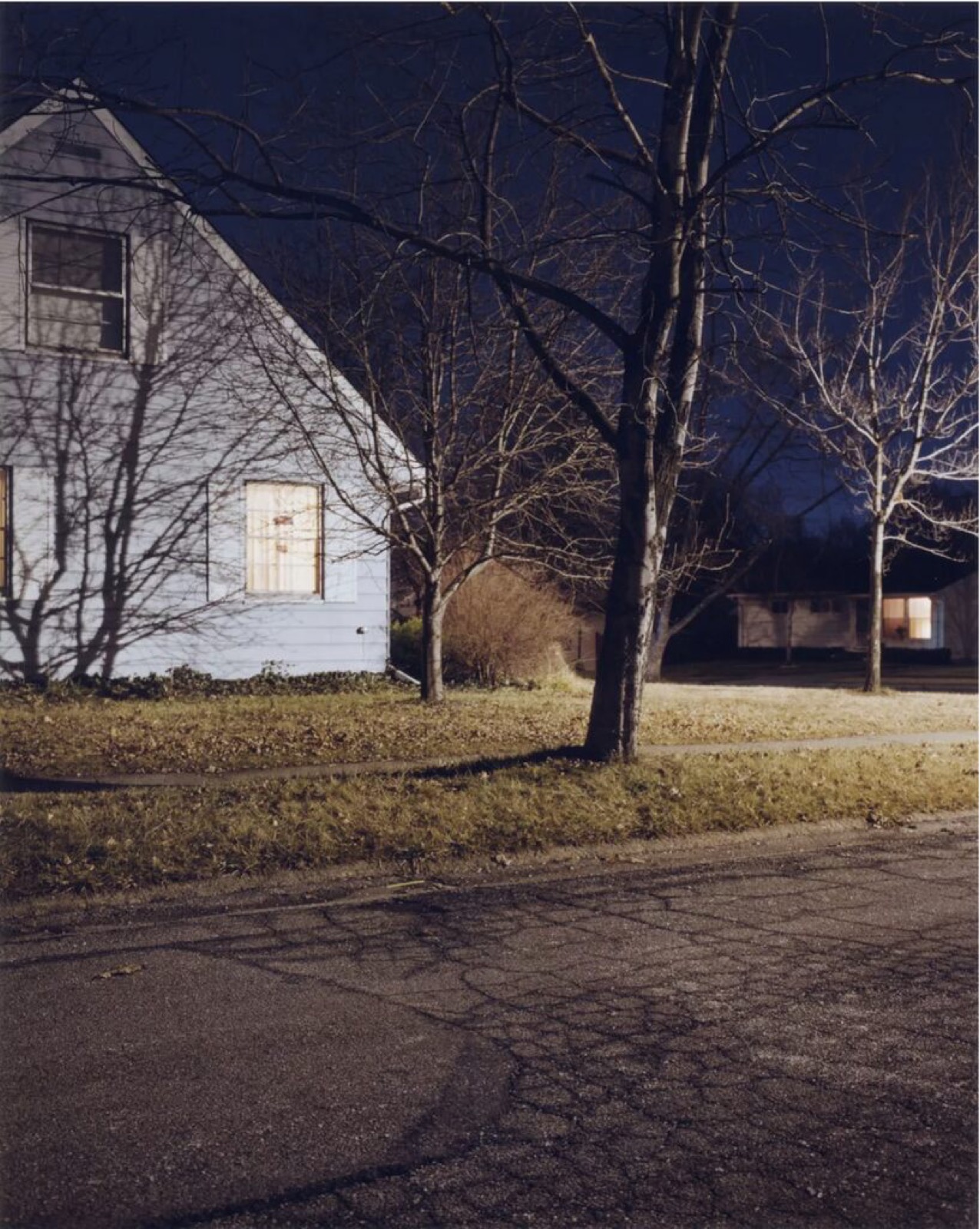

Two temperatures run this picture, and they never reconcile. A blue-white cold owns the clapboard house, the frosted grass, the cracked asphalt in the foreground, while one curtained window holds its small economy of amber. Between them the night sky settles into a saturated navy, the exact blue that makes windows look warmer than they are. The texture matters as much as the hue: bare branches print their shadows across the siding like a photogram, and the street is crazed with cracks, a glaze that has outlived its kiln.
Winter strips the scene to its materials. Wood, bark, frost, tar. The trees divide the frame like leading in a window, the big trunk dead center throwing its shadow toward us as if the light were arriving from the house across the lawn, where a second window burns in a low ranch. Nothing is staged here, yet the color performs like wardrobe and score at once: amber for the interior lives we are denied, blue for the exposure of standing outside them, looking in without an invitation.
Hido grew up in Kent, Ohio, and whether or not this street is Midwestern, the picture remembers those winters: thin frost, early dark, householders shut in by four in the afternoon. The archival pigment print keeps the navy sky dense without letting the shadows block up, and holds the window’s amber as a single, uncorrected note. The Getty, SFMOMA and the Whitney collect this work for good reason. Color, in this picture, is not description but plot, the only narrator left awake.