The fog gets top billing tonight. It takes a plain streetlamp and dilates it into a pale sun; it lifts the lawn into a green that midday would never permit; it presses the sky down over the barn-shaped house like a lid. Photographers like to say they work with available light. What is available here is weather, and Hido treats it as both lens and filter: everything sharp softens, everything bright blooms, and one window burns through vertical blinds with the intensity of a signal.
A cracked path enters from the bottom of the frame and heads for the house, which is photography’s oldest invitation, except that the weeds have half-claimed it and no one seems to have accepted for years. Night pictures used to belong to cities, to Brassaï’s glistening cobbles and assignations; Hido relocated them to the land of two-tone siding and backyard fences, where the drama is not who is out at this hour but that nobody is. The dim red glow in a second window only sharpens the point.
It helps to remember what a photograph like this asks of its own materials. The archival pigment print has to hold a streetlamp flaring at the edge of legibility and a shadowed pine at the edge of black, and it does, keeping the fog continuous between them. The Whitney, SFMOMA and the Getty hold this work, which confirms what the picture already knows: the American night, lit by whatever happens to be on, is one of the medium’s great subjects.
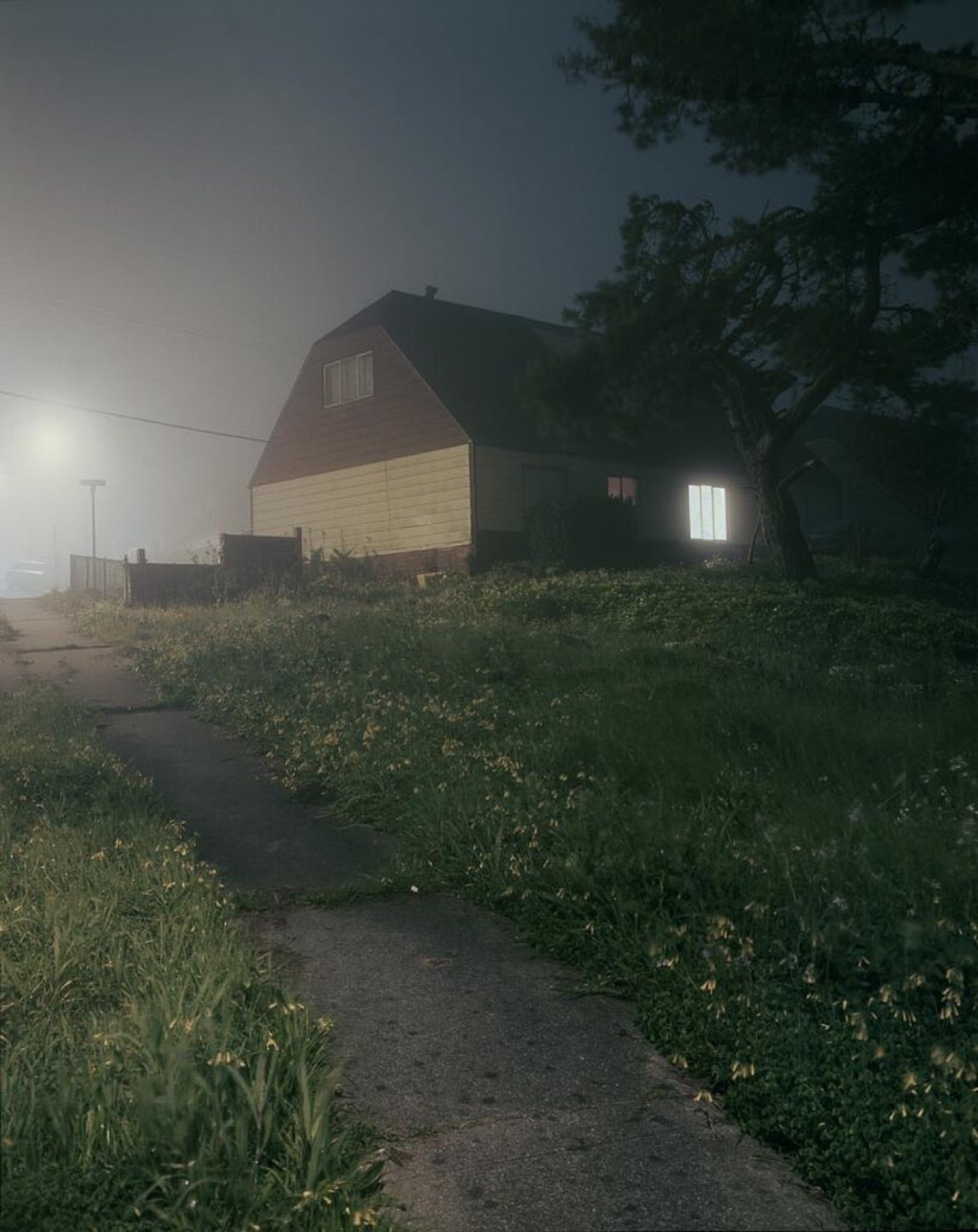

The fog gets top billing tonight. It takes a plain streetlamp and dilates it into a pale sun; it lifts the lawn into a green that midday would never permit; it presses the sky down over the barn-shaped house like a lid. Photographers like to say they work with available light. What is available here is weather, and Hido treats it as both lens and filter: everything sharp softens, everything bright blooms, and one window burns through vertical blinds with the intensity of a signal.
A cracked path enters from the bottom of the frame and heads for the house, which is photography’s oldest invitation, except that the weeds have half-claimed it and no one seems to have accepted for years. Night pictures used to belong to cities, to Brassaï’s glistening cobbles and assignations; Hido relocated them to the land of two-tone siding and backyard fences, where the drama is not who is out at this hour but that nobody is. The dim red glow in a second window only sharpens the point.
It helps to remember what a photograph like this asks of its own materials. The archival pigment print has to hold a streetlamp flaring at the edge of legibility and a shadowed pine at the edge of black, and it does, keeping the fog continuous between them. The Whitney, SFMOMA and the Getty hold this work, which confirms what the picture already knows: the American night, lit by whatever happens to be on, is one of the medium’s great subjects.