We never see the water, the boat, or the moment the fish was pulled from the surf; all of that is kept off-frame, behind us or already over. What we get instead is the aftermath, staged like a trophy the boy is too composed to gloat about: a large silvery bluefish laid across the back of his neck, its head at his right ear, its tail gripped in his left fist. His face gives nothing away. Freckled, sunburnt, red-blond hair falling in a blunt fringe, he meets the lens with the flat candor of someone who has done this before.
The navy nylon windbreaker, snapped to the throat and slightly damp, is the wardrobe of a working shore, not a photo shoot, and yet the picture has the poise of a fashion sitting. Behind him a snack-bar menu spells out the economy of the place in hand-set prices, LOBSTER ROLL and CHEESEBURGER, a blue counter ledge running level with his shoulders. The fish’s single visible eye, glassy and enormous, rhymes with the boy’s steady stare, and between the two gazes the whole New England summer hangs in balance.
Meyerowitz, who moved color photography from the street into the deliberate world of the 8×10 view camera, treats a Cape boy with the gravity of a Renaissance portrait. He is among the artists who made color serious in the 1970s, and his work lives at MoMA, the Met and the Boston MFA. This archival pigment print, made later from the original, holds the exact sunburnt red of the boy’s cheeks and the cold silver of his catch.
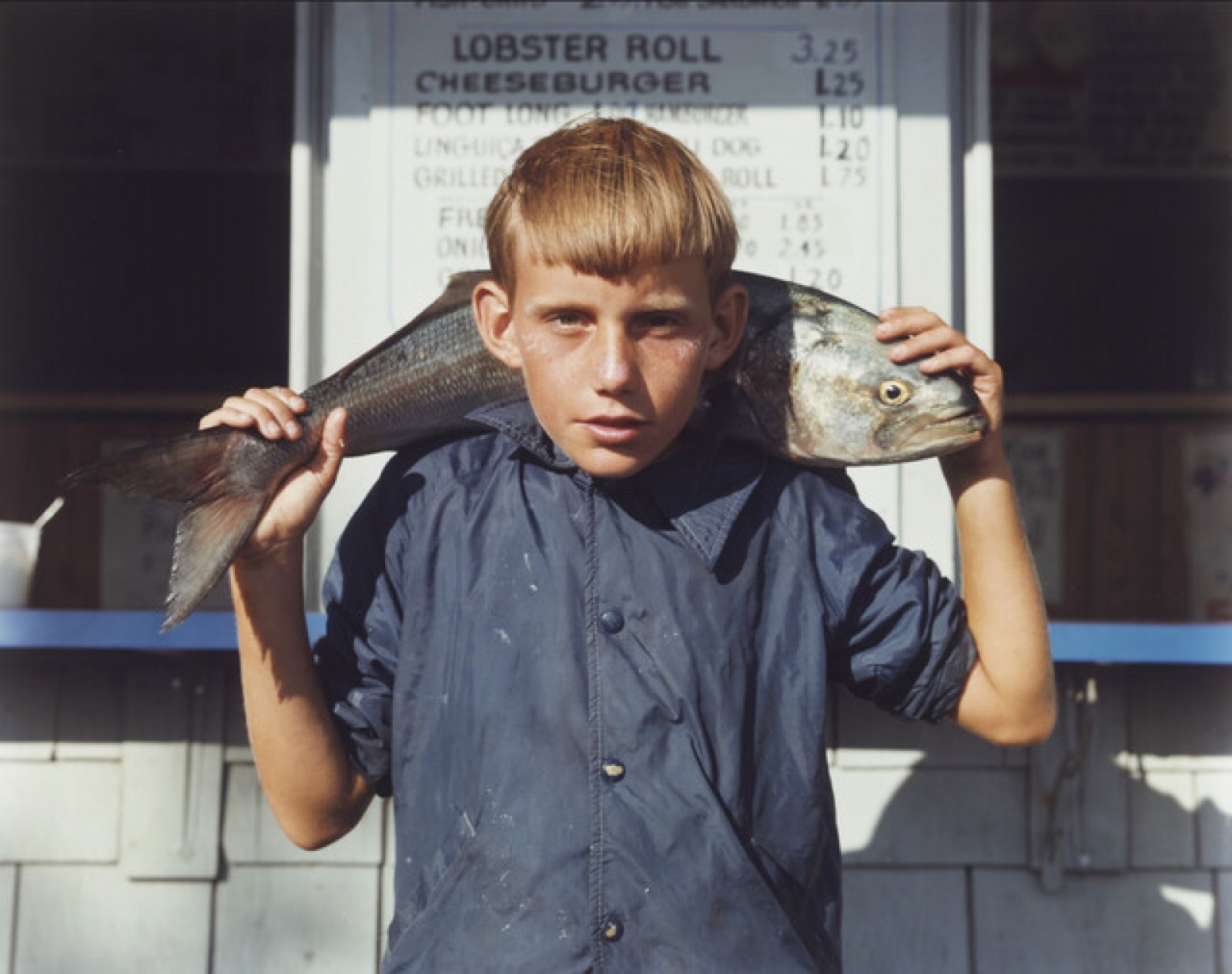

We never see the water, the boat, or the moment the fish was pulled from the surf; all of that is kept off-frame, behind us or already over. What we get instead is the aftermath, staged like a trophy the boy is too composed to gloat about: a large silvery bluefish laid across the back of his neck, its head at his right ear, its tail gripped in his left fist. His face gives nothing away. Freckled, sunburnt, red-blond hair falling in a blunt fringe, he meets the lens with the flat candor of someone who has done this before.
The navy nylon windbreaker, snapped to the throat and slightly damp, is the wardrobe of a working shore, not a photo shoot, and yet the picture has the poise of a fashion sitting. Behind him a snack-bar menu spells out the economy of the place in hand-set prices, LOBSTER ROLL and CHEESEBURGER, a blue counter ledge running level with his shoulders. The fish’s single visible eye, glassy and enormous, rhymes with the boy’s steady stare, and between the two gazes the whole New England summer hangs in balance.
Meyerowitz, who moved color photography from the street into the deliberate world of the 8×10 view camera, treats a Cape boy with the gravity of a Renaissance portrait. He is among the artists who made color serious in the 1970s, and his work lives at MoMA, the Met and the Boston MFA. This archival pigment print, made later from the original, holds the exact sunburnt red of the boy’s cheeks and the cold silver of his catch.