Turned on its end, the frame gives nearly half its height to empty asphalt, and the camera lets the word chalked there carry the weight: VICTORY, written away from us and so reaching the lens upside-down, the letters loosening as they climb toward a scrawled name. It is the kind of thing a photographer notices and then has to decide what to do with. Horvat decided to stand back and let the pavement run, so that the contest is pushed up into the top third of the picture and the announcement of its outcome fills the rest.
Up there the three boys are small and exact. The puncher's arm is out straight, glove to the other's jaw; the boy taking it bends at the knees, his own gloves dropped, already losing. A third watches with hands in his pockets, and beyond them a parked car and a row of terrace roofs close the scene off. Read top to bottom, the photograph tells the whole thing in order: the houses, the fight, the verdict in chalk. The vertical was the right call, and the rarer one in this set.
What the camera describes here is plain South London in 1955, and it describes it without raising its voice. Horvat (1928–2020), Italian-born and lately arrived from his Asian reportage for Life and Picture Post, was a long way from the fashion work to come; this Lambeth street belongs to the documentary years that the museums have since gone back to gather. The picture works because the maker trusted the asphalt to do half the talking.
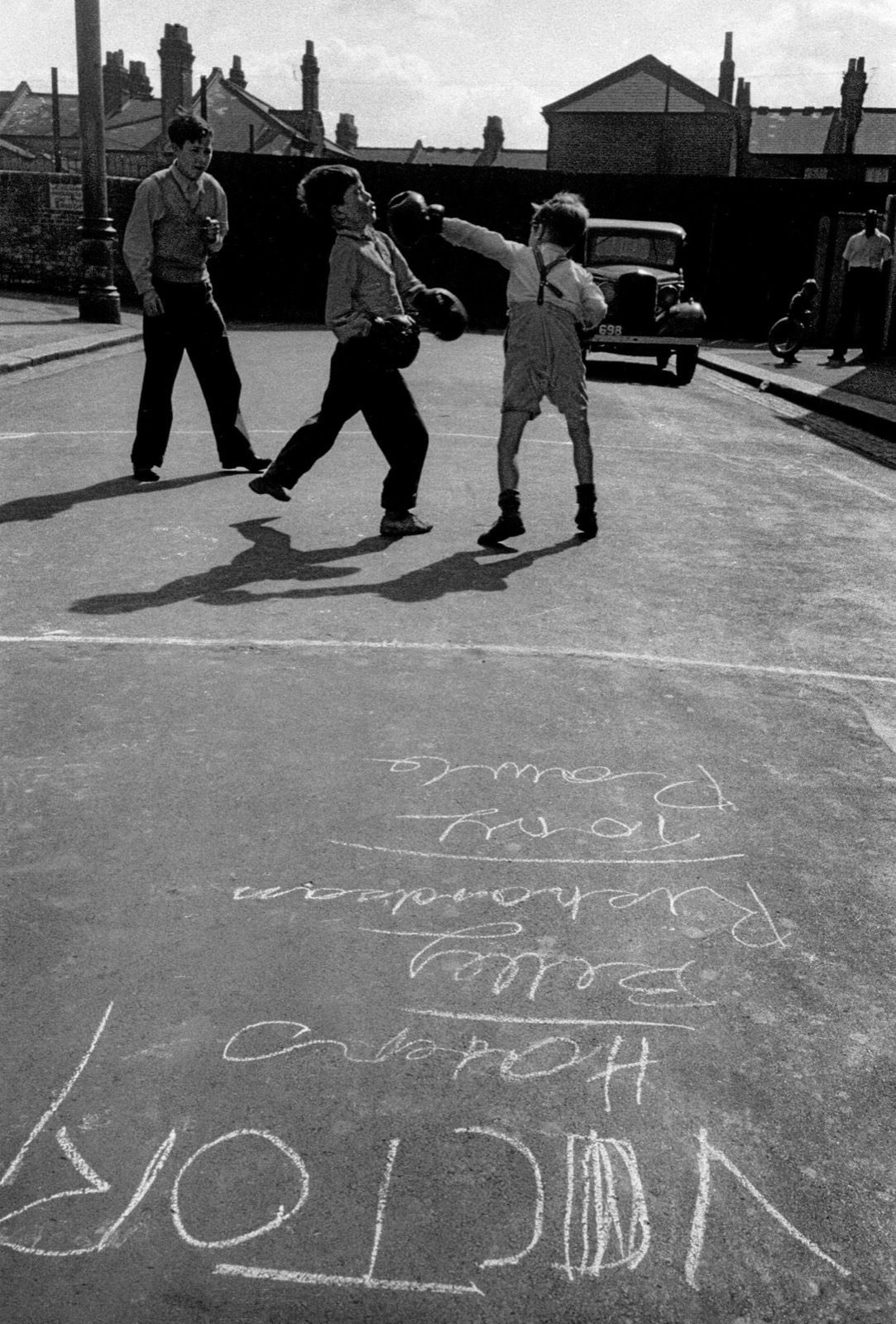

Turned on its end, the frame gives nearly half its height to empty asphalt, and the camera lets the word chalked there carry the weight: VICTORY, written away from us and so reaching the lens upside-down, the letters loosening as they climb toward a scrawled name. It is the kind of thing a photographer notices and then has to decide what to do with. Horvat decided to stand back and let the pavement run, so that the contest is pushed up into the top third of the picture and the announcement of its outcome fills the rest.
Up there the three boys are small and exact. The puncher's arm is out straight, glove to the other's jaw; the boy taking it bends at the knees, his own gloves dropped, already losing. A third watches with hands in his pockets, and beyond them a parked car and a row of terrace roofs close the scene off. Read top to bottom, the photograph tells the whole thing in order: the houses, the fight, the verdict in chalk. The vertical was the right call, and the rarer one in this set.
What the camera describes here is plain South London in 1955, and it describes it without raising its voice. Horvat (1928–2020), Italian-born and lately arrived from his Asian reportage for Life and Picture Post, was a long way from the fashion work to come; this Lambeth street belongs to the documentary years that the museums have since gone back to gather. The picture works because the maker trusted the asphalt to do half the talking.