We are standing on a cold plain where the snow has worn thin, rust-brown earth breaking through it like the pattern of an old carpet underfoot. Ahead, the land runs flat to a pair of small peaks; to the right a pale mountain leans into the frame, streaked where the wind has undressed it. And above, occupying most of everything, a sky of cream and bone, clouds lit from behind as though the afternoon were a ceremony no one stayed to watch.
Certain landscapes ask to be admired; this one asks something more compromising — to be lived in. I do not mean visited. I mean that looking at it produces in me the conviction, absurd and precise, of having already walked there, boots creaking on that crust, breath visible, nothing to say. The picture’s tenderness lies in its floor: that mottling of milk and rust, ground neither wholly winter nor wholly earth, undecided the way skin is undecided between warmth and cold. A photograph of emptiness, yes, but an emptiness with a temperature.
Hido is celebrated for the American night, for houses that keep one lamp burning; his prints have entered the museums (SFMOMA, the Getty, the Whitney). Here he photographs day, but a day with night’s discretion, nothing raised above a murmur. The archival pigment print suits this reticence: it keeps the creams from curdling into white and lets the rust stay quietly mineral. I notice, at last, that nothing here is vertical, no post, no wire, no figure. The place has no use for us. That, perhaps, is why I want so badly to stand in it.
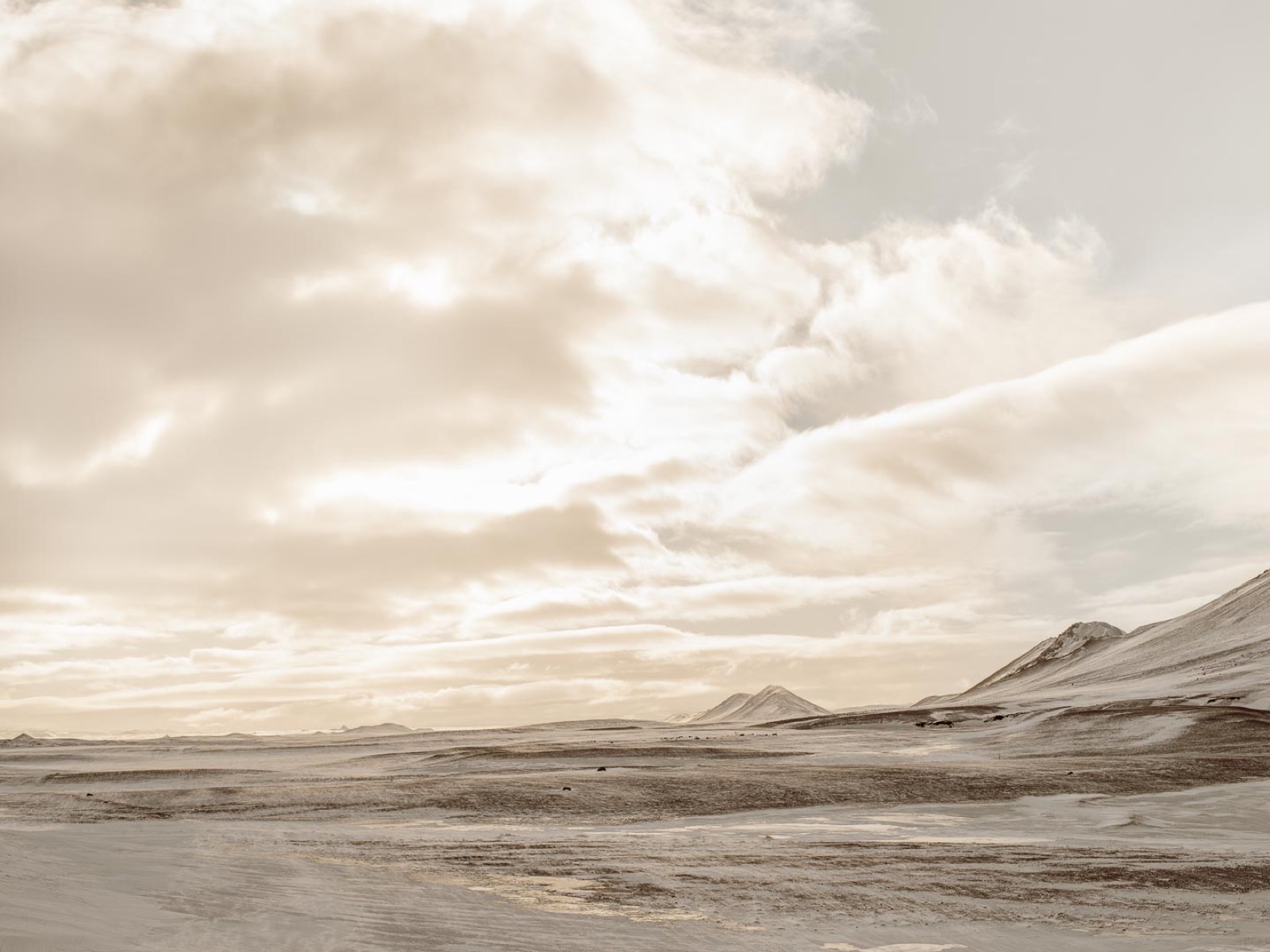

We are standing on a cold plain where the snow has worn thin, rust-brown earth breaking through it like the pattern of an old carpet underfoot. Ahead, the land runs flat to a pair of small peaks; to the right a pale mountain leans into the frame, streaked where the wind has undressed it. And above, occupying most of everything, a sky of cream and bone, clouds lit from behind as though the afternoon were a ceremony no one stayed to watch.
Certain landscapes ask to be admired; this one asks something more compromising — to be lived in. I do not mean visited. I mean that looking at it produces in me the conviction, absurd and precise, of having already walked there, boots creaking on that crust, breath visible, nothing to say. The picture’s tenderness lies in its floor: that mottling of milk and rust, ground neither wholly winter nor wholly earth, undecided the way skin is undecided between warmth and cold. A photograph of emptiness, yes, but an emptiness with a temperature.
Hido is celebrated for the American night, for houses that keep one lamp burning; his prints have entered the museums (SFMOMA, the Getty, the Whitney). Here he photographs day, but a day with night’s discretion, nothing raised above a murmur. The archival pigment print suits this reticence: it keeps the creams from curdling into white and lets the rust stay quietly mineral. I notice, at last, that nothing here is vertical, no post, no wire, no figure. The place has no use for us. That, perhaps, is why I want so badly to stand in it.