The picture within a picture is one of the oldest tricks in Western art, from a painted mirror in a Flemish interior to the framed ancestor hung above a mantel, and Maier drags that whole lineage out into a muddy Chicago backyard. Down in the corner, propped among a claw-foot tub, split boards and an axe, sits a framed photograph of the artist herself, beret on, camera lifted to her eye. It is a portrait treated as furniture, a face made object, left out with the trash of a house being cleared.
What makes it hers is the refusal to keep the two orders apart. Behind the frame the yard goes on being ordinary: two black garage bays, a white picket fence bent by winters, a wire mesh run, bare trees clawing a pale March sky, a bundled figure standing off by the boards. The framed print belongs to the same economy as the discarded tub and the loose lumber, an image that has finished circulating and washed up here, waiting to be carried off or thrown away.
She understood a photograph as a thing with a life in the world, handled, framed, abandoned, and she staged her own likeness inside that fate. This gelatin silver print, made later from her negative, gives the found frame its own crisp grays and lets the deep garage shadow stay properly black. The vast archive was found only after she died, boxes of exactly such objects; here, decades early, she had already pictured her portrait as one more item set out at the edge of a yard.
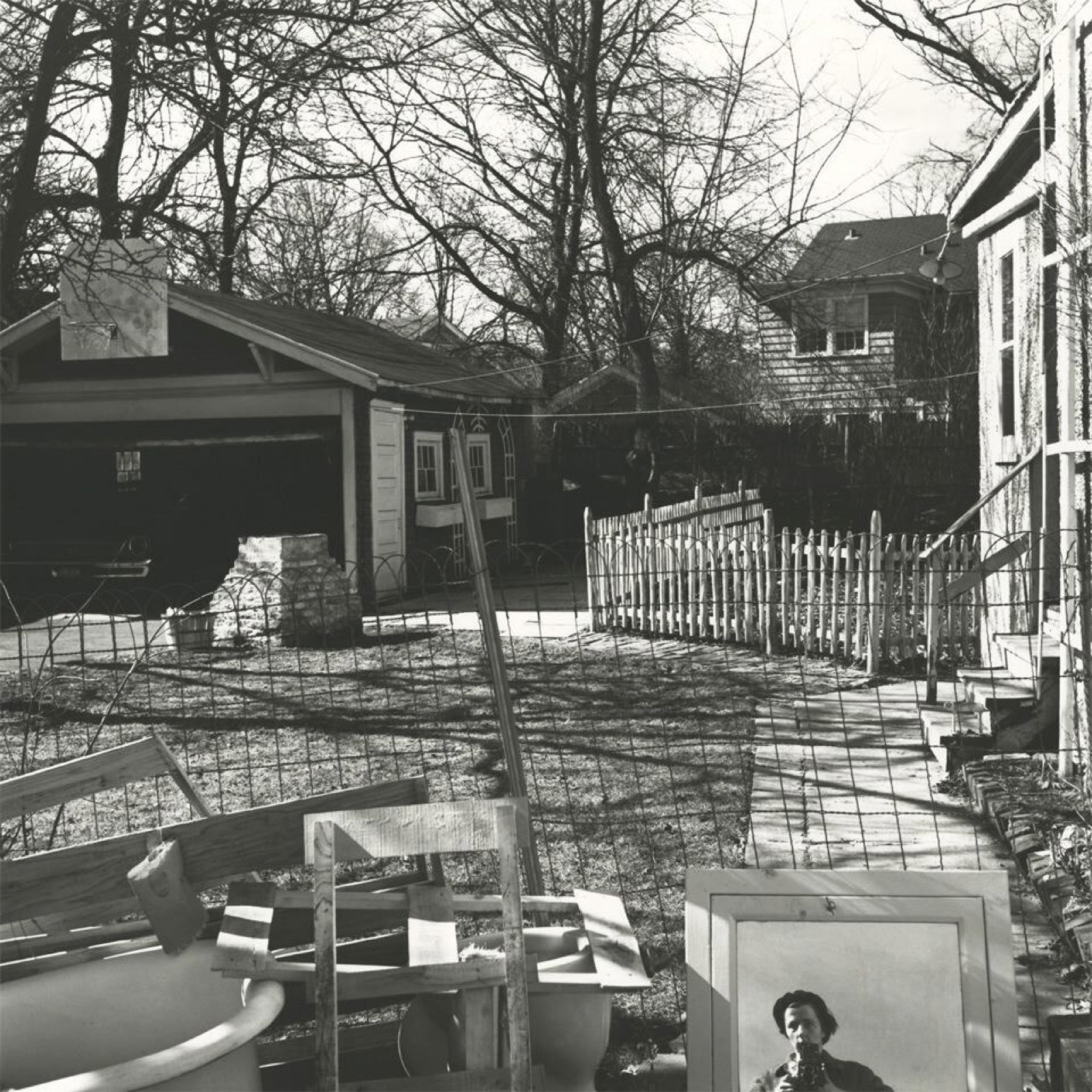

The picture within a picture is one of the oldest tricks in Western art, from a painted mirror in a Flemish interior to the framed ancestor hung above a mantel, and Maier drags that whole lineage out into a muddy Chicago backyard. Down in the corner, propped among a claw-foot tub, split boards and an axe, sits a framed photograph of the artist herself, beret on, camera lifted to her eye. It is a portrait treated as furniture, a face made object, left out with the trash of a house being cleared.
What makes it hers is the refusal to keep the two orders apart. Behind the frame the yard goes on being ordinary: two black garage bays, a white picket fence bent by winters, a wire mesh run, bare trees clawing a pale March sky, a bundled figure standing off by the boards. The framed print belongs to the same economy as the discarded tub and the loose lumber, an image that has finished circulating and washed up here, waiting to be carried off or thrown away.
She understood a photograph as a thing with a life in the world, handled, framed, abandoned, and she staged her own likeness inside that fate. This gelatin silver print, made later from her negative, gives the found frame its own crisp grays and lets the deep garage shadow stay properly black. The vast archive was found only after she died, boxes of exactly such objects; here, decades early, she had already pictured her portrait as one more item set out at the edge of a yard.