The largest bubble will thin, wobble, and vanish against the brick any second now; a moment ago it was only breath and a filmed wire ring. Maier catches the child mid-exhale, lips pursed at the wand, a leather flight cap buckled under the chin, one mittened hand steadying the little bottle of solution. Between mouth and wall drifts a chain of trembling, silver-rimmed spheres.
What lifts the picture beyond a snapshot of winter play is its economy of tone. The boy stands in near silhouette against a sunlit brick wall, and his own dark shadow rises beside him on the brick, so that the bubbles float in the one bright corridor between figure and shadow. Their skins catch a rim of light, fragile and exact. Nothing here is incidental. Maier composes with the rigor of a studio photographer while keeping the spontaneity of the street; the profile recalls a Victorian cutout, the shadow a second, coarser self.
Working with a twin-lens Rolleiflex held low, Maier photographed children with unusual gravity, granting them the seriousness they grant their own games. This scene stayed among the tens of thousands of negatives she never printed, discovered only after her death and printed later from her film. The gelatin silver sheet renders the wall’s warm grit and the bubbles’ near-invisible membranes with equal care. She fixes what physics will not let last: a handful of iridescent globes, held a fraction of a second longer than the world allowed the child to keep them.
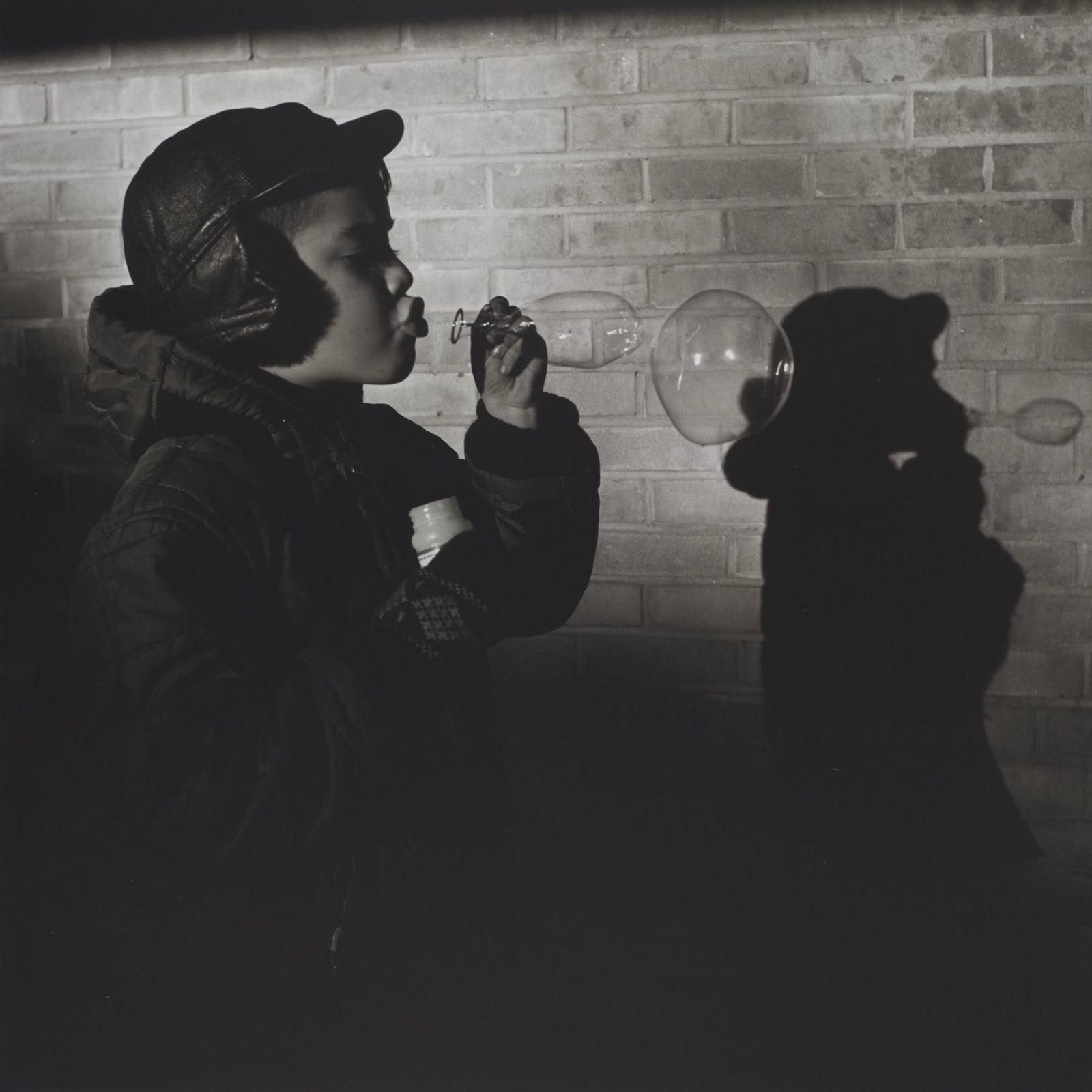

The largest bubble will thin, wobble, and vanish against the brick any second now; a moment ago it was only breath and a filmed wire ring. Maier catches the child mid-exhale, lips pursed at the wand, a leather flight cap buckled under the chin, one mittened hand steadying the little bottle of solution. Between mouth and wall drifts a chain of trembling, silver-rimmed spheres.
What lifts the picture beyond a snapshot of winter play is its economy of tone. The boy stands in near silhouette against a sunlit brick wall, and his own dark shadow rises beside him on the brick, so that the bubbles float in the one bright corridor between figure and shadow. Their skins catch a rim of light, fragile and exact. Nothing here is incidental. Maier composes with the rigor of a studio photographer while keeping the spontaneity of the street; the profile recalls a Victorian cutout, the shadow a second, coarser self.
Working with a twin-lens Rolleiflex held low, Maier photographed children with unusual gravity, granting them the seriousness they grant their own games. This scene stayed among the tens of thousands of negatives she never printed, discovered only after her death and printed later from her film. The gelatin silver sheet renders the wall’s warm grit and the bubbles’ near-invisible membranes with equal care. She fixes what physics will not let last: a handful of iridescent globes, held a fraction of a second longer than the world allowed the child to keep them.