Begin with one small tuft, a single dark whisk of dried algae combed flat against the pale silt as if a brush had swept past and lifted. It is nothing, a scrap of decay on a drying flat, and yet it sets the terms for everything around it: once you have read that one stroke, the whole cracked surface resolves into hundreds of them, feathered rosettes and swept commas of black matter scattered across the bleached clay. The detail teaches the eye its grammar.
A photograph like this reminds us how readily we convert ruin into calligraphy. What the picture actually records is stranded organic waste on a seabed left dry, small twigs and a scratched line crossing a shallow hollow. We are tempted to call it beautiful, to see ink painting where there is only rot and sediment, and that temptation is worth distrusting even as we yield to it. The camera does not editorialize; it simply looks straight down and lets us mistake the world’s debris for art.
The looking is served by the making. A gelatin silver print toned in selenium the year after the exposure gives these darks their sooty precision and holds the pale ground open across a long scale, so each filament stays legible against the grain. The choice matters: only a print with this tonal reach could keep decay and delicacy in the same frame without letting one swallow the other. The photographer, founder of the gallery that shows it, trusts a dry flat of mud to carry the weight of an image.
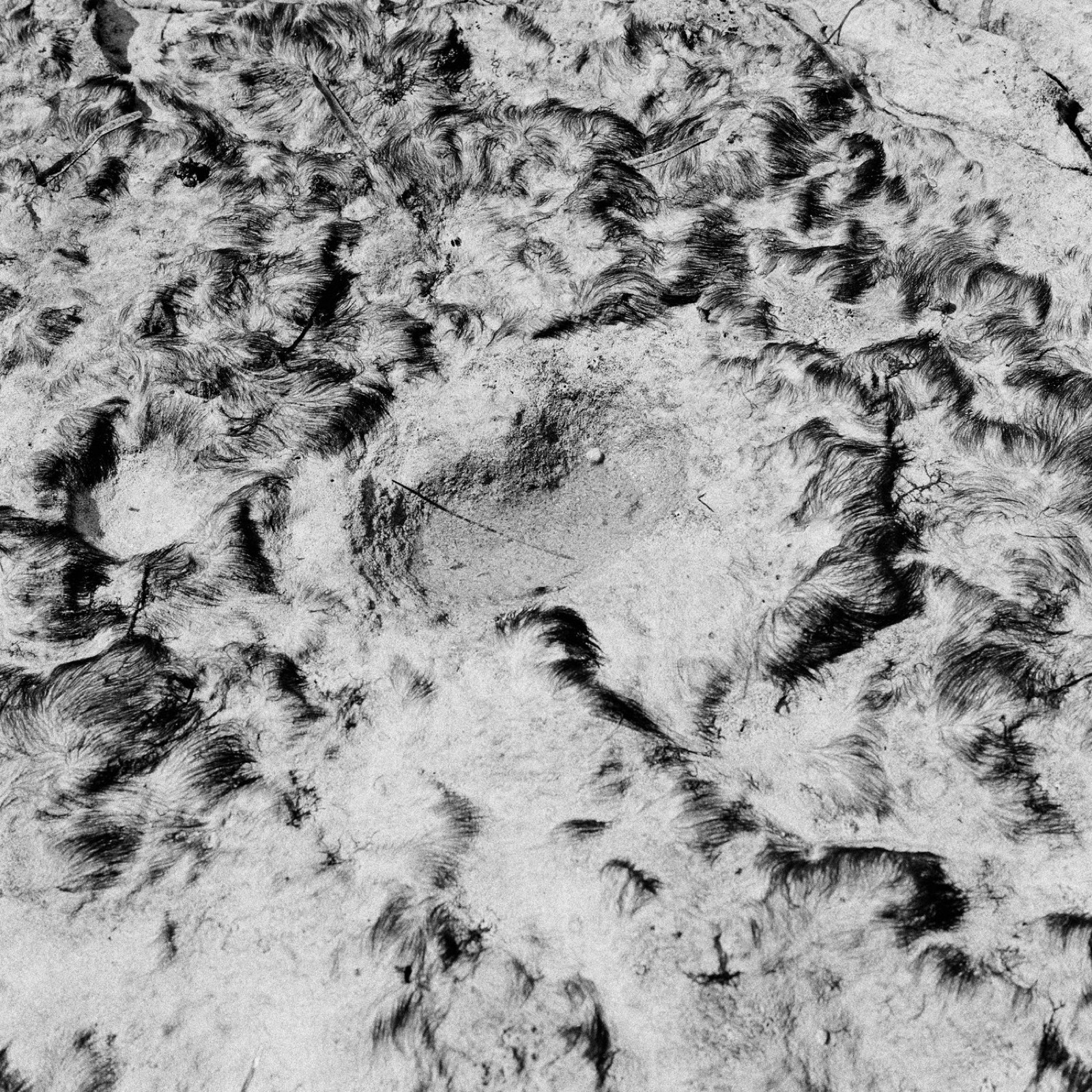

Begin with one small tuft, a single dark whisk of dried algae combed flat against the pale silt as if a brush had swept past and lifted. It is nothing, a scrap of decay on a drying flat, and yet it sets the terms for everything around it: once you have read that one stroke, the whole cracked surface resolves into hundreds of them, feathered rosettes and swept commas of black matter scattered across the bleached clay. The detail teaches the eye its grammar.
A photograph like this reminds us how readily we convert ruin into calligraphy. What the picture actually records is stranded organic waste on a seabed left dry, small twigs and a scratched line crossing a shallow hollow. We are tempted to call it beautiful, to see ink painting where there is only rot and sediment, and that temptation is worth distrusting even as we yield to it. The camera does not editorialize; it simply looks straight down and lets us mistake the world’s debris for art.
The looking is served by the making. A gelatin silver print toned in selenium the year after the exposure gives these darks their sooty precision and holds the pale ground open across a long scale, so each filament stays legible against the grain. The choice matters: only a print with this tonal reach could keep decay and delicacy in the same frame without letting one swallow the other. The photographer, founder of the gallery that shows it, trusts a dry flat of mud to carry the weight of an image.