Along the mottled wall a faint prism of light has broken into a soft vertical bar of color, and against this dim, papered surface a young woman stands, bare to the waist, a grey skirt low on her hips, her long hair falling over one shoulder. Her own shadow spreads huge behind her to the right. The room is worn and specific — seams splitting the wallpaper, a lampshade intruding at the edge, a bed with pale, rumpled bedding at the lower left.
The picture converses openly with the history of art. The standing nude lit by a window is among the oldest subjects in Western painting, and Hido positions his model within that long lineage while stripping away its idealization; the light is merely available and cool, and the pose is neither classical nor pornographic but simply held — self-possessed, a little guarded, entirely her own. She meets the camera without ever performing for it.
Surface is where the meaning finally settles. Rendered as an archival pigment print on Dibond, the image preserves the grain of the wallpaper and the slight rainbow fringe of refracted light, physical evidence of an interior genuinely inhabited at the moment of exposure. Part of Excerpts from Silver Meadows, it treats the body as one more found room — a place with its own history, dimly lit, and patiently, unhurriedly described.
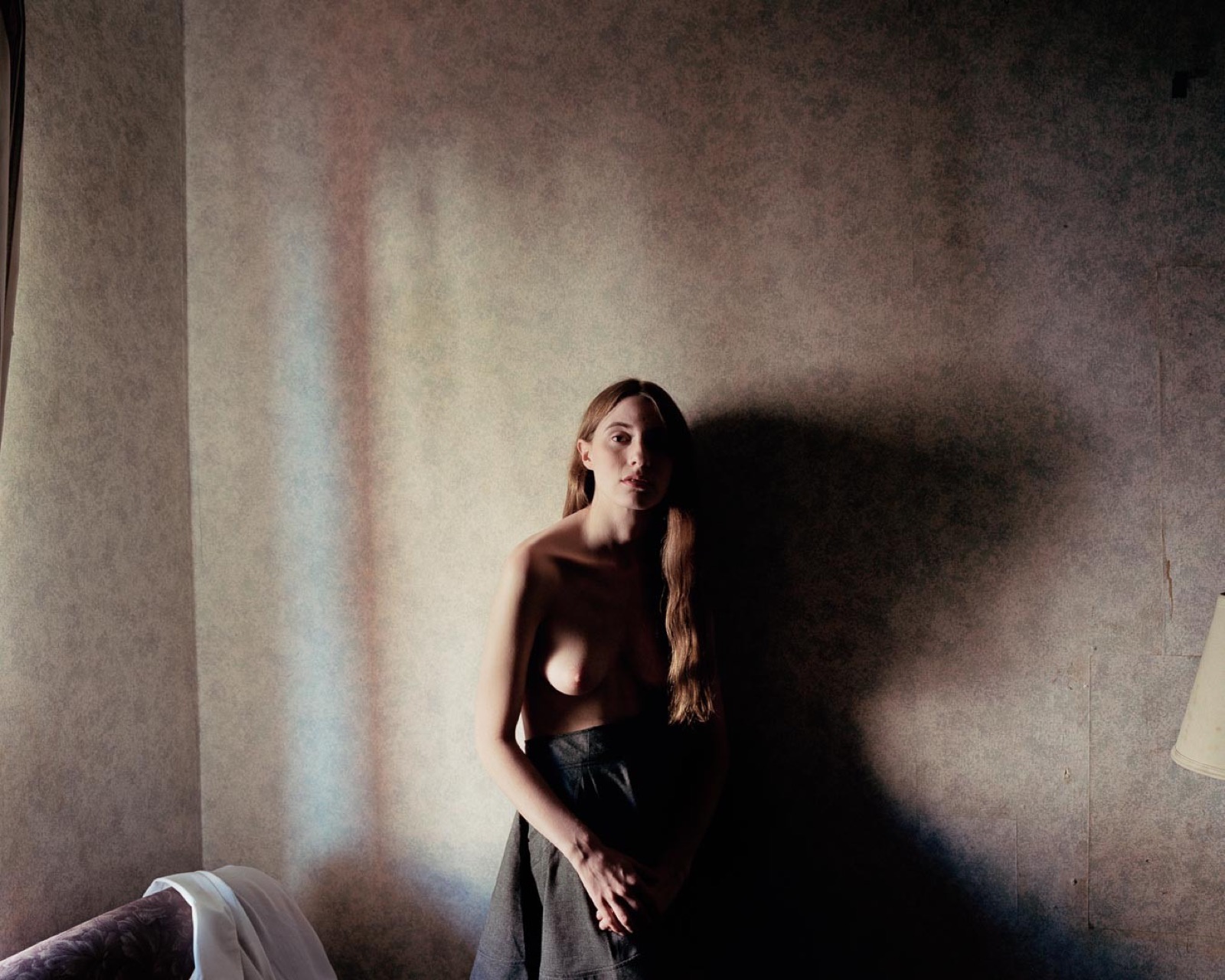

Along the mottled wall a faint prism of light has broken into a soft vertical bar of color, and against this dim, papered surface a young woman stands, bare to the waist, a grey skirt low on her hips, her long hair falling over one shoulder. Her own shadow spreads huge behind her to the right. The room is worn and specific — seams splitting the wallpaper, a lampshade intruding at the edge, a bed with pale, rumpled bedding at the lower left.
The picture converses openly with the history of art. The standing nude lit by a window is among the oldest subjects in Western painting, and Hido positions his model within that long lineage while stripping away its idealization; the light is merely available and cool, and the pose is neither classical nor pornographic but simply held — self-possessed, a little guarded, entirely her own. She meets the camera without ever performing for it.
Surface is where the meaning finally settles. Rendered as an archival pigment print on Dibond, the image preserves the grain of the wallpaper and the slight rainbow fringe of refracted light, physical evidence of an interior genuinely inhabited at the moment of exposure. Part of Excerpts from Silver Meadows, it treats the body as one more found room — a place with its own history, dimly lit, and patiently, unhurriedly described.