Hand-signed by the artist, with title, date, and edition number inscribed in ink on an archival label affixed to the reverse side of the mounted photograph.
Why does photography keep coming back to the table? Partly because the table was there at the start: the first cameras, saddled with long exposures, needed subjects that would hold still, and fruit obliged. Cig Harvey knows the inheritance. A tarnished copper vessel lies tipped on a table draped in deep blue cloth, and from its mouth a freight of cherries has spilled and scattered, glowing like coals in a room otherwise sinking into darkness.
The description is almost too good. Each cherry wears the studio's highlight like a bead of glass; the stems tangle in wiry copper curls; the cloth drinks the light the fruit throws back. Painters spent centuries earning that shine one stroke at a time, and the lens acquires it wholesale — which is precisely why we begin to doubt it, wondering whether such lacquered perfection can be fruit at all. That suspicion is the picture's engine. A spill is an event, and this still life behaves like a report from one: something has just happened, and nobody has come to clean it up.
So the photograph enters the oldest genre on its own terms: no skull, no hourglass, just perishables doing the work of mortality under a borrowed Dutch darkness. And the opening question answers itself. The table is where the medium rehearses patience — where it slows to the speed of ripening, and waits.
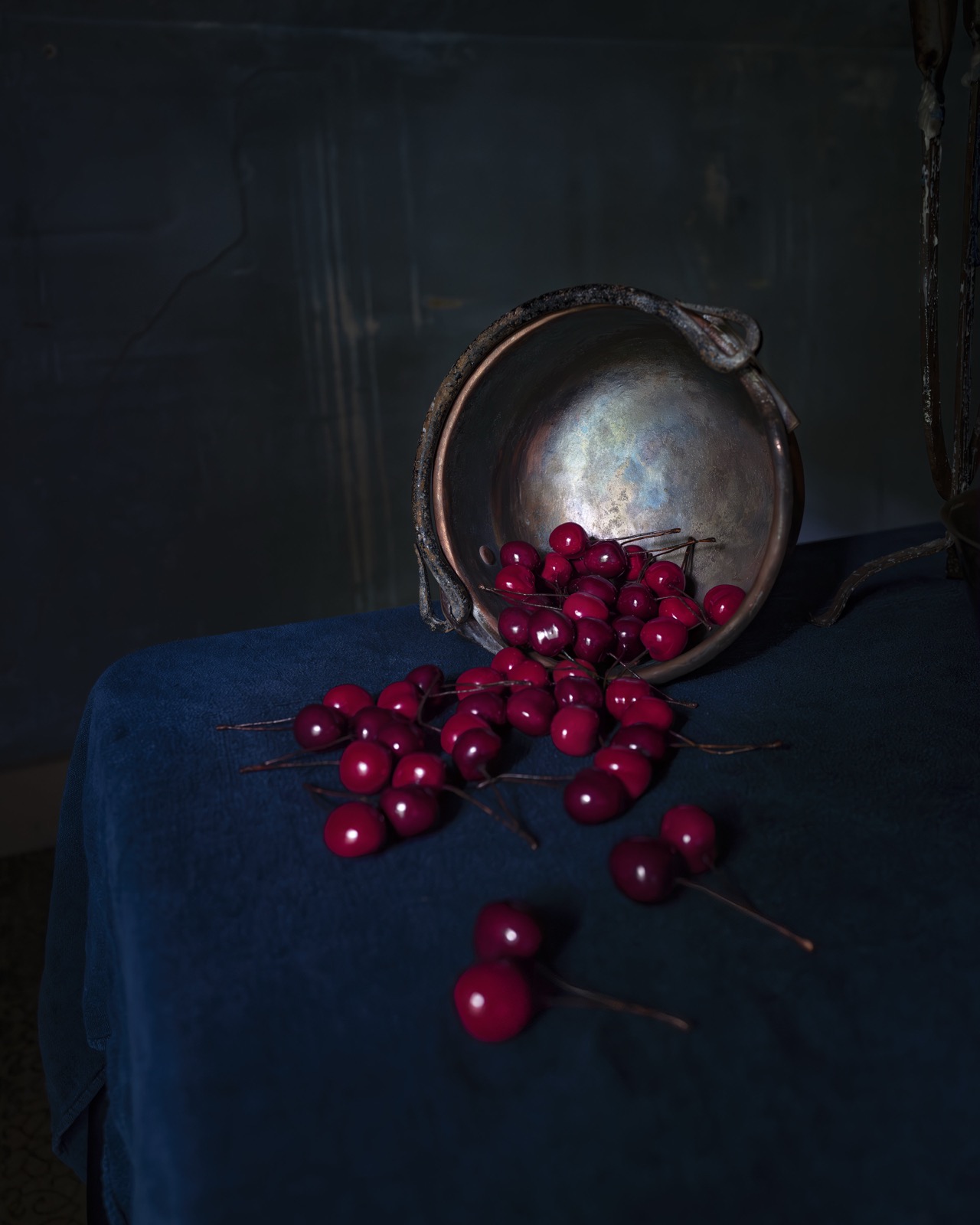

Why does photography keep coming back to the table? Partly because the table was there at the start: the first cameras, saddled with long exposures, needed subjects that would hold still, and fruit obliged. Cig Harvey knows the inheritance. A tarnished copper vessel lies tipped on a table draped in deep blue cloth, and from its mouth a freight of cherries has spilled and scattered, glowing like coals in a room otherwise sinking into darkness.
The description is almost too good. Each cherry wears the studio's highlight like a bead of glass; the stems tangle in wiry copper curls; the cloth drinks the light the fruit throws back. Painters spent centuries earning that shine one stroke at a time, and the lens acquires it wholesale — which is precisely why we begin to doubt it, wondering whether such lacquered perfection can be fruit at all. That suspicion is the picture's engine. A spill is an event, and this still life behaves like a report from one: something has just happened, and nobody has come to clean it up.
So the photograph enters the oldest genre on its own terms: no skull, no hourglass, just perishables doing the work of mortality under a borrowed Dutch darkness. And the opening question answers itself. The table is where the medium rehearses patience — where it slows to the speed of ripening, and waits.