Hand-signed by the artist, with title, date, and edition number inscribed in ink on an archival label affixed to the reverse side of the mounted photograph.
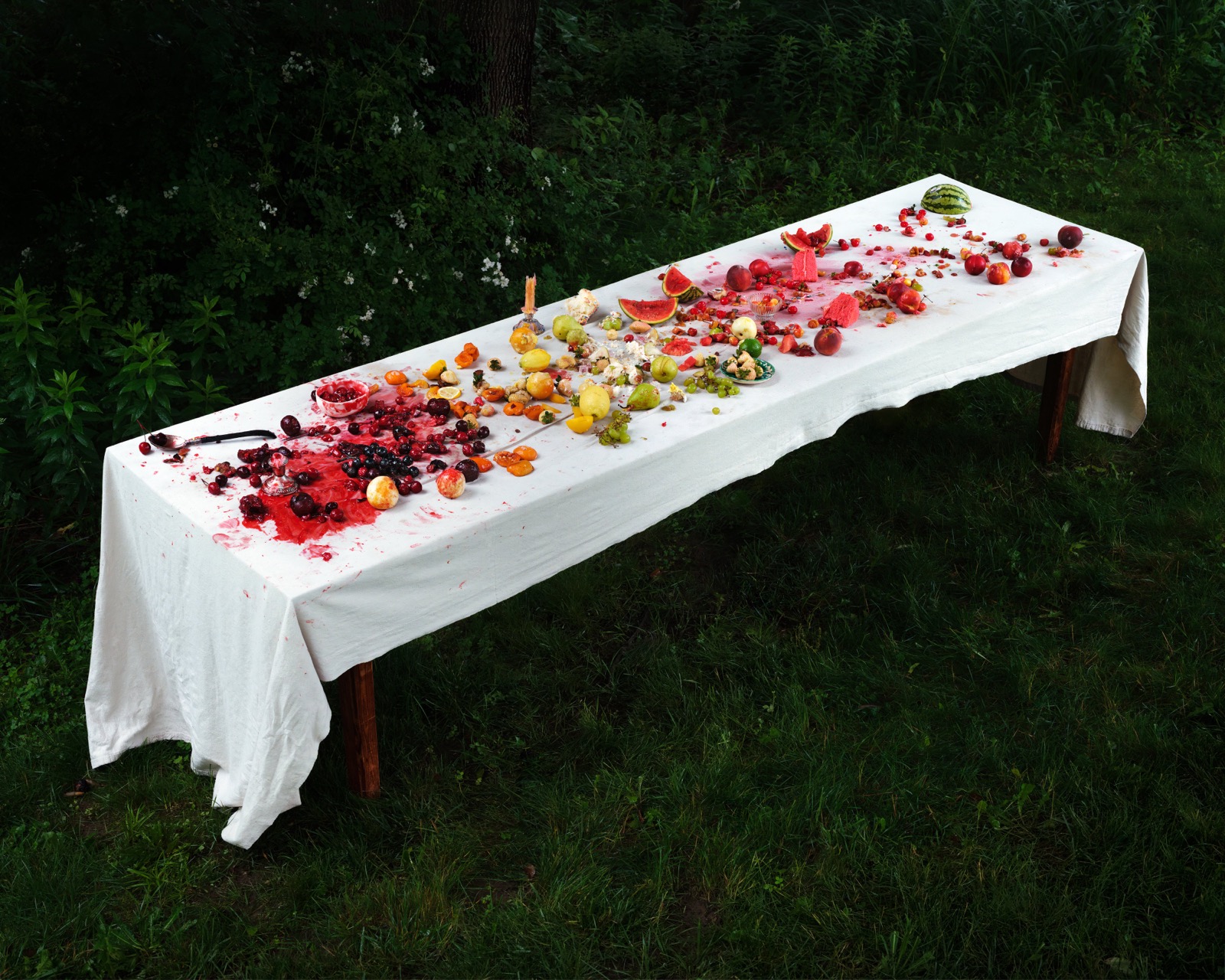
Who has just left this table? The cloth is spread the length of a banquet, white in the bruised dusk of the Maine woods, and the answer arrives not in a face but in the stain: at the near end the cloth is soaked through with crimson, a pulp of crushed berries gone almost to blood, as if the feast had ended in something more violent than appetite. That smear is what catches me and will not let go. It is not arranged. It has the look of an accident the camera arrived too late to prevent, and too soon to leave alone.
I read the rest as a sentence trailing off. Toward the far end the fruit is still whole, or only halved — a watermelon opened to its wet pink, pomegranates split, plums and pears set in a loose constellation across the linen. The eye travels right to left, from order into ruin, and the deeper green of the forest presses in at every edge, holding the white table the way night holds a lit window. Small white flowers glow faintly in the dark hedge behind. They are not part of the feast; they are the witnesses.
This is Cig Harvey's register exactly — the staged tableau out of doors, color pushed to the pitch of feeling, beauty and spoilage made to share one surface. The midnight feast of childhood was a secret pleasure; here the secret has a wound in it. I keep returning to the place where the cloth drinks the red. Everything else can be named — fruit, table, grass, woods. That one stain refuses the inventory, and that is why the picture stays.
Who has just left this table? The cloth is spread the length of a banquet, white in the bruised dusk of the Maine woods, and the answer arrives not in a face but in the stain: at the near end the cloth is soaked through with crimson, a pulp of crushed berries gone almost to blood, as if the feast had ended in something more violent than appetite. That smear is what catches me and will not let go. It is not arranged. It has the look of an accident the camera arrived too late to prevent, and too soon to leave alone.
I read the rest as a sentence trailing off. Toward the far end the fruit is still whole, or only halved — a watermelon opened to its wet pink, pomegranates split, plums and pears set in a loose constellation across the linen. The eye travels right to left, from order into ruin, and the deeper green of the forest presses in at every edge, holding the white table the way night holds a lit window. Small white flowers glow faintly in the dark hedge behind. They are not part of the feast; they are the witnesses.
This is Cig Harvey's register exactly — the staged tableau out of doors, color pushed to the pitch of feeling, beauty and spoilage made to share one surface. The midnight feast of childhood was a secret pleasure; here the secret has a wound in it. I keep returning to the place where the cloth drinks the red. Everything else can be named — fruit, table, grass, woods. That one stain refuses the inventory, and that is why the picture stays.