What is a tree, that a photograph should want it so badly? Hido gives us one, alone on a rise, its bare crown thrown wide and one long branch drooping as if tired, emerging from a mist that dissolves the ground beneath it. The sky is an improbable teal, streaked with cloud; dry golden grass burns at the base of the trunk; a second branch reaches in from the upper left, framing the solitary subject like a hand at the edge of the picture.
The image belongs to a very old vernacular, the specimen tree isolated for contemplation, a motif that runs from nineteenth-century survey photographs through the family snapshot taken because a place mattered. Hido's fog strips away context and leaves only the thing and its aura, so the picture works almost as a relic, an object standing in for a feeling of place that words would flatten.
As an archival pigment print mounted on Dibond, the photograph has a physical presence that matters to its meaning; it is a made thing, a surface you could touch, holding an image of something you never could. From the artist's unpublished work, it trades narrative for encounter. The mist is not atmosphere alone but a kind of erasure, and the tree, half-taken by it, becomes a monument to the ordinary act of noticing before the noticing is gone.
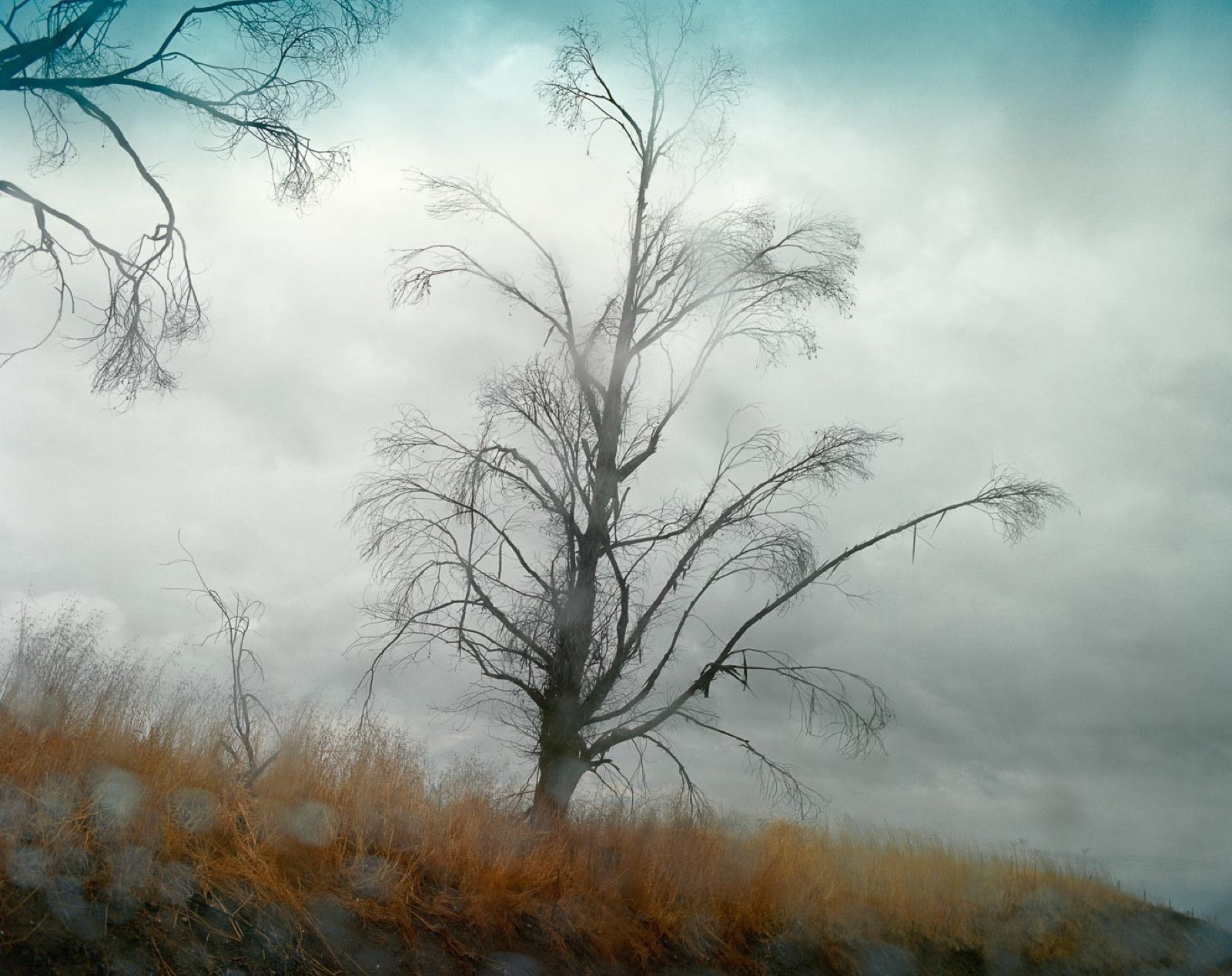

What is a tree, that a photograph should want it so badly? Hido gives us one, alone on a rise, its bare crown thrown wide and one long branch drooping as if tired, emerging from a mist that dissolves the ground beneath it. The sky is an improbable teal, streaked with cloud; dry golden grass burns at the base of the trunk; a second branch reaches in from the upper left, framing the solitary subject like a hand at the edge of the picture.
The image belongs to a very old vernacular, the specimen tree isolated for contemplation, a motif that runs from nineteenth-century survey photographs through the family snapshot taken because a place mattered. Hido's fog strips away context and leaves only the thing and its aura, so the picture works almost as a relic, an object standing in for a feeling of place that words would flatten.
As an archival pigment print mounted on Dibond, the photograph has a physical presence that matters to its meaning; it is a made thing, a surface you could touch, holding an image of something you never could. From the artist's unpublished work, it trades narrative for encounter. The mist is not atmosphere alone but a kind of erasure, and the tree, half-taken by it, becomes a monument to the ordinary act of noticing before the noticing is gone.