We stand near enough to read the nap of the felt, the wide flat brim of a Spanish hat throwing its underside into shadow, near enough to count the freckles under her eyes, the small white crescents of a French manicure where her fingers work a black ribbon under her chin. Everything close to us is black: hat, bow, turtleneck; everything beyond her dissolves into a pale, overexposed blur. The picture puts us at conversational distance and lets the rest of Sevilla evaporate.
Her hand is caught in the middle of a small, ordinary task: fastening or loosening the chin strap, fingers pinching the ribbon into a bow. It is the kind of touch photographs preserve best, too minor for anyone to have posed, and it carries the image’s whole charge. A thin silver hoop swings at her ear, a single loose strand of hair escapes across the jaw, and these tiny accidents keep the severe black-and-white geometry from freezing into a logo.
Weber has always known fashion photographs live twice, once on the magazine page and again as objects to be held, and the gelatin silver print belongs to that second, slower life. Its blacks are dense, the felt and wool reading as distinct materials rather than a single flat mass, the paper carrying a physical weight the screen cannot. He remade American fashion imagery in the 1980s, and even a strict studio portrait like this keeps his old faith: that a hat, a hoop, and a passing gesture can hold a person entire.
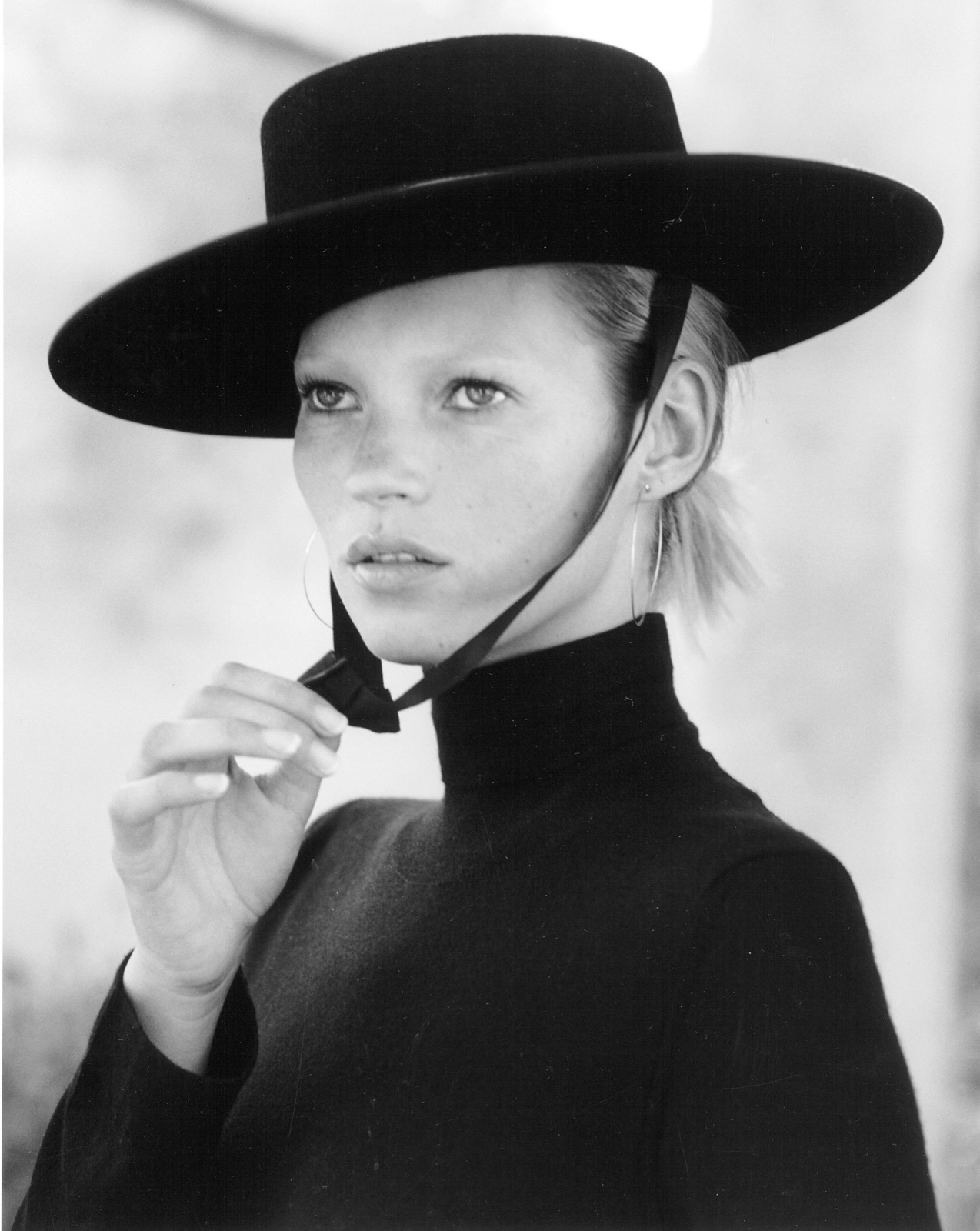

We stand near enough to read the nap of the felt, the wide flat brim of a Spanish hat throwing its underside into shadow, near enough to count the freckles under her eyes, the small white crescents of a French manicure where her fingers work a black ribbon under her chin. Everything close to us is black: hat, bow, turtleneck; everything beyond her dissolves into a pale, overexposed blur. The picture puts us at conversational distance and lets the rest of Sevilla evaporate.
Her hand is caught in the middle of a small, ordinary task: fastening or loosening the chin strap, fingers pinching the ribbon into a bow. It is the kind of touch photographs preserve best, too minor for anyone to have posed, and it carries the image’s whole charge. A thin silver hoop swings at her ear, a single loose strand of hair escapes across the jaw, and these tiny accidents keep the severe black-and-white geometry from freezing into a logo.
Weber has always known fashion photographs live twice, once on the magazine page and again as objects to be held, and the gelatin silver print belongs to that second, slower life. Its blacks are dense, the felt and wool reading as distinct materials rather than a single flat mass, the paper carrying a physical weight the screen cannot. He remade American fashion imagery in the 1980s, and even a strict studio portrait like this keeps his old faith: that a hat, a hoop, and a passing gesture can hold a person entire.