Whoever lived here has gone, and the room keeps the shape of their leaving: a stack of children's books abandoned on the carpet, a crocheted blanket half-unfolded, a plastic bag and a small box left by the skirting where a socket hangs loose. Nobody appears. The absence is the subject, and Hido has framed it with the deliberateness of a still life, letting the vacated house stand in for a whole grammar of American mobility and foreclosure.
A white six-panel door sits ajar at the centre, and through it the afternoon pushes a warm rectangle of light across the wall and floor, printed with the soft shadow of leaves outside. The rest of the room is cool, mauve-grey, faintly bruised. This is a constructed encounter as much as a found one: the photographer arrives after the fact, choosing what the light will underline and what it will leave in shadow, and the choice is unmistakably authored.
Belonging to Between the Two, the image reads less as documentary than as set, an interior emptied for us to project into. The archival pigment print on aluminium holds the wall's texture and the carpet's nap with a flat, forensic patience, so that these humble leftovers acquire the weight of evidence. What has happened is never stated. We are left to assemble the story from a blanket, some books, and a door that no longer closes on anyone.
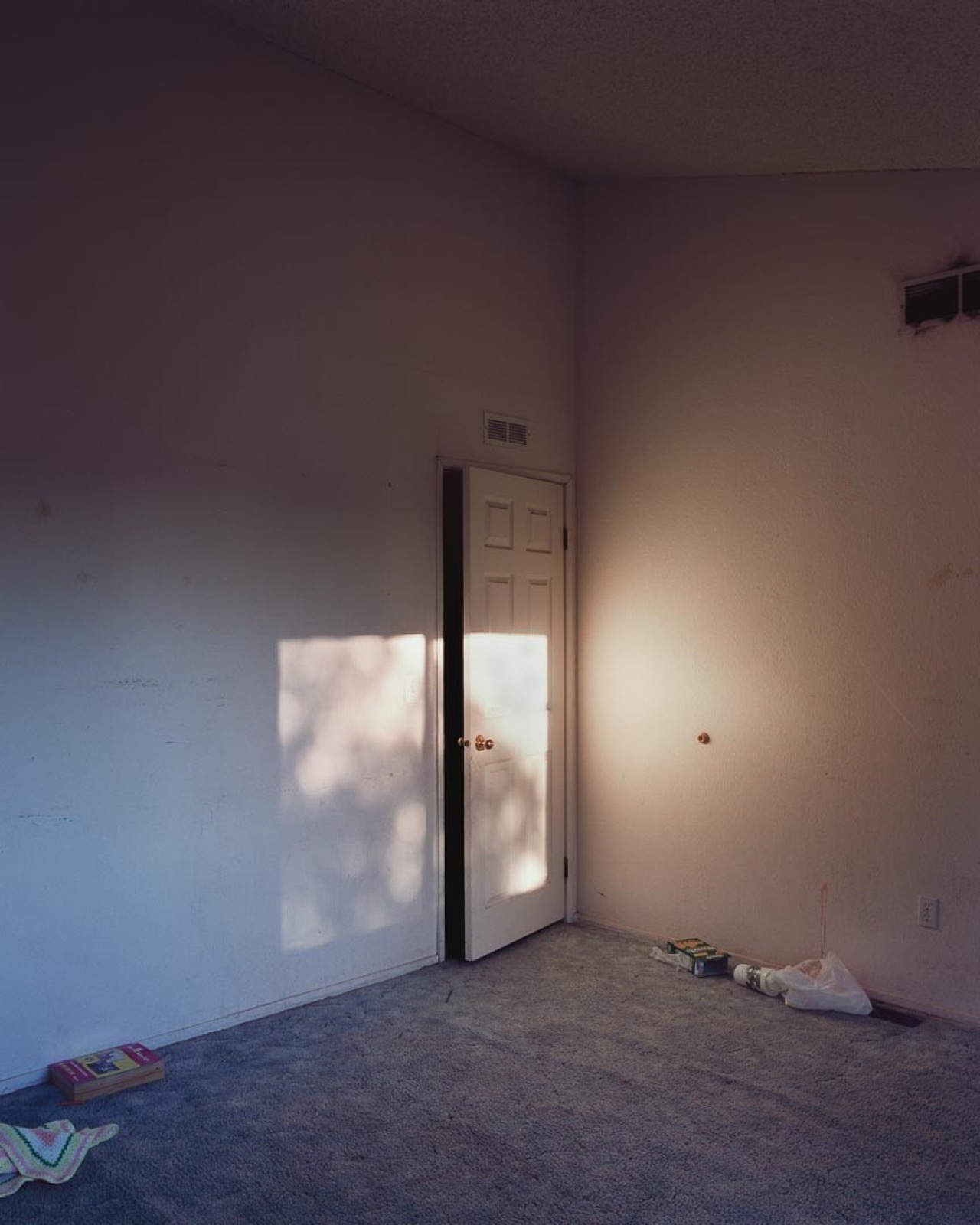

Whoever lived here has gone, and the room keeps the shape of their leaving: a stack of children's books abandoned on the carpet, a crocheted blanket half-unfolded, a plastic bag and a small box left by the skirting where a socket hangs loose. Nobody appears. The absence is the subject, and Hido has framed it with the deliberateness of a still life, letting the vacated house stand in for a whole grammar of American mobility and foreclosure.
A white six-panel door sits ajar at the centre, and through it the afternoon pushes a warm rectangle of light across the wall and floor, printed with the soft shadow of leaves outside. The rest of the room is cool, mauve-grey, faintly bruised. This is a constructed encounter as much as a found one: the photographer arrives after the fact, choosing what the light will underline and what it will leave in shadow, and the choice is unmistakably authored.
Belonging to Between the Two, the image reads less as documentary than as set, an interior emptied for us to project into. The archival pigment print on aluminium holds the wall's texture and the carpet's nap with a flat, forensic patience, so that these humble leftovers acquire the weight of evidence. What has happened is never stated. We are left to assemble the story from a blanket, some books, and a door that no longer closes on anyone.