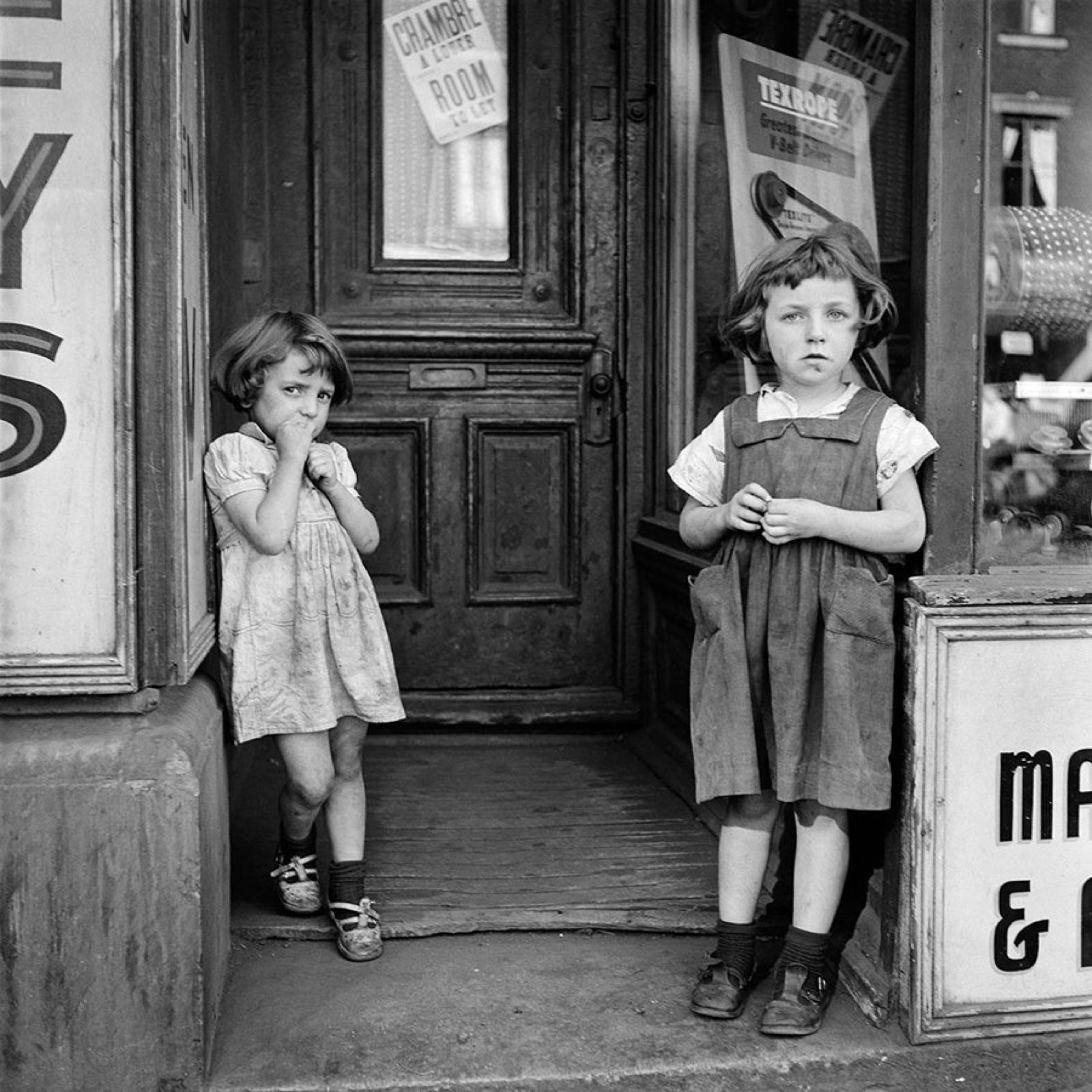
Two girls hold the doorway of a shop as if it were the edge of the known world. The younger presses back against the jamb, fingers at her lips, wary; the older stands her ground on the worn threshold, hands folded over something small, meeting the camera with a gravity beyond her years. Between them a heavy wooden door, a hand-lettered CHAMBRE À LOUER, and the French of the signs placing this street somewhere in working-class Canada.
Maier worked at the level of childhood without once condescending to it. Crouching to the height of her Rolleiflex, she let the girls return her look on equal terms, so the picture becomes less a study of hard circumstance than a negotiation between two children and a stranger who took them seriously. The scuffed shoes, the darned socks, the dress worn thin at the hem are set down plainly, and so is the composure with which the older girl wears them.
For most of her life Maier showed work like this to no one. A nanny by profession, she made more than a hundred thousand negatives that stayed in storage until a Chicago auction in 2007 delivered them, and her, to a posterity she never sought. Seen now, the girls' steady attention reads like a message held for half a century and only lately opened. This gelatin silver print, made later from her negative, keeps their vigil intact.
Two girls hold the doorway of a shop as if it were the edge of the known world. The younger presses back against the jamb, fingers at her lips, wary; the older stands her ground on the worn threshold, hands folded over something small, meeting the camera with a gravity beyond her years. Between them a heavy wooden door, a hand-lettered CHAMBRE À LOUER, and the French of the signs placing this street somewhere in working-class Canada.
Maier worked at the level of childhood without once condescending to it. Crouching to the height of her Rolleiflex, she let the girls return her look on equal terms, so the picture becomes less a study of hard circumstance than a negotiation between two children and a stranger who took them seriously. The scuffed shoes, the darned socks, the dress worn thin at the hem are set down plainly, and so is the composure with which the older girl wears them.
For most of her life Maier showed work like this to no one. A nanny by profession, she made more than a hundred thousand negatives that stayed in storage until a Chicago auction in 2007 delivered them, and her, to a posterity she never sought. Seen now, the girls' steady attention reads like a message held for half a century and only lately opened. This gelatin silver print, made later from her negative, keeps their vigil intact.