An empty shopping cart has come to rest under the trees at the edge of the frame, a long way from any store, and that is as much story as this night is prepared to tell. The rest is a wall: pale siding taking up most of the picture, four windows, no door, and across the whole of it the shadow of a winter tree thrown by a light behind the photographer's back, so sharp that the architecture seems to be wearing the landscape. Hido's work was to recognize the picture and stand in the right place — which is, as usual, the hard part.
Somebody is home. One downstairs window glows amber through drawn blinds while its neighbors keep dark, and the siding goes green where the tree-shadow thins, rust where it gathers — colors nobody chose, made by street light and long exposure out of a neighborhood's ordinary wattage. These are the outskirts he was working in 1999, places built in a hurry and lit by accident, photographed with the patience of a surveyor and the appetite of a voyeur. The method is documentary. The result is not. It is theater found standing, the stage lights left burning after the play has closed.
Evans photographed American houses as if they were facts; Robert Adams, as if they were consequences. Hido photographs them as if they were sleepers — warm, breathing, incommunicado. It has been said that a photograph is either a window or a mirror; here is one content to be a wall, which suggests the distinction was always too tidy. What the picture withholds — the door, the tenant, the street out front — is exactly what keeps us standing in a stranger's yard among the fallen leaves, counting windows, unsure whether we are remembering such a place or being warned about it.
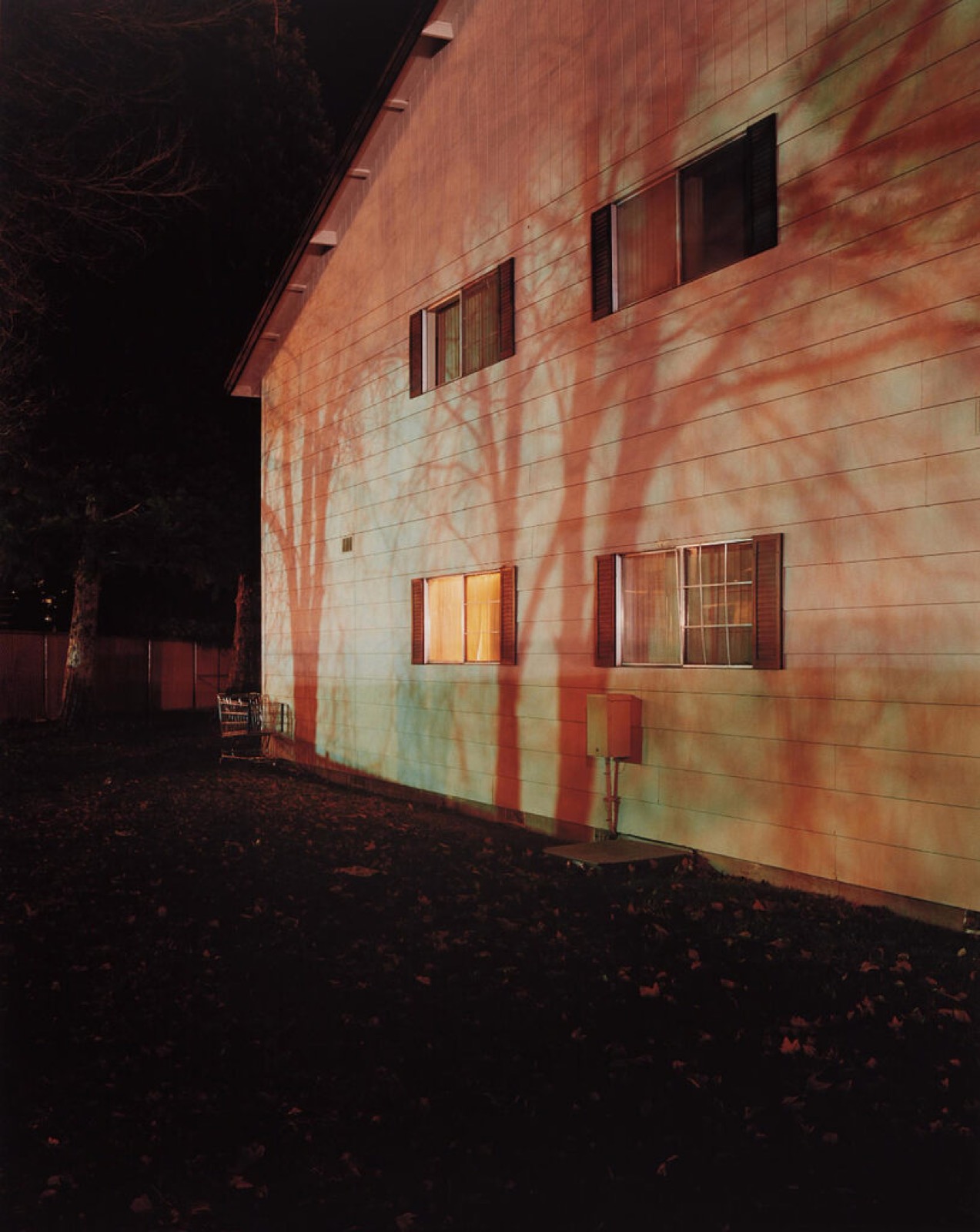

An empty shopping cart has come to rest under the trees at the edge of the frame, a long way from any store, and that is as much story as this night is prepared to tell. The rest is a wall: pale siding taking up most of the picture, four windows, no door, and across the whole of it the shadow of a winter tree thrown by a light behind the photographer's back, so sharp that the architecture seems to be wearing the landscape. Hido's work was to recognize the picture and stand in the right place — which is, as usual, the hard part.
Somebody is home. One downstairs window glows amber through drawn blinds while its neighbors keep dark, and the siding goes green where the tree-shadow thins, rust where it gathers — colors nobody chose, made by street light and long exposure out of a neighborhood's ordinary wattage. These are the outskirts he was working in 1999, places built in a hurry and lit by accident, photographed with the patience of a surveyor and the appetite of a voyeur. The method is documentary. The result is not. It is theater found standing, the stage lights left burning after the play has closed.
Evans photographed American houses as if they were facts; Robert Adams, as if they were consequences. Hido photographs them as if they were sleepers — warm, breathing, incommunicado. It has been said that a photograph is either a window or a mirror; here is one content to be a wall, which suggests the distinction was always too tidy. What the picture withholds — the door, the tenant, the street out front — is exactly what keeps us standing in a stranger's yard among the fallen leaves, counting windows, unsure whether we are remembering such a place or being warned about it.