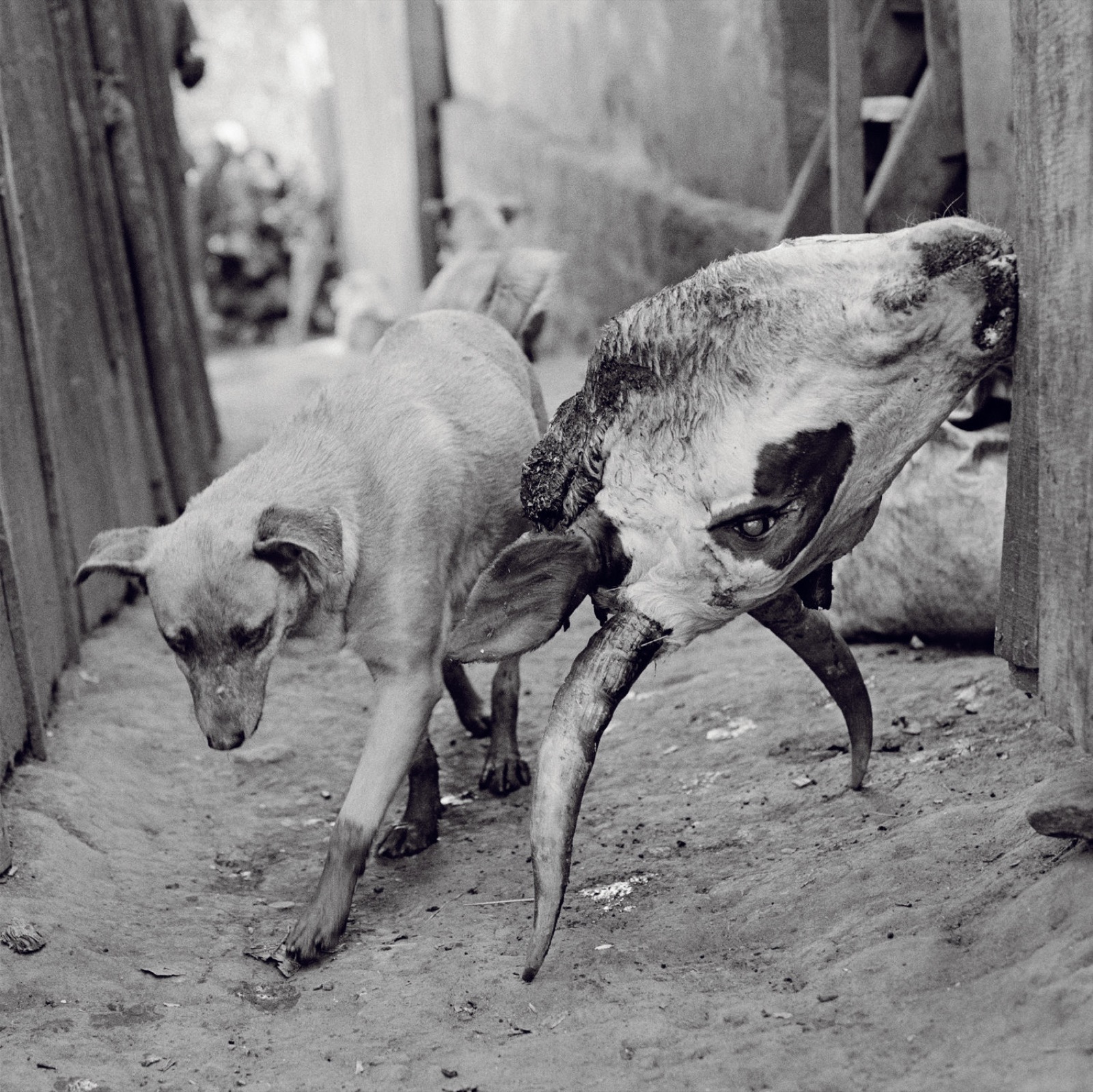
A moment earlier the dog had not yet drawn level with the horns; a moment later it will have slipped past into the shadowed end of the alley, the encounter gone. The photograph holds them in the one instant when their two heads nearly touch: the lean street dog, ears folded, muzzle lowered almost to the sand, and the severed head of a horned bull propped against a plank fence, its one visible eye catching a wet gleam of light. Between them the sandy ground is scuffed and pale.
Call it a dance because the bodies rhyme. The dog’s downturned skull answers the bull’s upturned one; the curve of the folded ear echoes the long sweep of the horn; the living animal and the dead one are, for this fraction of a second, partners in a step neither chose. Nothing is staged. It is the ordinary traffic of a working yard, a slaughter remainder and a scavenger crossing paths, and the picture’s tact lies in refusing to flinch or to sensationalize what it found.
As a physical thing the image insists on its own making: a gelatin silver print toned in selenium the year after the exposure, its surface carrying the fine grain of fast film and the deep, protected blacks that selenium confers. Such a print is meant to be held, examined, passed from hand to hand, the way this chance encounter asks to be looked at slowly. The photographer, who founded the gallery that circulates the work, trusts the old chemistry to keep a hard, fleeting truth legible.
A moment earlier the dog had not yet drawn level with the horns; a moment later it will have slipped past into the shadowed end of the alley, the encounter gone. The photograph holds them in the one instant when their two heads nearly touch: the lean street dog, ears folded, muzzle lowered almost to the sand, and the severed head of a horned bull propped against a plank fence, its one visible eye catching a wet gleam of light. Between them the sandy ground is scuffed and pale.
Call it a dance because the bodies rhyme. The dog’s downturned skull answers the bull’s upturned one; the curve of the folded ear echoes the long sweep of the horn; the living animal and the dead one are, for this fraction of a second, partners in a step neither chose. Nothing is staged. It is the ordinary traffic of a working yard, a slaughter remainder and a scavenger crossing paths, and the picture’s tact lies in refusing to flinch or to sensationalize what it found.
As a physical thing the image insists on its own making: a gelatin silver print toned in selenium the year after the exposure, its surface carrying the fine grain of fast film and the deep, protected blacks that selenium confers. Such a print is meant to be held, examined, passed from hand to hand, the way this chance encounter asks to be looked at slowly. The photographer, who founded the gallery that circulates the work, trusts the old chemistry to keep a hard, fleeting truth legible.