Backstage has its own genealogy in fashion photography, a line running from the mirrored wings that image-makers have always preferred to the runway itself, and this picture takes its place in it with a white ostrich boa and a black hairdryer. A shirtless young man with hair parted to his jaw sits at the centre of a small choreography of hands: one drapes the feathers across his shoulder, another aims the dryer at his bare chest. The mirror bulbs behind him flare to pure white, erasing the wall.
The title leans on a Lennon lyric, and the joke is legible in the frame: denim jeans and a bare working torso wrapped in the plumage of a showgirl, masculinity and its costume held in one exposure, neither winning. Weber lets the apparatus show, the grooming hands and the dryer and the beaded snakeskin pouch in the lap, so that we read glamour as labour rather than as magic. It is a directorial picture that pretends to be a candid, and the pretence is the point.
This is the terrain Weber made his own: the male body treated with the tenderness usually reserved for women, desire framed as American wholesomeness even at its most theatrical. Half a generation of image-makers learned their backstage grammar from him. The gelatin silver print is essential to the effect, its deep blacks pooling in the feathers and denim while the blown mirror-light keeps the whole thing breathing. Printed by hand, it turns a fleeting backstage ritual into something that carries the settled weight of a portrait.
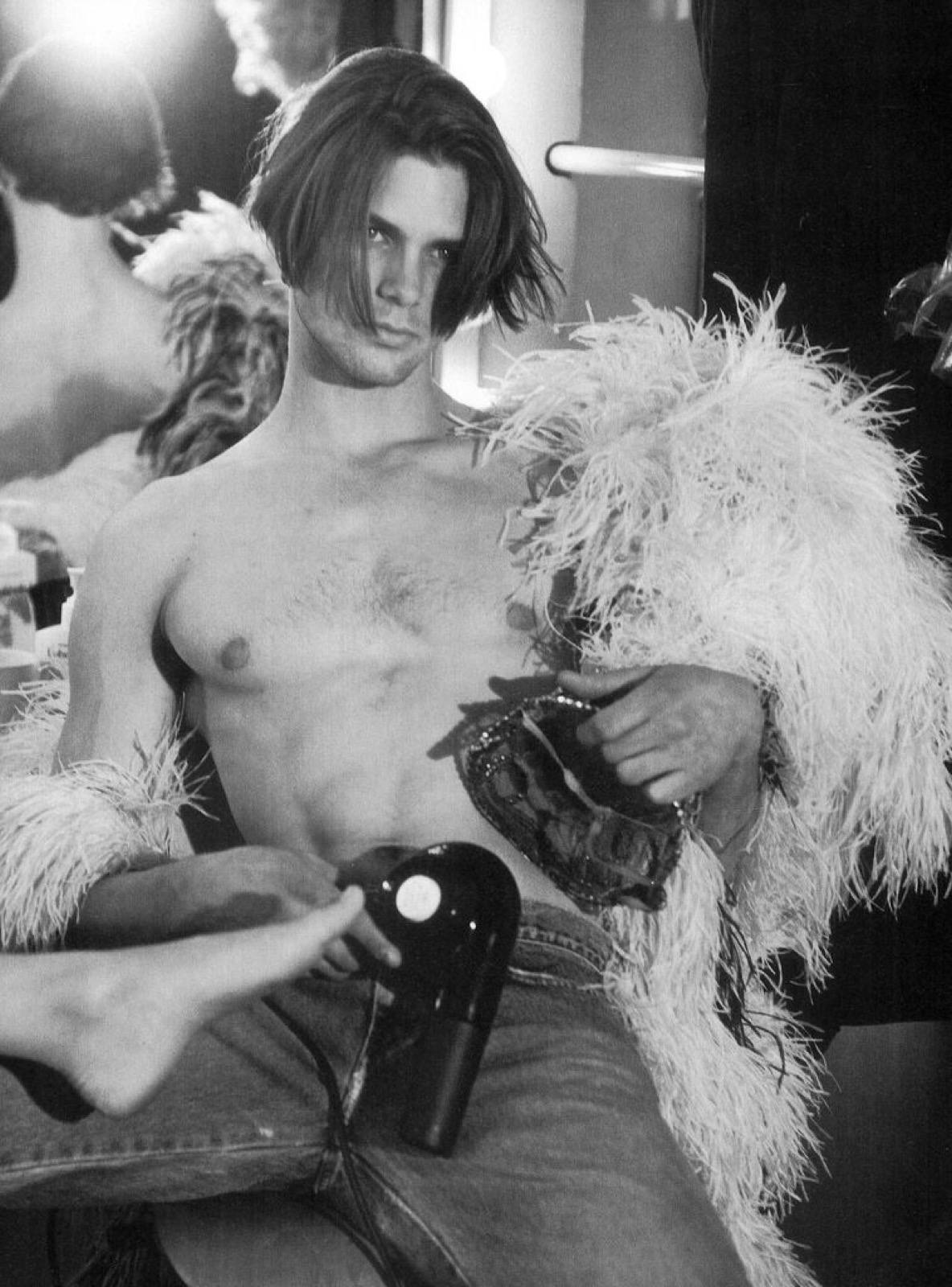

Backstage has its own genealogy in fashion photography, a line running from the mirrored wings that image-makers have always preferred to the runway itself, and this picture takes its place in it with a white ostrich boa and a black hairdryer. A shirtless young man with hair parted to his jaw sits at the centre of a small choreography of hands: one drapes the feathers across his shoulder, another aims the dryer at his bare chest. The mirror bulbs behind him flare to pure white, erasing the wall.
The title leans on a Lennon lyric, and the joke is legible in the frame: denim jeans and a bare working torso wrapped in the plumage of a showgirl, masculinity and its costume held in one exposure, neither winning. Weber lets the apparatus show, the grooming hands and the dryer and the beaded snakeskin pouch in the lap, so that we read glamour as labour rather than as magic. It is a directorial picture that pretends to be a candid, and the pretence is the point.
This is the terrain Weber made his own: the male body treated with the tenderness usually reserved for women, desire framed as American wholesomeness even at its most theatrical. Half a generation of image-makers learned their backstage grammar from him. The gelatin silver print is essential to the effect, its deep blacks pooling in the feathers and denim while the blown mirror-light keeps the whole thing breathing. Printed by hand, it turns a fleeting backstage ritual into something that carries the settled weight of a portrait.