The light in this room is the kind that lives indoors all afternoon, thinned by tall windows we cannot see and settling grey and even across the leather spines that rise floor to ceiling. It touches everything without hurry: the man reclined in the worn armchair with his hand at his lips, the woman standing barefoot in a long dark dress, the charcoal portrait propped on its easel between them. No lamp is lit. The room supplies its own weather, a still, bookish overcast.
Books lie open on the rug like birds brought down mid-flight, newspapers unfolded across the floor, and a golden retriever has made a bed of the day’s news in the corner. It should read as chaos and instead reads as intimacy, two people who have stopped performing for each other and let the library close around them. He looks inward; she looks down at the page in her hands. The drawn face on the easel watches them both, a third guest who will not leave.
Weber has always understood that a photograph of leisure is really a photograph of belonging, and few image-makers have staged the good life so tenderly or with so many dogs in it. What keeps the picture from mere luxury is its attention, the way the gelatin silver print holds the whole tonal argument at once: the near-black dress, the pale flank of the dog, the grey wall of learning behind. Printed by hand, the surface carries that indoor light like held breath, and asks us, quietly, to look longer.
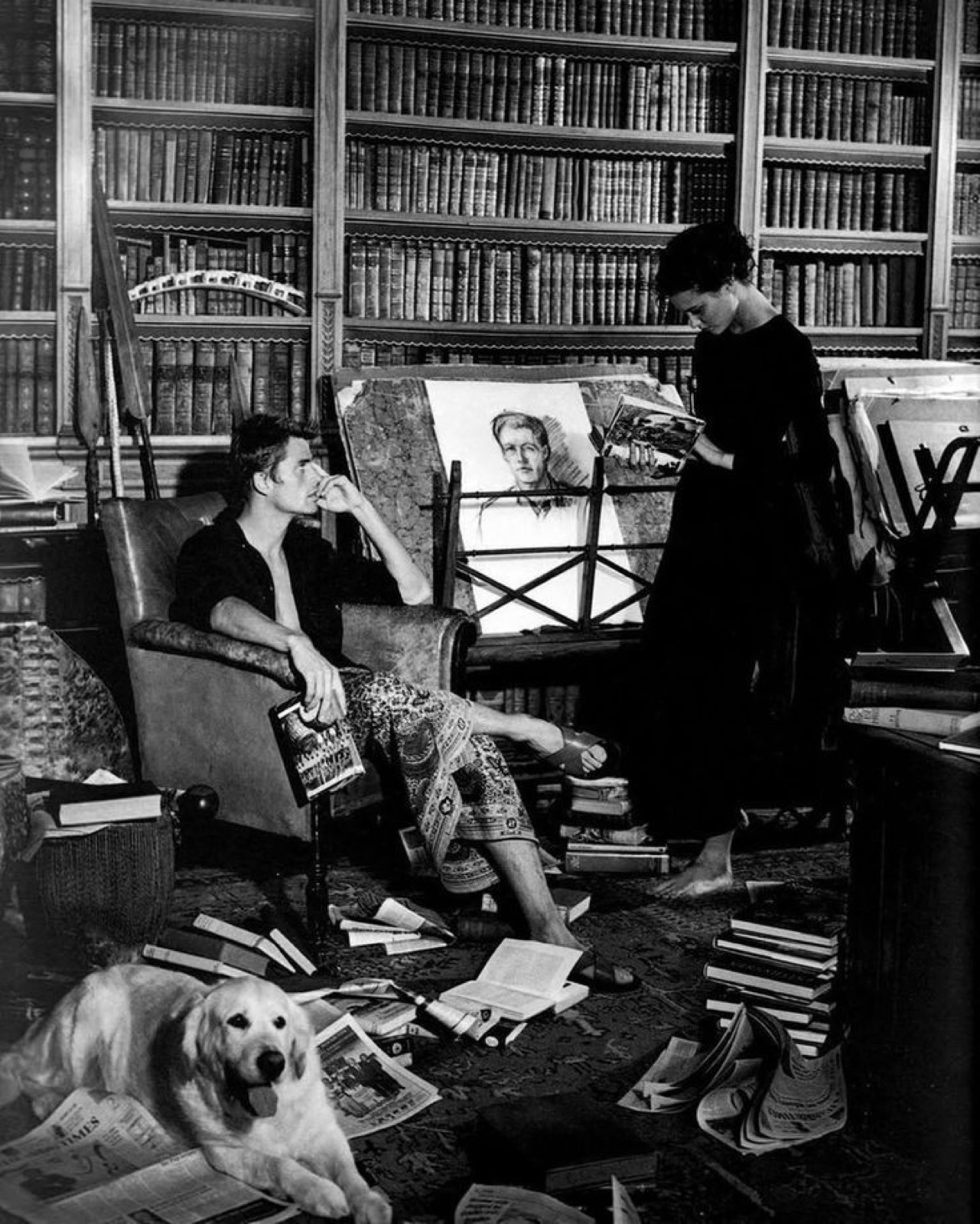

The light in this room is the kind that lives indoors all afternoon, thinned by tall windows we cannot see and settling grey and even across the leather spines that rise floor to ceiling. It touches everything without hurry: the man reclined in the worn armchair with his hand at his lips, the woman standing barefoot in a long dark dress, the charcoal portrait propped on its easel between them. No lamp is lit. The room supplies its own weather, a still, bookish overcast.
Books lie open on the rug like birds brought down mid-flight, newspapers unfolded across the floor, and a golden retriever has made a bed of the day’s news in the corner. It should read as chaos and instead reads as intimacy, two people who have stopped performing for each other and let the library close around them. He looks inward; she looks down at the page in her hands. The drawn face on the easel watches them both, a third guest who will not leave.
Weber has always understood that a photograph of leisure is really a photograph of belonging, and few image-makers have staged the good life so tenderly or with so many dogs in it. What keeps the picture from mere luxury is its attention, the way the gelatin silver print holds the whole tonal argument at once: the near-black dress, the pale flank of the dog, the grey wall of learning behind. Printed by hand, the surface carries that indoor light like held breath, and asks us, quietly, to look longer.