Light is making a break for it. From the door of this trailer it pours out hot and orange, streams past a leaning trunk, and flares clean across the frame in one long diagonal slash, as if the exposure had caught it mid-escape. Whether the source is a porch lamp or something less domesticated, the picture declines to say. Photography can freeze a gesture; it can also prolong one until it stops being explicable, and night exposures lean toward the second.
Meanwhile a second light, green as an aquarium, washes the far end of the trailer’s corrugated siding, and the two colors refuse to agree. Our eyes, on site, would have brokered a compromise; the camera honors the dispute. So the patchy snow in the yard reads orange here, green there, with the shadows of bare trees raking forward like fingers. A wire fence, a short flight of steps, a window lit from inside: ordinary evidence, rendered in the palette of an emergency.
Hido built his reputation photographing suburban houses at night, windows lit, occupants withheld, and this trailer sits at the rougher edge of that family. He titles by number, keeping narrative off the scent, though the scent is everywhere. SFMOMA, the Getty and the Whitney hold his prints. As an archival pigment print this one keeps both temperatures intact, ember against aquarium, with no drift between them. What the photograph shows is a trailer at night; what it is about is how little a lit doorway must do to become a plot.
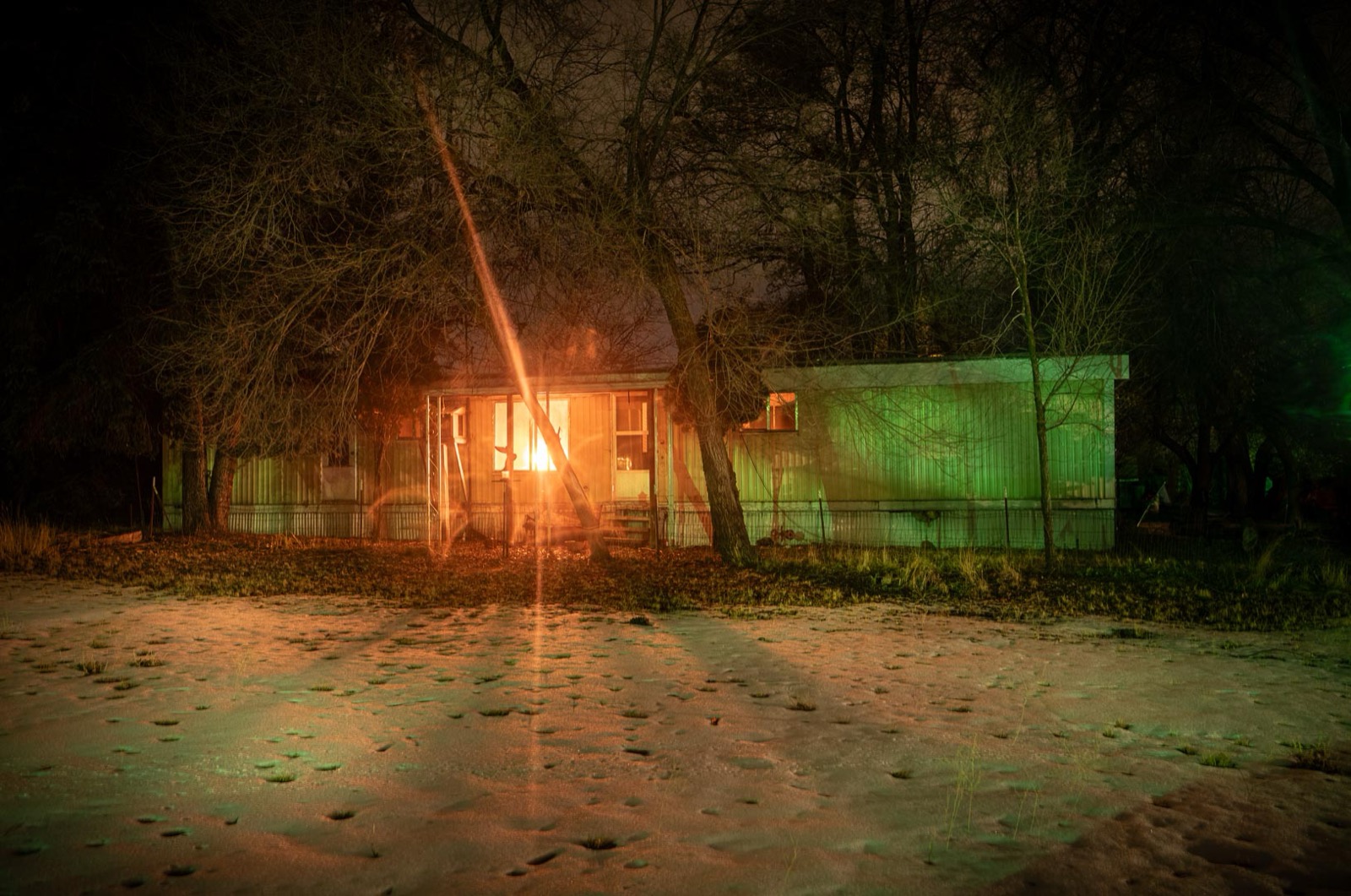

Light is making a break for it. From the door of this trailer it pours out hot and orange, streams past a leaning trunk, and flares clean across the frame in one long diagonal slash, as if the exposure had caught it mid-escape. Whether the source is a porch lamp or something less domesticated, the picture declines to say. Photography can freeze a gesture; it can also prolong one until it stops being explicable, and night exposures lean toward the second.
Meanwhile a second light, green as an aquarium, washes the far end of the trailer’s corrugated siding, and the two colors refuse to agree. Our eyes, on site, would have brokered a compromise; the camera honors the dispute. So the patchy snow in the yard reads orange here, green there, with the shadows of bare trees raking forward like fingers. A wire fence, a short flight of steps, a window lit from inside: ordinary evidence, rendered in the palette of an emergency.
Hido built his reputation photographing suburban houses at night, windows lit, occupants withheld, and this trailer sits at the rougher edge of that family. He titles by number, keeping narrative off the scent, though the scent is everywhere. SFMOMA, the Getty and the Whitney hold his prints. As an archival pigment print this one keeps both temperatures intact, ember against aquarium, with no drift between them. What the photograph shows is a trailer at night; what it is about is how little a lit doorway must do to become a plot.