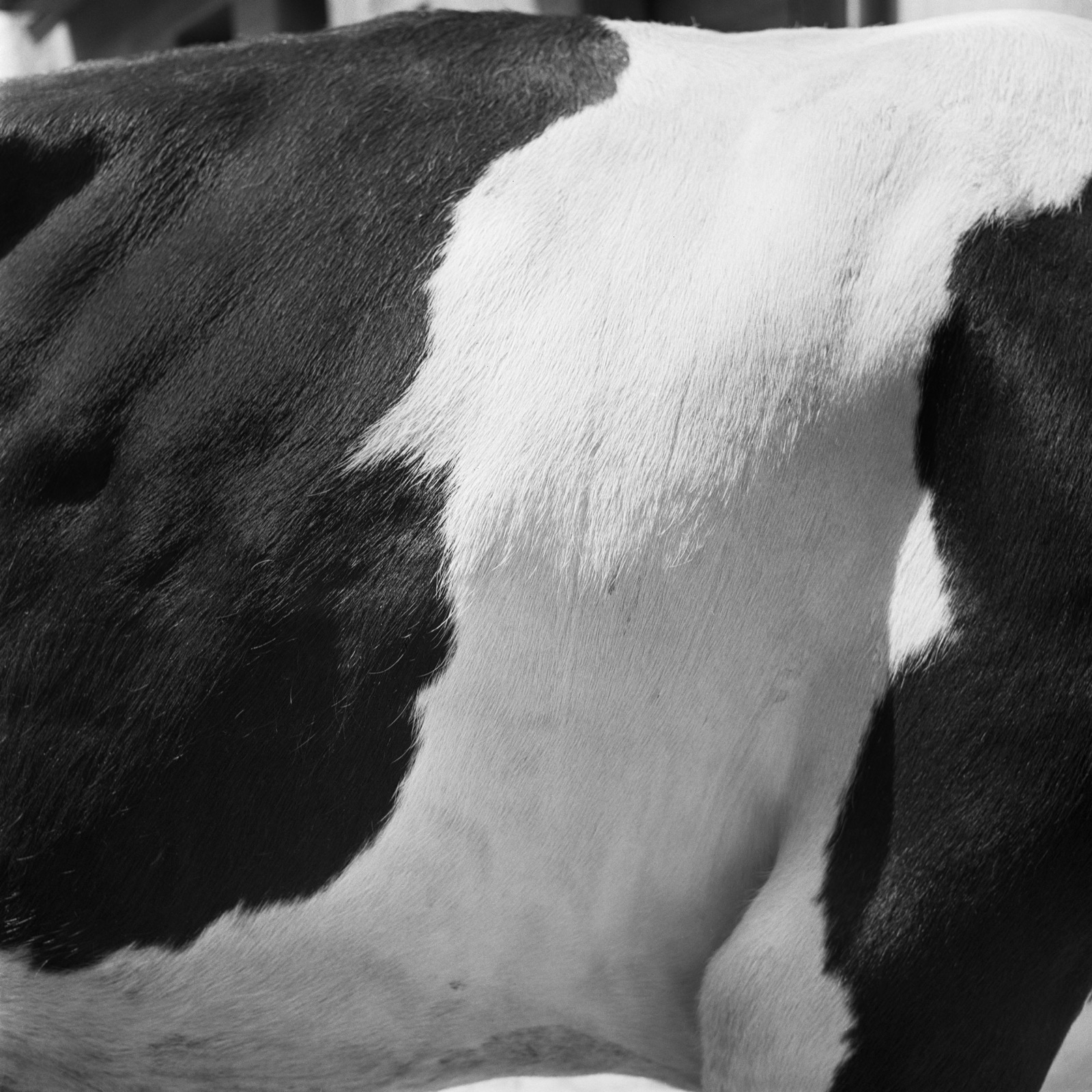
The cow has almost disappeared. Brought this close, its flank turns into cartography: two dark continents pressing in from either side, a channel of white running between them, the nap of the hide shifting like current on a chart. Along the top edge rides the ridge of the animal’s back; in the upper corners the world hangs out of focus, certifying the abstraction is warm and breathing. The square frame holds it with unusual poise for a photographer who, in 1953, had scarcely begun.
Consider what Spanish photography rewarded that year: soft-focus salon pieces, folkloric types, prize-night sentiment. In Terrassa, a wool town outside Barcelona, a grocer’s son in his early twenties walked up to a cow and cropped away everything a jury wanted — head, field, anecdote — until only pattern remained. Weston had done this with peppers and dunes, Siskind with peeling walls; Masats had seen little of it — instinct, he said, was his only method. That confidence would shortly take him to Madrid and remake Spanish documentary photography.
The estate files the picture under Where it all began, and the title earns its plainness: the Terrassa frames open one of the essential bodies of work in postwar Spain. This later gelatin silver print, square as the negative, is one of fifteen, bearing the Estate dry stamp and Sonia Masats’s pencilled authentication. Careers rarely leave their origins so legible. Here, on the flank of the most ordinary animal in town, an eye announces itself, certain that looking hard at a small thing was a way of seeing everything.

The cow has almost disappeared. Brought this close, its flank turns into cartography: two dark continents pressing in from either side, a channel of white running between them, the nap of the hide shifting like current on a chart. Along the top edge rides the ridge of the animal’s back; in the upper corners the world hangs out of focus, certifying the abstraction is warm and breathing. The square frame holds it with unusual poise for a photographer who, in 1953, had scarcely begun.
Consider what Spanish photography rewarded that year: soft-focus salon pieces, folkloric types, prize-night sentiment. In Terrassa, a wool town outside Barcelona, a grocer’s son in his early twenties walked up to a cow and cropped away everything a jury wanted — head, field, anecdote — until only pattern remained. Weston had done this with peppers and dunes, Siskind with peeling walls; Masats had seen little of it — instinct, he said, was his only method. That confidence would shortly take him to Madrid and remake Spanish documentary photography.
The estate files the picture under Where it all began, and the title earns its plainness: the Terrassa frames open one of the essential bodies of work in postwar Spain. This later gelatin silver print, square as the negative, is one of fifteen, bearing the Estate dry stamp and Sonia Masats’s pencilled authentication. Careers rarely leave their origins so legible. Here, on the flank of the most ordinary animal in town, an eye announces itself, certain that looking hard at a small thing was a way of seeing everything.