Black lacquer and white neon: the photograph's whole texture lives in that collision. Faurer shot it from behind a convertible in Times Square in 1950, and the car's dark rear deck swells across the foreground like polished stone, swallowing the spilled light of the marquees and giving it back as streaks and smears along the curve of the bodywork. Above and beyond, the signs blaze—GOTHAM, a great looped PEPSI-COLA—dissolving into the soft, granular brilliance that this printing keeps so tenderly alive.
Inside the open car, three women lean together, laughing, one in glasses with her head thrown back, an arm flung up against the seat. They are caught mid-joyride, mid-delight, the camera close enough to feel like a fourth passenger. Around them taxis idle and a bus pulls away, the avenue's traffic reduced to glints and silhouettes, so that the women's brightness becomes the only warm thing in a night made of chrome and electricity.
The gelatin silver print, drawn from the negative decades later, treats all this as a single luminous skin—reflection and reality pressed flat, the difference between a woman and her ghost on the paint nearly abolished. Faurer salvages an ordinary euphoria and lets it harden into something keepable. The car will be scrapped, the signs unplugged, the laughter spent; what remains is this dark mirror, holding their faces and the burning city at once.
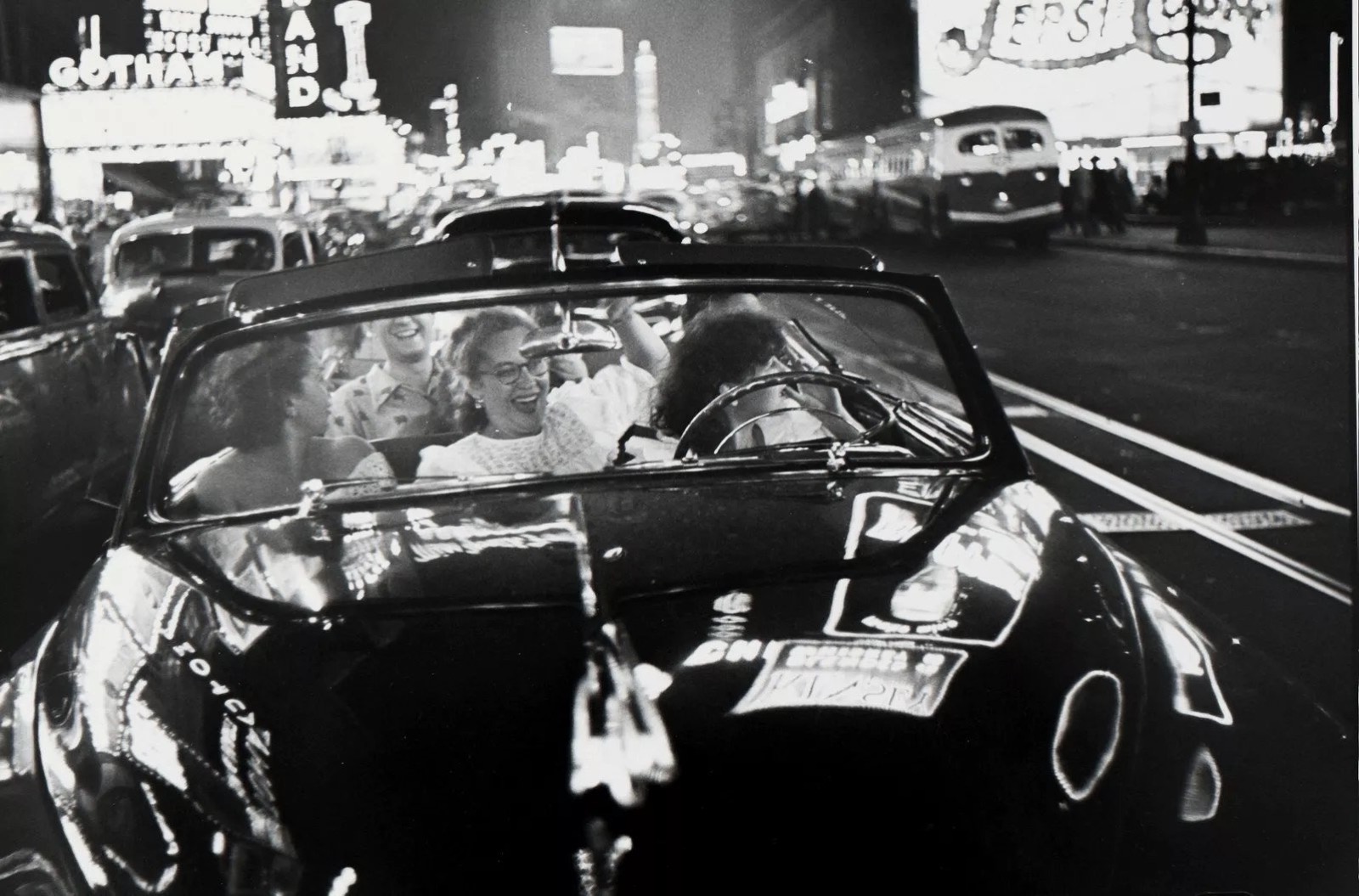

Black lacquer and white neon: the photograph's whole texture lives in that collision. Faurer shot it from behind a convertible in Times Square in 1950, and the car's dark rear deck swells across the foreground like polished stone, swallowing the spilled light of the marquees and giving it back as streaks and smears along the curve of the bodywork. Above and beyond, the signs blaze—GOTHAM, a great looped PEPSI-COLA—dissolving into the soft, granular brilliance that this printing keeps so tenderly alive.
Inside the open car, three women lean together, laughing, one in glasses with her head thrown back, an arm flung up against the seat. They are caught mid-joyride, mid-delight, the camera close enough to feel like a fourth passenger. Around them taxis idle and a bus pulls away, the avenue's traffic reduced to glints and silhouettes, so that the women's brightness becomes the only warm thing in a night made of chrome and electricity.
The gelatin silver print, drawn from the negative decades later, treats all this as a single luminous skin—reflection and reality pressed flat, the difference between a woman and her ghost on the paint nearly abolished. Faurer salvages an ordinary euphoria and lets it harden into something keepable. The car will be scrapped, the signs unplugged, the laughter spent; what remains is this dark mirror, holding their faces and the burning city at once.