Ramón Masats
Spanish, 1931–2024Arcos de la Frontera, Cádiz, circa 1963
Gelatin Silver Print.
Printed later.
Image: 24.5 x 37.5 cm / 9 5/8 x 14 3/4 in / Paper: 30 x 40 cm / 11 3/4 x 15 3/4 in
Image: 37.5 x 56.5 cm / 14 3/4 x 22 1/4 in / Paper: 50 x 60 cm / 19 3/4 x 23 5/8 in
Ramón Masats Estate dry stamp, signed and authenticated by Sonia Masats with title and edition number in pencil on label affixed to print verso
Edition of 15 — Image: 24.5 x 37.5 cm / 9 5/8 x 14 3/4 in / Paper: 30 x 40 cm / 11 3/4 x 15 3/4 in
Edition of 5 — Image: 37.5 x 56.5 cm / 14 3/4 x 22 1/4 in / Paper: 50 x 60 cm / 19 3/4 x 23 5/8 in
© The Artist
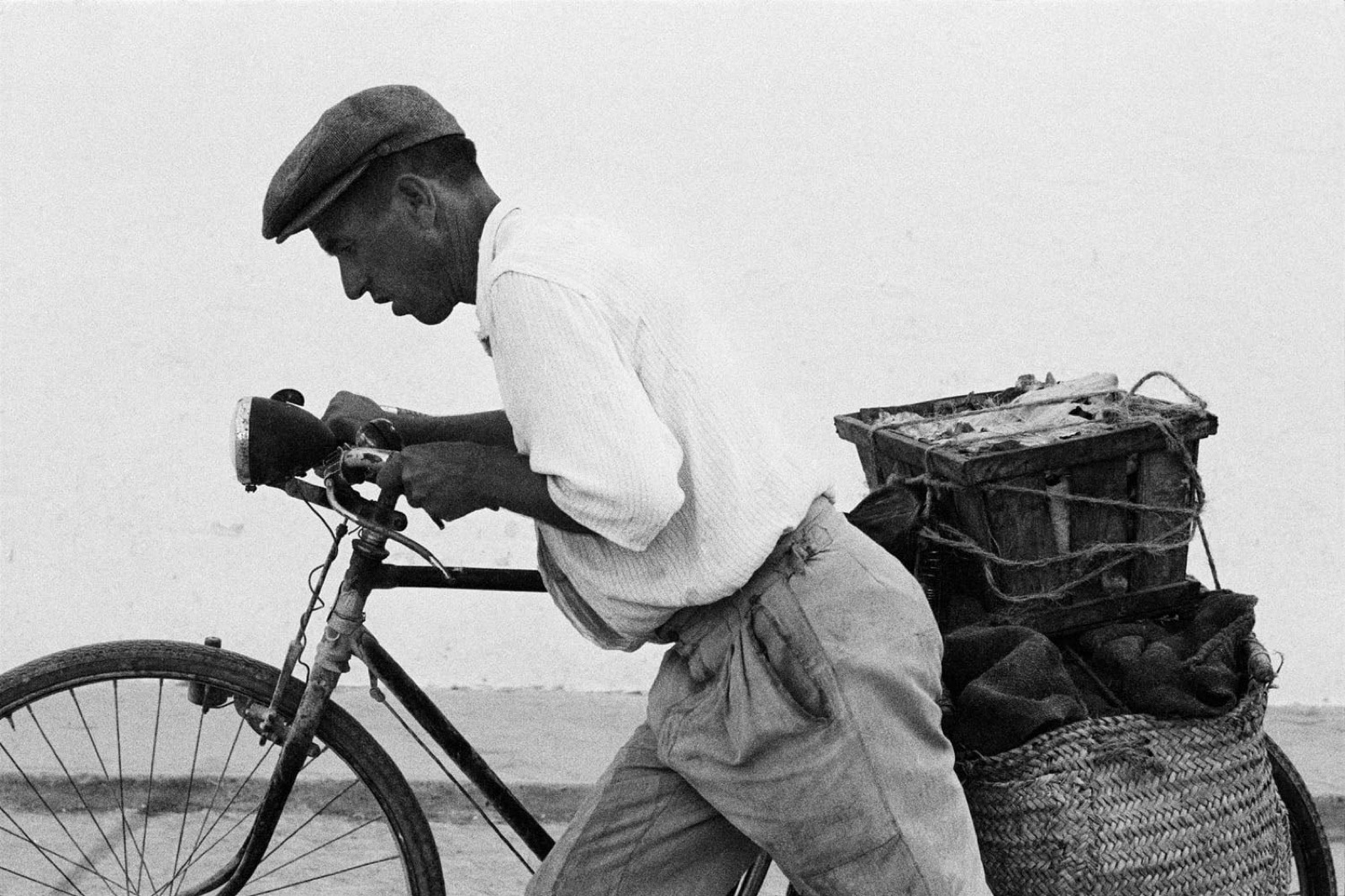
A photograph of labor rarely shows the weight of it; this loaded bicycle does nothing else. A man bends into the handlebars, his esparto basket crammed and a roped wooden crate riding above it, and the whole apparatus becomes an argument about effort. The camera, which loves to make hardship elegant, has caught him in profile against a wall so white it could be a studio, and the beauty of the light does not cancel the labor; it frames it.
There is a seduction here that suspicion would name at once. The flat tweed cap, the sleeveless knit, the patched and voluminous trousers, the dented headlamp on the bars, all of it composes into a near-classical figure, a peasant carried into art by good tone and clean geometry. Yet the load is real, the twine is really knotted, the basket really sags with its cargo, and the man’s lowered face is intent on the road, not on us. We admire; he works. The picture holds both facts without reconciling them.
Masats made this in Andalusian Arcos de la Frontera, part of the long AFAL reckoning with Franco-era daily life that pulled Spanish photography toward the documentary present. Neither sentimental nor accusing, he lets the ordinary bear its own scrutiny, an ethic that would carry him to the Premio Nacional de Fotografía. Printed later in gelatin silver, the sheet gives that overexposed wall as pure luminous paper and the man as its dark, deliberate counterweight, so the eye keeps sliding from the pleasure of the print to the fact of the burden.