Almost nothing in this landscape is in focus, and that is the decision the image is about. Bare trees, a low tangle of brush, muddy ground threaded with water, and above it a bank of cloud through which a weak sun burns — all of it dissolved into soft orbs of bokeh, as though the scene were being remembered rather than recorded. Hido has made the lens itself a subject, letting optics stand in for feeling.
The picture belongs to Excerpts from Silver Meadows, and its blur is not accident but authorship. Where his houses are described with cold precision, here Hido stages a deliberate imprecision, borrowing the atmospherics of nineteenth-century Pictorialism and the look of a half-developed memory. The archival pigment print on Dibond gives this softness a paradoxical solidity, a hard surface holding a scene that will not resolve.
This is landscape as psychological interior, a mode that runs through much recent photography preoccupied with mood over document. The constructed vagueness asks us to supply what the focus withholds — a childhood wood, a threshold, a dream half-recalled on waking. Hido withholds the crisp fact and offers instead its emotional residue, trusting that the unresolved image will lodge more deeply than a sharp one ever could.
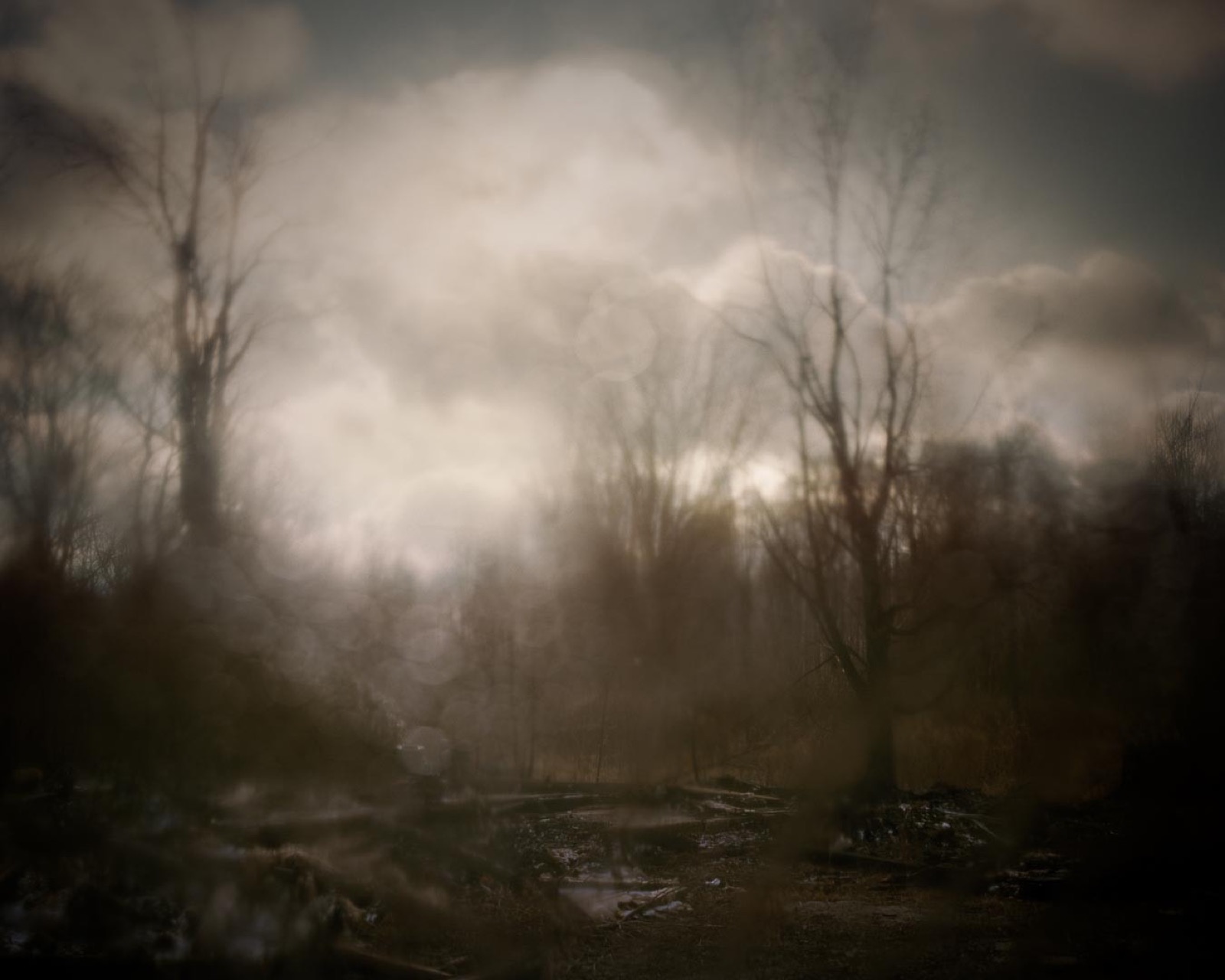

Almost nothing in this landscape is in focus, and that is the decision the image is about. Bare trees, a low tangle of brush, muddy ground threaded with water, and above it a bank of cloud through which a weak sun burns — all of it dissolved into soft orbs of bokeh, as though the scene were being remembered rather than recorded. Hido has made the lens itself a subject, letting optics stand in for feeling.
The picture belongs to Excerpts from Silver Meadows, and its blur is not accident but authorship. Where his houses are described with cold precision, here Hido stages a deliberate imprecision, borrowing the atmospherics of nineteenth-century Pictorialism and the look of a half-developed memory. The archival pigment print on Dibond gives this softness a paradoxical solidity, a hard surface holding a scene that will not resolve.
This is landscape as psychological interior, a mode that runs through much recent photography preoccupied with mood over document. The constructed vagueness asks us to supply what the focus withholds — a childhood wood, a threshold, a dream half-recalled on waking. Hido withholds the crisp fact and offers instead its emotional residue, trusting that the unresolved image will lodge more deeply than a sharp one ever could.