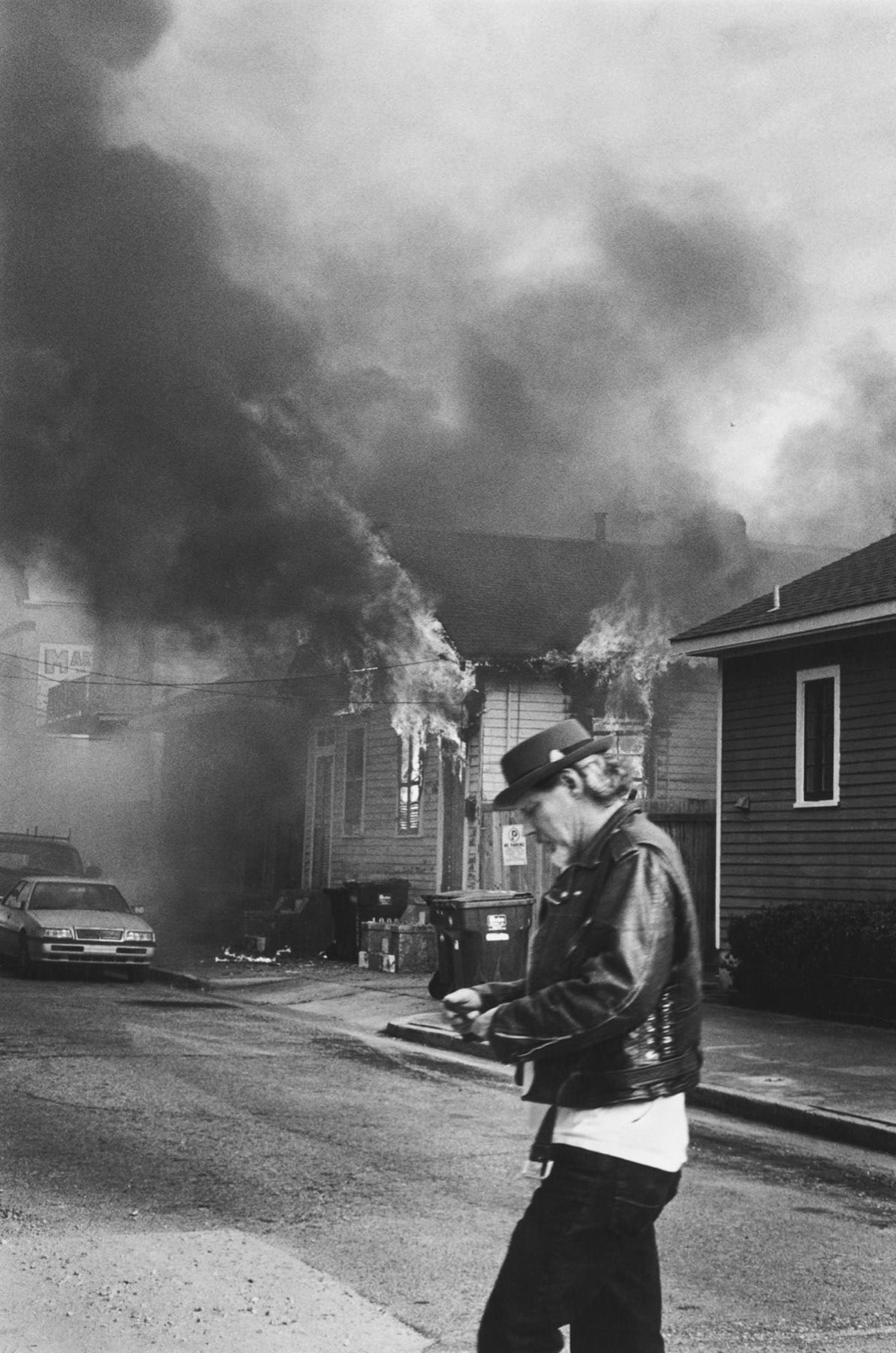
Somewhere behind this man a building is burning, and he has decided it has nothing to do with him. Flames lick out from under the eaves of a New Orleans shotgun house, black smoke piling up into a sky already heavy with it, and he walks across the foreground in a leather jacket and a porkpie hat looking down at something in his hands — change, maybe, or a phone, or nothing. The whole drama of the picture is staged on this refusal to look. The fire does the looking for him.
I keep coming back to the geometry of indifference here. He cuts the frame in two, a vertical figure laid over a horizontal catastrophe, and the camera has caught him at the exact moment his stride leaves the ground. A parked sedan idles to the left, untouched. Wheelie bins sit at the curb as if it were collection day and not the end of something. This is a city that has rehearsed disaster so often it can stroll past a live one. Lange shoots it the way you'd shoot a man crossing any street, which is precisely what makes it unbearable.
What gets me is how the grain and the smoke become the same substance, the photographic emulsion and the burning house dissolving into one grey weather. The print withholds the heat; you have to supply it yourself. And then there's the small unforgivable comedy of the hat — jaunty, deliberate, a man dressed for an evening that the world behind him is busy cancelling. He'll be at the corner before the roof goes. The picture lets him keep walking, which is the only mercy it has to offer.
Somewhere behind this man a building is burning, and he has decided it has nothing to do with him. Flames lick out from under the eaves of a New Orleans shotgun house, black smoke piling up into a sky already heavy with it, and he walks across the foreground in a leather jacket and a porkpie hat looking down at something in his hands — change, maybe, or a phone, or nothing. The whole drama of the picture is staged on this refusal to look. The fire does the looking for him.
I keep coming back to the geometry of indifference here. He cuts the frame in two, a vertical figure laid over a horizontal catastrophe, and the camera has caught him at the exact moment his stride leaves the ground. A parked sedan idles to the left, untouched. Wheelie bins sit at the curb as if it were collection day and not the end of something. This is a city that has rehearsed disaster so often it can stroll past a live one. Lange shoots it the way you'd shoot a man crossing any street, which is precisely what makes it unbearable.
What gets me is how the grain and the smoke become the same substance, the photographic emulsion and the burning house dissolving into one grey weather. The print withholds the heat; you have to supply it yourself. And then there's the small unforgivable comedy of the hat — jaunty, deliberate, a man dressed for an evening that the world behind him is busy cancelling. He'll be at the corner before the roof goes. The picture lets him keep walking, which is the only mercy it has to offer.