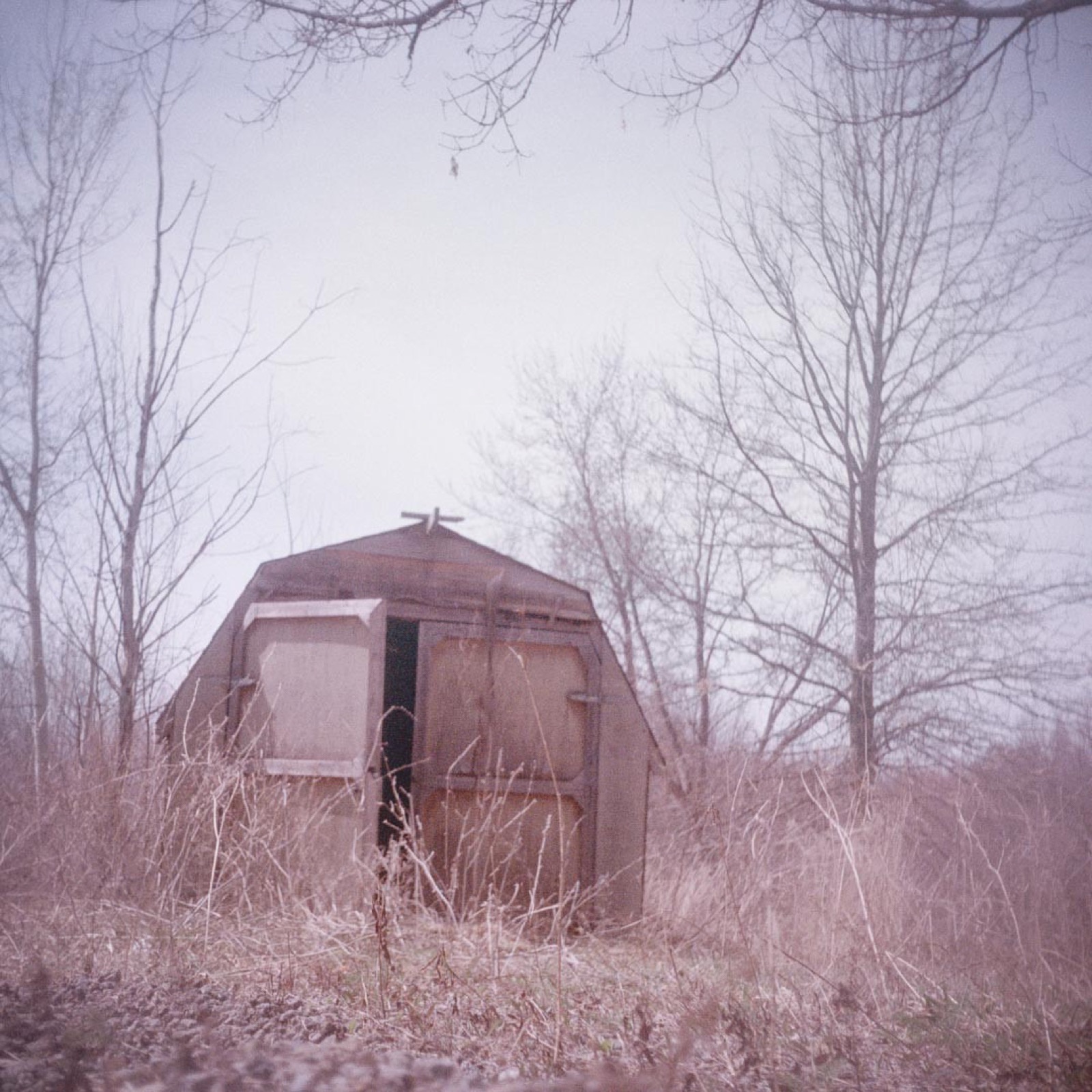
What was kept in a shed like this, and who stopped coming for it? A small weathered outbuilding with a gambrel roof stands in a field of dry winter grass, its double doors faded, its boards softened by years of weather. Bare saplings crowd around it, and from one branch overhead a little object dangles, too small to name, a knot, a seed pod, a forgotten bit of string. The whole scene is bathed in a pale lavender-pink, the color of an overcast afternoon remembered rather than seen.
Part of Excerpts from Silver Meadows, the picture belongs to Hido's return to the landscapes of his own past, made in the soft square format of a simple camera that blurs the corners and warms the light. There is real tenderness in how he regards this humble structure, neither picturesque nor ruined, just quietly outlasting whatever purpose it once served. It is the kind of building a child might have claimed as a hideout and an adult would drive past without a glance.
Printed as archival pigment on aluminium, the muted tones hold together like a watercolor left in the sun, and the shed takes on the dignity of a portrait sitter. Hido has always understood that the ordinary American vernacular, the tract house, the barn, the shed at the field's edge, carries more feeling than grandeur ever could. Here the feeling is one of gentle abandonment, of a place still standing, patiently, for no one in particular.

What was kept in a shed like this, and who stopped coming for it? A small weathered outbuilding with a gambrel roof stands in a field of dry winter grass, its double doors faded, its boards softened by years of weather. Bare saplings crowd around it, and from one branch overhead a little object dangles, too small to name, a knot, a seed pod, a forgotten bit of string. The whole scene is bathed in a pale lavender-pink, the color of an overcast afternoon remembered rather than seen.
Part of Excerpts from Silver Meadows, the picture belongs to Hido's return to the landscapes of his own past, made in the soft square format of a simple camera that blurs the corners and warms the light. There is real tenderness in how he regards this humble structure, neither picturesque nor ruined, just quietly outlasting whatever purpose it once served. It is the kind of building a child might have claimed as a hideout and an adult would drive past without a glance.
Printed as archival pigment on aluminium, the muted tones hold together like a watercolor left in the sun, and the shed takes on the dignity of a portrait sitter. Hido has always understood that the ordinary American vernacular, the tract house, the barn, the shed at the field's edge, carries more feeling than grandeur ever could. Here the feeling is one of gentle abandonment, of a place still standing, patiently, for no one in particular.