Hand-signed by the artist, with title, date, and edition number inscribed in ink on an archival label affixed to the reverse side of the mounted photograph.
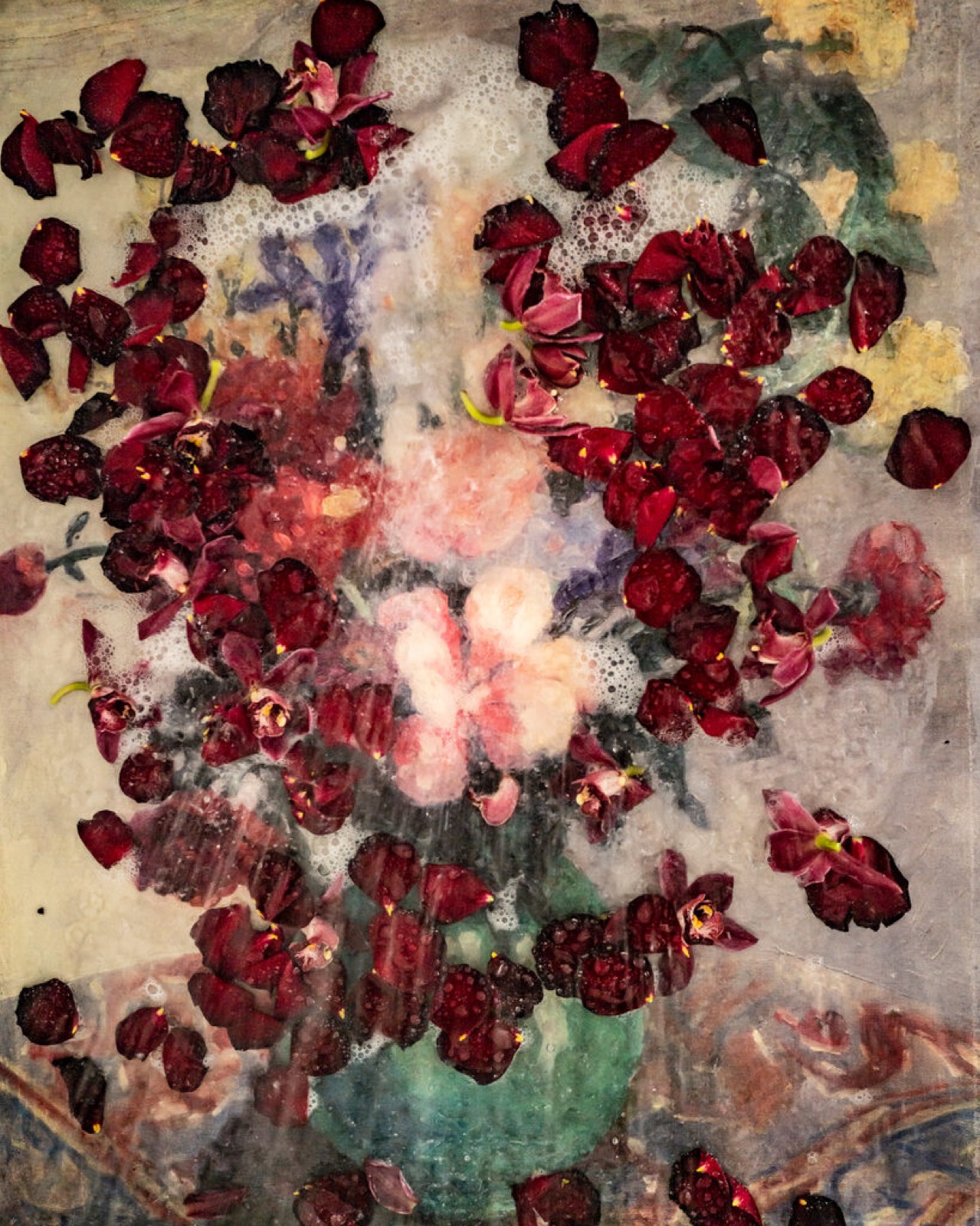
The weather inside this picture is flood. An oil painting of a bouquet — pink roses fat as powder puffs, yellow blooms at the corners, a green vase, the swirl of a patterned cloth — lies soaking beneath a skin of water, so the light reaching it arrives pre-dissolved: milky, veiled, remembering the flowers rather than describing them. Foam collects across the surface like surf just after a wave has pulled back, and every color underneath goes soft at the edges, a print left out in the rain.
On top of that drowned pastel world, the real thing: actual rose petals scattered thick, oxblood and black cherry, every one of them beaded with droplets; magenta orchids, yellow-flecked at the throat, still riding their green stems. The contrast is the whole performance. Below, flowers as painting remembers them — idealized, arranged, permanently fresh. Above, flowers as they actually end — loose, spent, gorgeous in decay, wearing the water like sequins. It’s a still life stacked on a still life, and the darker layer wins on sheer presence.
This collision of sweetness and mortality is Cig Harvey’s home key. From Rockport, Maine, she has built a career on exactly this pitch of sensory intensity, in books like You an Orchestra a Bomb and Blue Violet and in museum collections across the United States. The archival pigment print holds both registers at once: the submerged softness of the painting and the wet, saturated snap of the petals strewn across its surface. Few photographs let you watch one medium float on another.

The weather inside this picture is flood. An oil painting of a bouquet — pink roses fat as powder puffs, yellow blooms at the corners, a green vase, the swirl of a patterned cloth — lies soaking beneath a skin of water, so the light reaching it arrives pre-dissolved: milky, veiled, remembering the flowers rather than describing them. Foam collects across the surface like surf just after a wave has pulled back, and every color underneath goes soft at the edges, a print left out in the rain.
On top of that drowned pastel world, the real thing: actual rose petals scattered thick, oxblood and black cherry, every one of them beaded with droplets; magenta orchids, yellow-flecked at the throat, still riding their green stems. The contrast is the whole performance. Below, flowers as painting remembers them — idealized, arranged, permanently fresh. Above, flowers as they actually end — loose, spent, gorgeous in decay, wearing the water like sequins. It’s a still life stacked on a still life, and the darker layer wins on sheer presence.
This collision of sweetness and mortality is Cig Harvey’s home key. From Rockport, Maine, she has built a career on exactly this pitch of sensory intensity, in books like You an Orchestra a Bomb and Blue Violet and in museum collections across the United States. The archival pigment print holds both registers at once: the submerged softness of the painting and the wet, saturated snap of the petals strewn across its surface. Few photographs let you watch one medium float on another.