Hand-signed by the artist, with title, date, and edition number inscribed in ink on an archival label affixed to the reverse side of the mounted photograph.
One stem stands taller than the rest, a narrow-leaved stalk rising out of the froth at the left like a raised hand, and once you have seen it the whole tangle organizes itself around its verticality. Everything else is horizontal drift: a dense thicket of tiny white flowers spread over dark green foliage, brightest in a lit patch near the center and along the lower edge, dissolving into near-black at the corners. The picture is almost all undergrowth, photographed as if the meadow were a wall.
There is a moral in how little light this image asks for. Most flower pictures flatter their subject with sun; this one withholds it, letting the blossoms glow faintly out of a dusk that seems reluctant to end. The effect is less pretty than haunted. A photograph of nothing but weeds and wildflowers should not carry this much unease, yet the darkness that surrounds the white keeps insisting that something, just outside the frame, is watching the same patch we are.
Harvey, British-born and long settled on the Maine coast, has built her reputation on precisely this refusal to separate the lovely from the ominous, across books such as You an Orchestra a Bomb and Blue Violet and in American museum collections. The archival pigment print earns its keep here: only a process with this depth of black and this delicacy in the highlights could hold both the smothering dark and the pinprick whites without sacrificing either. It is beautiful in the way certain nights are, which is to say not entirely safe.
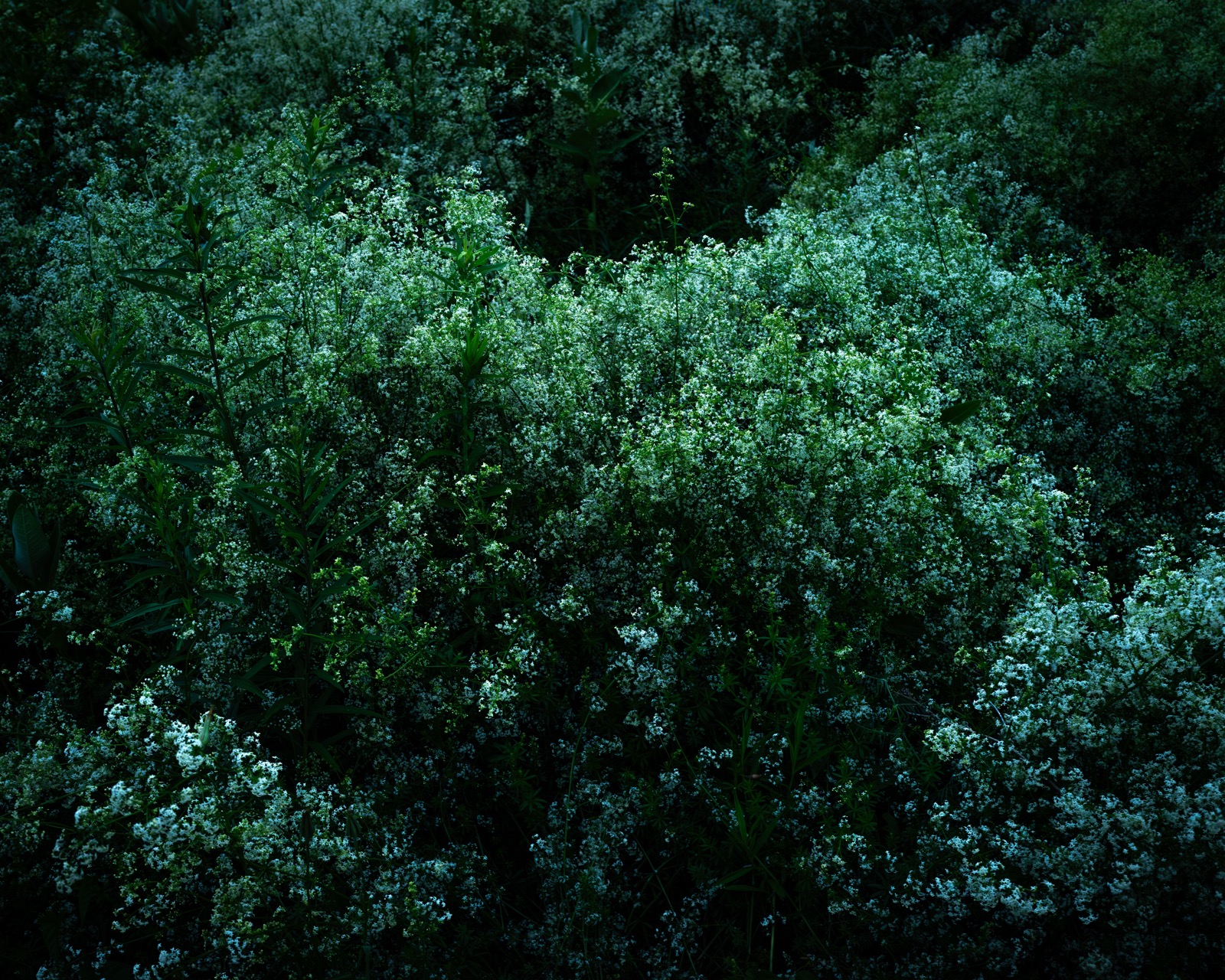

One stem stands taller than the rest, a narrow-leaved stalk rising out of the froth at the left like a raised hand, and once you have seen it the whole tangle organizes itself around its verticality. Everything else is horizontal drift: a dense thicket of tiny white flowers spread over dark green foliage, brightest in a lit patch near the center and along the lower edge, dissolving into near-black at the corners. The picture is almost all undergrowth, photographed as if the meadow were a wall.
There is a moral in how little light this image asks for. Most flower pictures flatter their subject with sun; this one withholds it, letting the blossoms glow faintly out of a dusk that seems reluctant to end. The effect is less pretty than haunted. A photograph of nothing but weeds and wildflowers should not carry this much unease, yet the darkness that surrounds the white keeps insisting that something, just outside the frame, is watching the same patch we are.
Harvey, British-born and long settled on the Maine coast, has built her reputation on precisely this refusal to separate the lovely from the ominous, across books such as You an Orchestra a Bomb and Blue Violet and in American museum collections. The archival pigment print earns its keep here: only a process with this depth of black and this delicacy in the highlights could hold both the smothering dark and the pinprick whites without sacrificing either. It is beautiful in the way certain nights are, which is to say not entirely safe.