A single small craft, white-railed and toy-sized, idles in the upper-left quarter of the frame while the rest of the picture is given over to water — acres of churning teal and bottle-green swell, threaded with combed foam and falling, at the top, into a wall of blue-grey mist. The boat is the only made thing here, and its smallness is the point: it has been let into the composition like a figure placed on a stage so vast it nearly swallows the performer. Nothing is posed in the documentary sense, yet everything reads as arranged — the eye steered toward the lone vessel because there is nowhere else to land.
What looks like reportage of a tourist boat beneath Niagara is in fact a constructed mood. The Fresson process, with its powdered pigment and velvet matte surface, does not record the spray so much as transfigure it, pushing the greens toward saturated dream and dissolving the cataract's edge into haze that could be smoke or theatrical scrim. The churn becomes texture, almost paint; the mist becomes atmosphere staged rather than caught. This is colour used as an emotional instrument — the picture performs sublimity instead of reporting weather.
The drama is real but authored: a chosen vantage, a chosen instant, a printing method that turns a postcard subject into reverie. That deliberate making lifts the image out of holiday snapshot and into the lineage of dreamlike colour photography for which this artist is held in French public collections. A vintage Fresson print carries that hand-laid surface no reproduction can imitate — the object itself the final, irreproducible act of staging.
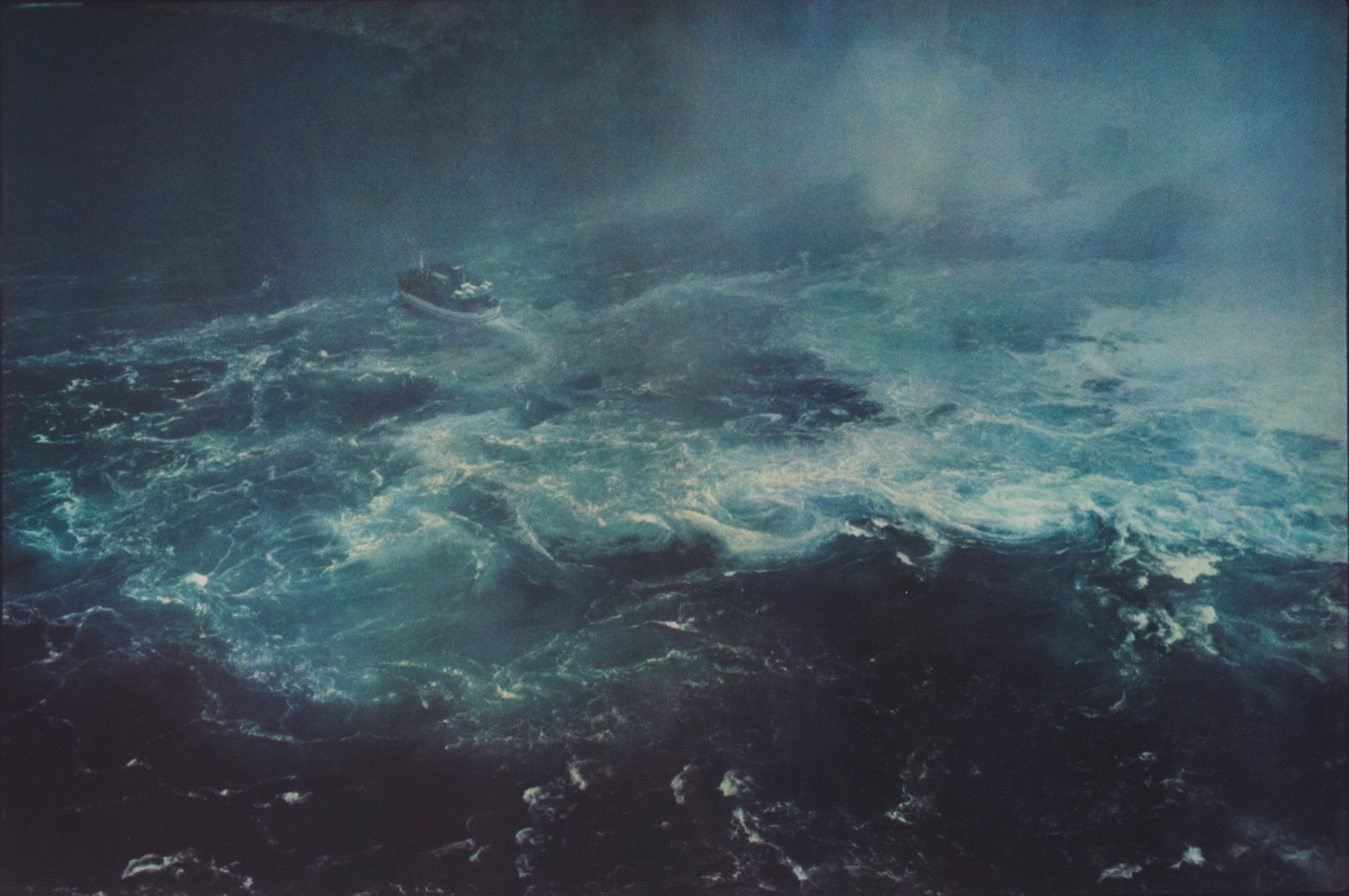

A single small craft, white-railed and toy-sized, idles in the upper-left quarter of the frame while the rest of the picture is given over to water — acres of churning teal and bottle-green swell, threaded with combed foam and falling, at the top, into a wall of blue-grey mist. The boat is the only made thing here, and its smallness is the point: it has been let into the composition like a figure placed on a stage so vast it nearly swallows the performer. Nothing is posed in the documentary sense, yet everything reads as arranged — the eye steered toward the lone vessel because there is nowhere else to land.
What looks like reportage of a tourist boat beneath Niagara is in fact a constructed mood. The Fresson process, with its powdered pigment and velvet matte surface, does not record the spray so much as transfigure it, pushing the greens toward saturated dream and dissolving the cataract's edge into haze that could be smoke or theatrical scrim. The churn becomes texture, almost paint; the mist becomes atmosphere staged rather than caught. This is colour used as an emotional instrument — the picture performs sublimity instead of reporting weather.
The drama is real but authored: a chosen vantage, a chosen instant, a printing method that turns a postcard subject into reverie. That deliberate making lifts the image out of holiday snapshot and into the lineage of dreamlike colour photography for which this artist is held in French public collections. A vintage Fresson print carries that hand-laid surface no reproduction can imitate — the object itself the final, irreproducible act of staging.