One thing the picture most wants to explain, it withholds: a reason for the raised arms. She stands in a hotel room, hands clasped high above her head, wrists crossed, and offers no clue whether she is stretching, undressing, or holding a pose she was asked to hold. Topless, a white cloth knotted low at the hips, big hoop earrings catching the light, she looks back at us and gives nothing away. To her left the wall is blank; to her right the room is crowded. The gesture stays a question.
Weber has organized the frame as a plain argument between emptiness and clutter. The left half is bare wall, a field of grey that lets the lifted body read as a single clean line from wrist to hip. The right half fills with the debris of occupancy: a lamp, a vase of dark flowers, a telephone, bottles and papers on a low table. The figure stands on the seam between them, upright and composed, while the room keeps the untidy evidence of a life the portrait refuses to explain.
Weber built his reputation on this even-handedness, treating body and ordinary room with equal attention; the nude and the nightstand get the same clear light. His subject is a Brazilian model, photographed in the plain daylight of a Copacabana room rather than a studio. The gelatin silver print rewards that restraint, holding the full stretch of tones from the bright wall to the dark flowers, the whole quiet range on one sheet. The best portraits keep some of their sitter back, and this one does, arms raised, still unaccountable.
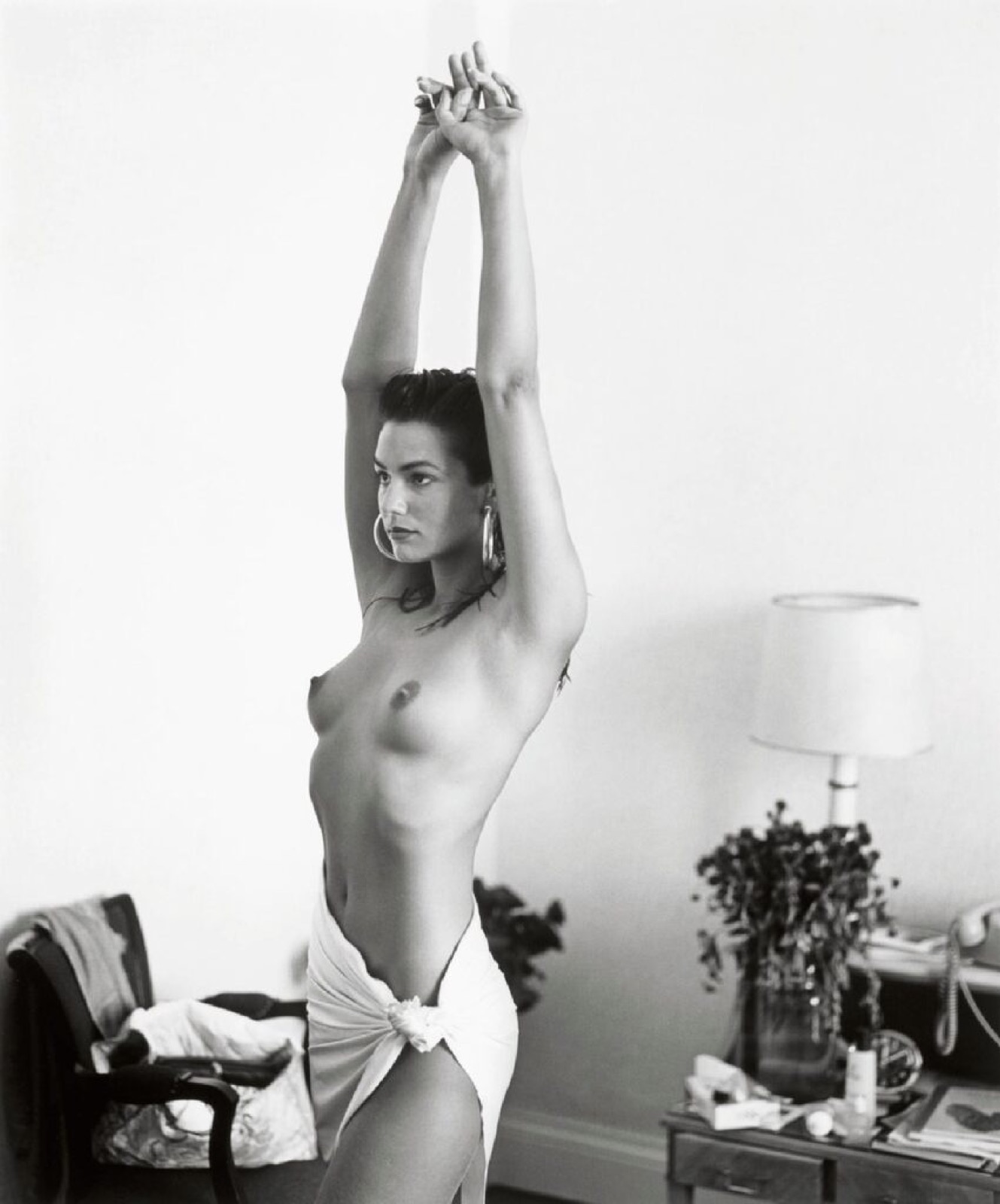

One thing the picture most wants to explain, it withholds: a reason for the raised arms. She stands in a hotel room, hands clasped high above her head, wrists crossed, and offers no clue whether she is stretching, undressing, or holding a pose she was asked to hold. Topless, a white cloth knotted low at the hips, big hoop earrings catching the light, she looks back at us and gives nothing away. To her left the wall is blank; to her right the room is crowded. The gesture stays a question.
Weber has organized the frame as a plain argument between emptiness and clutter. The left half is bare wall, a field of grey that lets the lifted body read as a single clean line from wrist to hip. The right half fills with the debris of occupancy: a lamp, a vase of dark flowers, a telephone, bottles and papers on a low table. The figure stands on the seam between them, upright and composed, while the room keeps the untidy evidence of a life the portrait refuses to explain.
Weber built his reputation on this even-handedness, treating body and ordinary room with equal attention; the nude and the nightstand get the same clear light. His subject is a Brazilian model, photographed in the plain daylight of a Copacabana room rather than a studio. The gelatin silver print rewards that restraint, holding the full stretch of tones from the bright wall to the dark flowers, the whole quiet range on one sheet. The best portraits keep some of their sitter back, and this one does, arms raised, still unaccountable.