We are standing above it all, where the rocks give way to a made thing: a bathing platform poured like grey batter into Capri’s shoreline, its steps worn pale, and a naked young man descending them, unhurried, toward the water. From this height the place becomes a plan of itself. Two steel ladder rails curl at the platform’s edge, the only machined curves in a landscape of fracture, and the sea lies top left like a sheet of hammered metal.
Photography has always been good at this view — the elevated look that turns leisure into cartography. What the camera notices, and we might not, is how modest the human figure is against all that geology: no monument, just a body scaled to the steps it uses, glancing down at the water as he goes. The drama is in the descent, the oldest choreography of the swim, and in the tonal argument between sun-bleached concrete and water so dark it reads as a solid.
Weber built the imagery of American fashion in the 1980s on bodies like this one, and part of the pleasure here is watching that vocabulary go on holiday: same athlete’s frame, no product, no urgency, just the Mediterranean’s old permission. The gelatin silver print holds the scene’s whole mineral range — wet rock, dry rock, skin — in greys you want to reach out and touch. It is a picture about arriving at the water, which is to say, about the moment just before the picture most photographers would have taken.
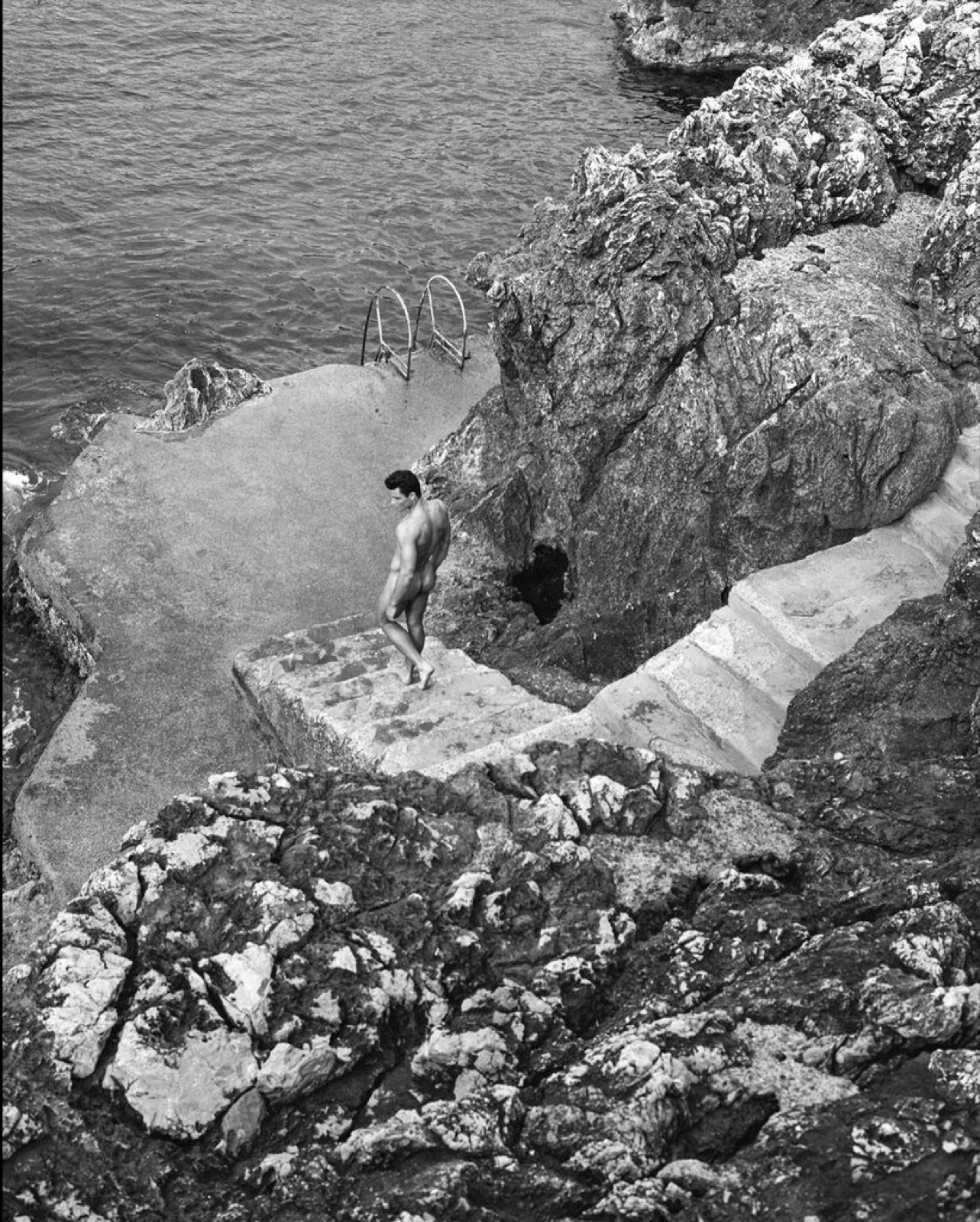

We are standing above it all, where the rocks give way to a made thing: a bathing platform poured like grey batter into Capri’s shoreline, its steps worn pale, and a naked young man descending them, unhurried, toward the water. From this height the place becomes a plan of itself. Two steel ladder rails curl at the platform’s edge, the only machined curves in a landscape of fracture, and the sea lies top left like a sheet of hammered metal.
Photography has always been good at this view — the elevated look that turns leisure into cartography. What the camera notices, and we might not, is how modest the human figure is against all that geology: no monument, just a body scaled to the steps it uses, glancing down at the water as he goes. The drama is in the descent, the oldest choreography of the swim, and in the tonal argument between sun-bleached concrete and water so dark it reads as a solid.
Weber built the imagery of American fashion in the 1980s on bodies like this one, and part of the pleasure here is watching that vocabulary go on holiday: same athlete’s frame, no product, no urgency, just the Mediterranean’s old permission. The gelatin silver print holds the scene’s whole mineral range — wet rock, dry rock, skin — in greys you want to reach out and touch. It is a picture about arriving at the water, which is to say, about the moment just before the picture most photographers would have taken.