Everything here is slightly out of focus except her eyes, and every decision in the picture follows from that. A young woman fills the square, seen close, her chin resting on a raised fist, her pale grey off-shoulder dress catching the light, a thin strand of pearls at her throat. The eyes are the one sharp thing; the rest — hair, hand, the dark at the right, a glass tumbler in the lower corner — softens into a haze that reads like breath on cold glass.
The picture is built on a single diagonal, shoulder to hand to eyes, and on a narrow band of cool tones broken only by the warmth of skin. Hido stages his figures inside the same fictional world as his houses and his roads, so the portrait carries the atmosphere of a set rather than a studio, of a scene half-dreamed. The soft lens is not a flaw to be excused but the governing choice, and it holds the woman at one remove, as though she were remembered rather than seen.
What the frame offers is a mood suspended just short of narrative. She might be waiting, drinking, thinking; the picture flatly declines to say. Printed as archival pigment on Dibond, the low-contrast surface keeps the whole thing tender and faintly unreal. Within Excerpts from Silver Meadows the women belong to the same reverie as the landscapes — described with care, and then left, sensibly, unexplained.
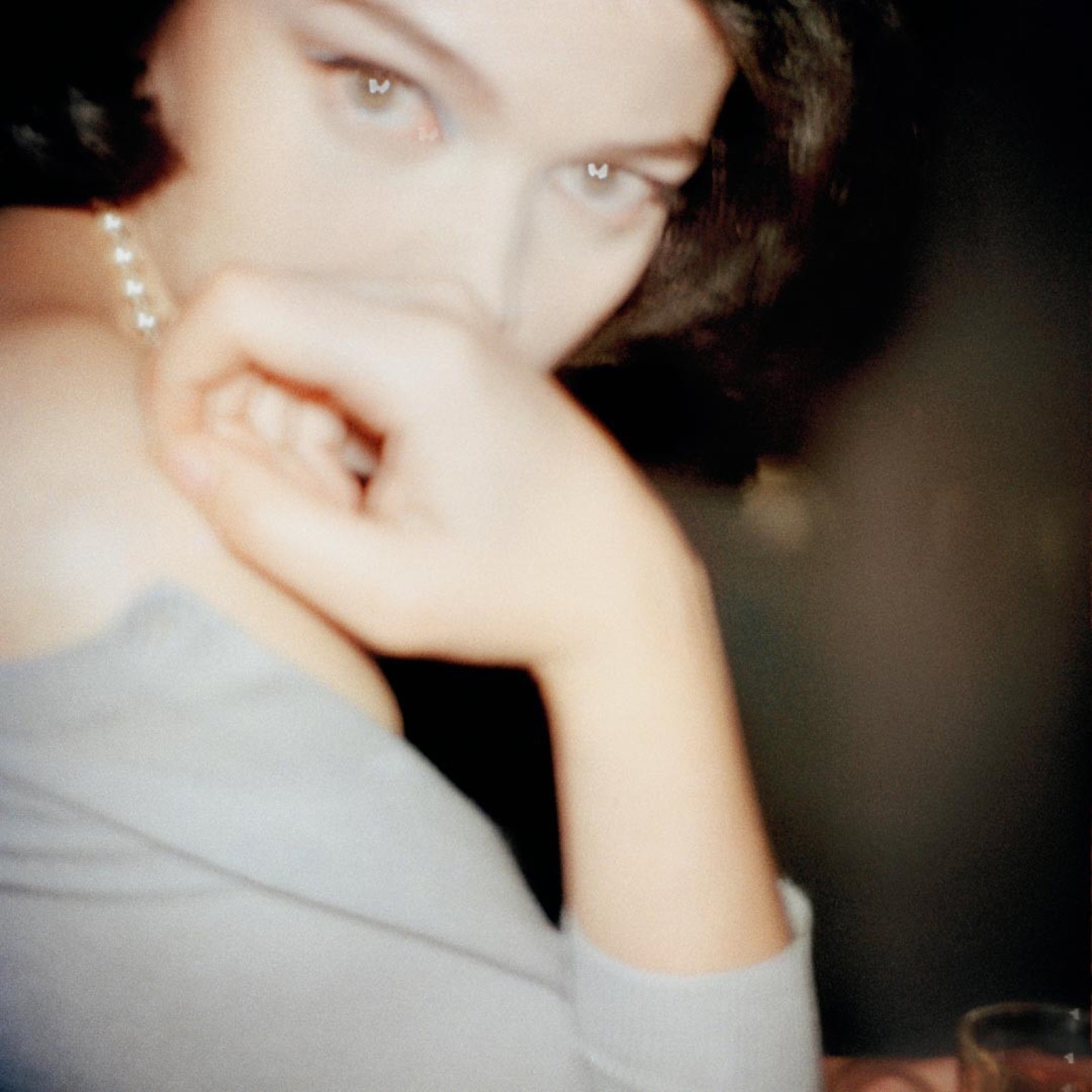

Everything here is slightly out of focus except her eyes, and every decision in the picture follows from that. A young woman fills the square, seen close, her chin resting on a raised fist, her pale grey off-shoulder dress catching the light, a thin strand of pearls at her throat. The eyes are the one sharp thing; the rest — hair, hand, the dark at the right, a glass tumbler in the lower corner — softens into a haze that reads like breath on cold glass.
The picture is built on a single diagonal, shoulder to hand to eyes, and on a narrow band of cool tones broken only by the warmth of skin. Hido stages his figures inside the same fictional world as his houses and his roads, so the portrait carries the atmosphere of a set rather than a studio, of a scene half-dreamed. The soft lens is not a flaw to be excused but the governing choice, and it holds the woman at one remove, as though she were remembered rather than seen.
What the frame offers is a mood suspended just short of narrative. She might be waiting, drinking, thinking; the picture flatly declines to say. Printed as archival pigment on Dibond, the low-contrast surface keeps the whole thing tender and faintly unreal. Within Excerpts from Silver Meadows the women belong to the same reverie as the landscapes — described with care, and then left, sensibly, unexplained.