
Txema Yeste
Spanish, b. 1972Needles, 2019-24
Gelatin silver print mounted on aluminium Dibond.
IImage: 63 x 45 cm / 24 3/4 x 17 3/4 in / Paper: 78 x 59 cm / 30 3/4 x 23 1/4 in
Image: 110 x 78.5 cm / 43 1/4 x 30 7/8 in / Paper: 127 x 94.5 cm / 50 x 37 1/4 in
Image: 126 x 90 cm / 49 5/8 x 35 3/8 in / Paper: 143 x 106 cm / 56 1/4 x 41 3/4 in
Hand-signed by the artist, titled, editioned, and dated in ink on a label affixed to the verso of the mount
Edition of 10 — IImage: 63 x 45 cm / 24 3/4 x 17 3/4 in / Paper: 78 x 59 cm / 30 3/4 x 23 1/4 in
Edition of 5 — Image: 110 x 78.5 cm / 43 1/4 x 30 7/8 in / Paper: 127 x 94.5 cm / 50 x 37 1/4 in
Edition of 3 — Image: 126 x 90 cm / 49 5/8 x 35 3/8 in / Paper: 143 x 106 cm / 56 1/4 x 41 3/4 in
© The Artist
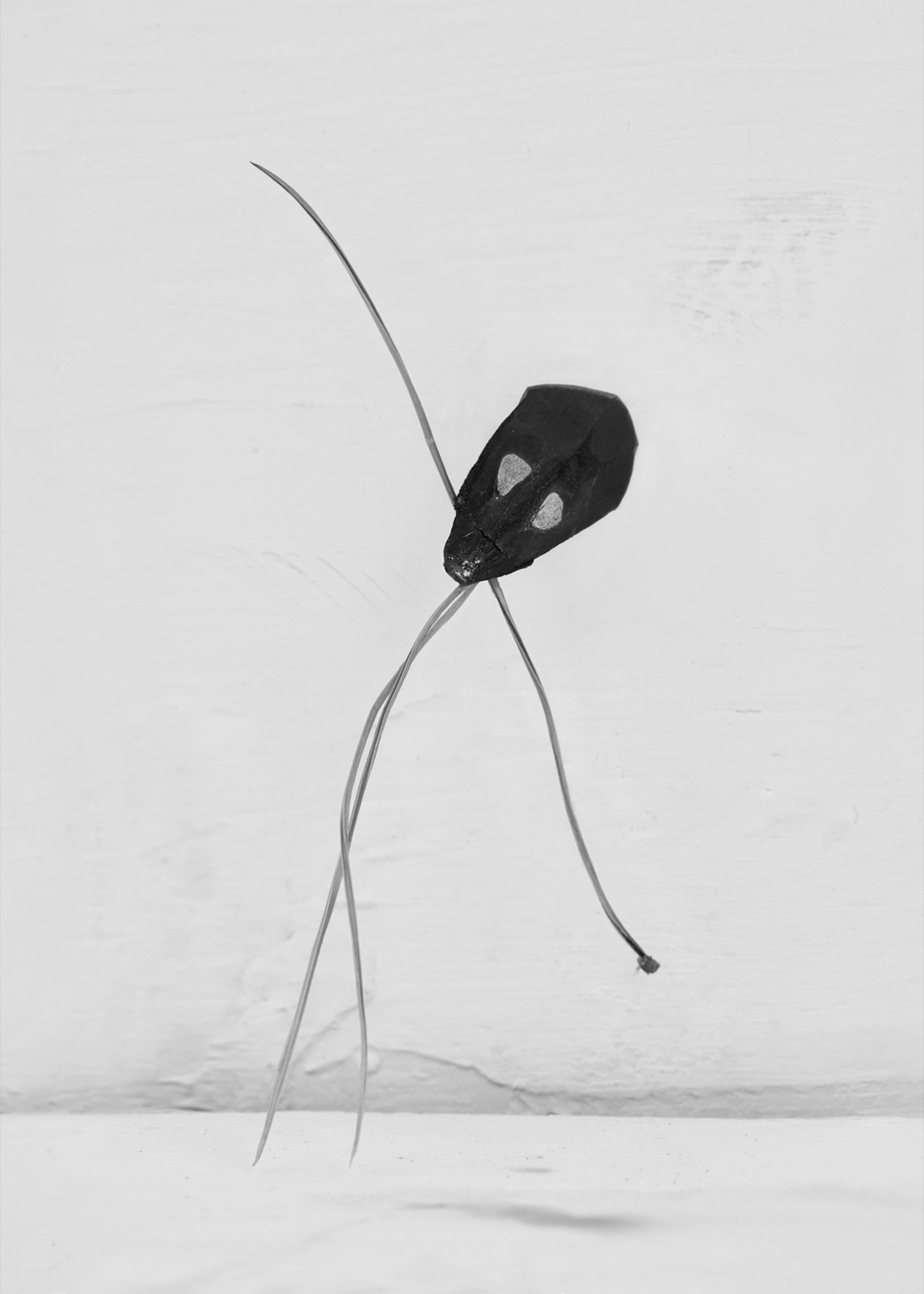
We stand very close to a whitewashed wall, close enough to read the trowel marks and the low ledge running along the bottom like a horizon. Against it balances something improbable: a small black stone, faceted and rough, marked with two pale spots where eyes would be, perched on a splay of long grass stems that fan down to the floor like the legs of a wading bird. It is nothing, and it stands there like a figure.
The organization is the whole drama. One stem arcs high to the upper left, a single confident line; the others cross in a shallow X beneath the dark head and carry the eye down to the pale step. Everything is weight and counterweight — a heavy black mass held aloft on filaments that should not support it, the improbability made to look, for the length of an exposure, entirely stable. What the camera has done is simply notice a creature assembled out of debris and shadow, and hold it still.
Yeste built his name at the top of Spanish fashion photography, yet the Needles series turns away from all that glamour toward these austere, close-looking still lifes. This one inverts its companions: where they set pale lines against black, here a dark form floats on a field of chalk. As a gelatin silver print mounted on aluminium Dibond the whites stay clean and luminous to the edge, the object’s blacks dense and matte against them, the whole thing given the flat, resolute presence of a specimen pinned for study. Debris has been raised, briefly, to the rank of portrait.