Warmth is the hardest thing to photograph, yet here it is, pressed into the grass: two people and a big pale dog folded into one drowsy heap on a summer lawn. The claim the image makes is that skin, fur and cut grass belong to the same tactile family. A nude woman lies on her back in the foreground, a small tattoo below her navel, eyes nearly closed; behind her a second body reclines, and the dog drapes its forelegs across them both as if it, too, had been posed and then forgot.
Everything in the frame is about touch. The dog’s paw hangs over a bare shoulder; a cheek rests against flank; blades of dry grass print themselves faintly on skin. This is the vernacular of the family snapshot, the pile of sleepers, the pet who will not be excluded, raised to the pitch of art without losing its ordinariness. Weber understands that a photograph is itself a thing to be handled, and he makes one you almost want to lie down inside.
Weber built a career on exactly this affection, photographing dogs with the same seriousness he brought to movie stars and athletes, refusing the hierarchy that puts humans above their animals. This gelatin silver print holds the whole tonal argument in its surface, the near-white of the dog’s coat, the soft greys of sunlit flesh, the darker mat of trodden grass. Circulated first as an image of celebrity ease, it survives as something plainer and better, a study of creatures keeping each other warm.
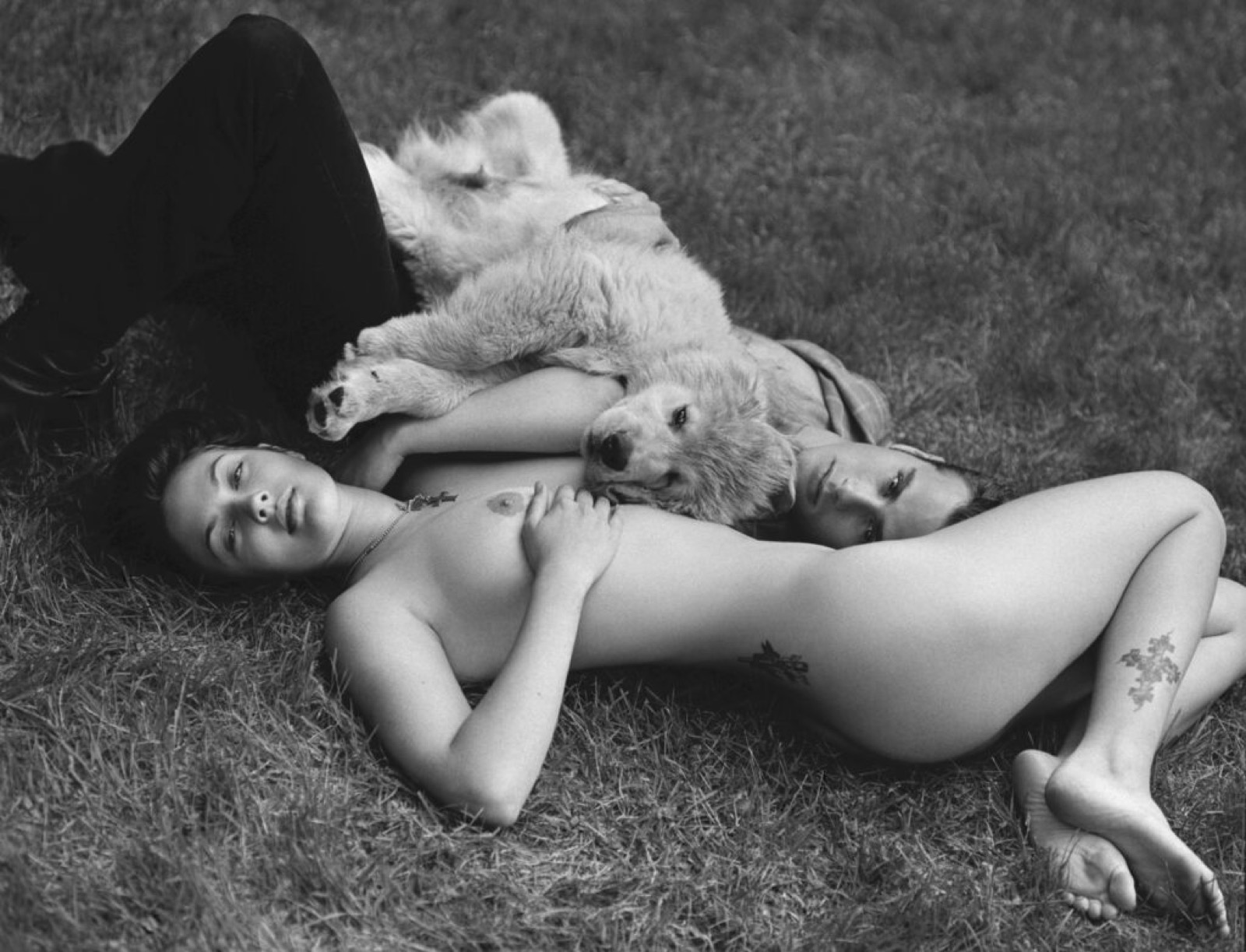

Warmth is the hardest thing to photograph, yet here it is, pressed into the grass: two people and a big pale dog folded into one drowsy heap on a summer lawn. The claim the image makes is that skin, fur and cut grass belong to the same tactile family. A nude woman lies on her back in the foreground, a small tattoo below her navel, eyes nearly closed; behind her a second body reclines, and the dog drapes its forelegs across them both as if it, too, had been posed and then forgot.
Everything in the frame is about touch. The dog’s paw hangs over a bare shoulder; a cheek rests against flank; blades of dry grass print themselves faintly on skin. This is the vernacular of the family snapshot, the pile of sleepers, the pet who will not be excluded, raised to the pitch of art without losing its ordinariness. Weber understands that a photograph is itself a thing to be handled, and he makes one you almost want to lie down inside.
Weber built a career on exactly this affection, photographing dogs with the same seriousness he brought to movie stars and athletes, refusing the hierarchy that puts humans above their animals. This gelatin silver print holds the whole tonal argument in its surface, the near-white of the dog’s coat, the soft greys of sunlit flesh, the darker mat of trodden grass. Circulated first as an image of celebrity ease, it survives as something plainer and better, a study of creatures keeping each other warm.