Is she turning toward us or away? The young woman has been caught mid-pivot, her dark bob swinging, her shoulder leading, her face angled back over it to meet the lens with a look that could be curiosity or wariness or simply the neutral alertness of someone photographed for a long time. She wears a pale, crinkled cream top; behind her is nothing but a soft grey seamless, the studio's polite way of saying elsewhere.
The light does most of the talking. It falls from the side, modeling one cheek into brightness and letting the far side of her face slip toward shadow, so the portrait feels sculpted rather than snapped. There's a restraint here I find myself admiring, no props, no narrative furniture, just a person and the decision about where the light should land, which turns out to be enough.
The picture sits outside Hido's named series, one of the studio portraits he has increasingly made alongside the houses and roads, and it's telling how the same sensibility survives the change of subject: the same patience, the same tenderness toward a slightly guarded human presence. Printed as archival pigment on aluminium, the tonal transitions stay smooth and unhurried. I keep meeting her eyes and losing them, which is, I suspect, exactly the temperature the picture was aiming for.
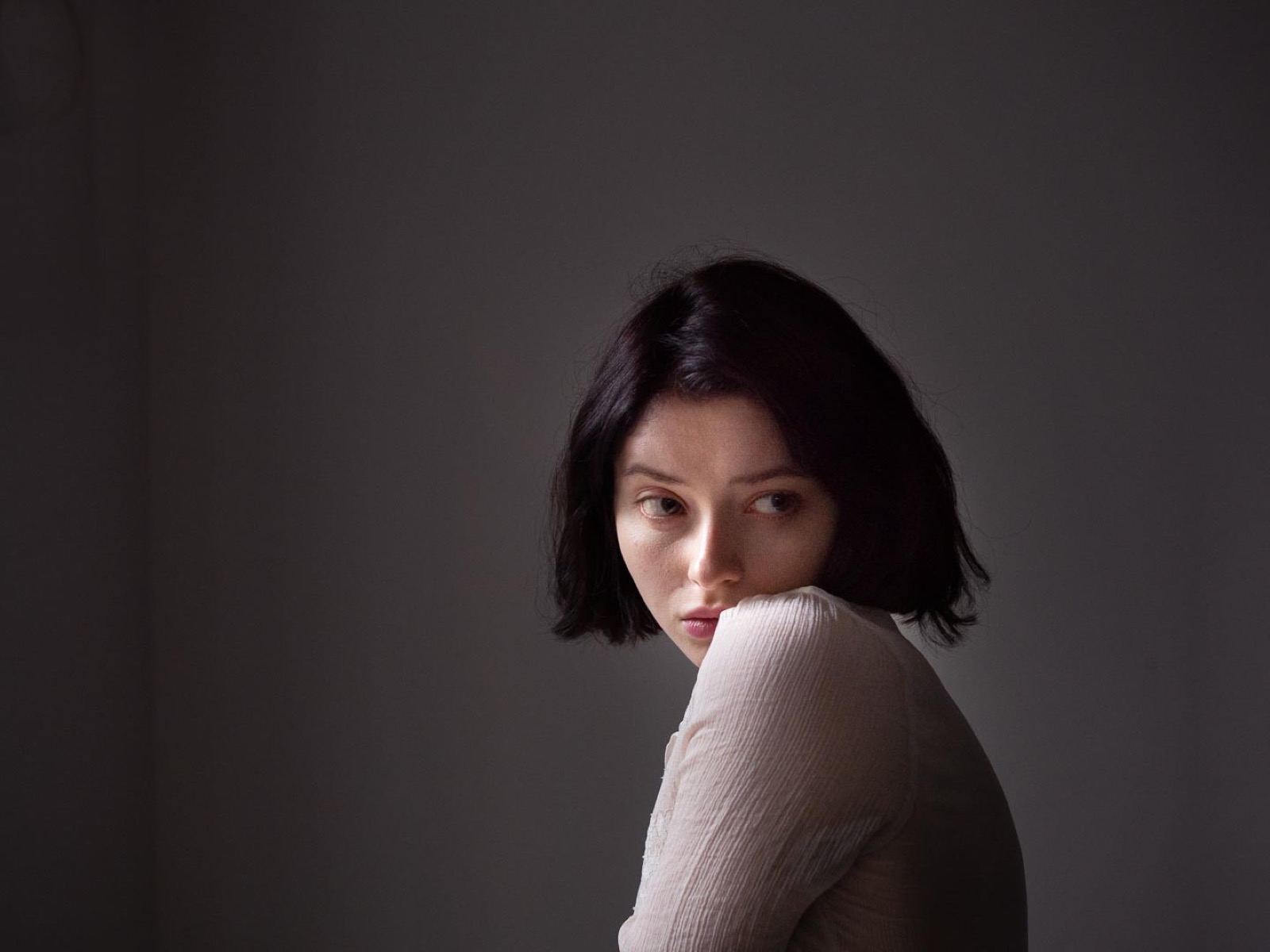

Is she turning toward us or away? The young woman has been caught mid-pivot, her dark bob swinging, her shoulder leading, her face angled back over it to meet the lens with a look that could be curiosity or wariness or simply the neutral alertness of someone photographed for a long time. She wears a pale, crinkled cream top; behind her is nothing but a soft grey seamless, the studio's polite way of saying elsewhere.
The light does most of the talking. It falls from the side, modeling one cheek into brightness and letting the far side of her face slip toward shadow, so the portrait feels sculpted rather than snapped. There's a restraint here I find myself admiring, no props, no narrative furniture, just a person and the decision about where the light should land, which turns out to be enough.
The picture sits outside Hido's named series, one of the studio portraits he has increasingly made alongside the houses and roads, and it's telling how the same sensibility survives the change of subject: the same patience, the same tenderness toward a slightly guarded human presence. Printed as archival pigment on aluminium, the tonal transitions stay smooth and unhurried. I keep meeting her eyes and losing them, which is, I suspect, exactly the temperature the picture was aiming for.