
Todd Hido
American, b. 19681726, 1996
Archival pigment print mounted on aluminium Dibond.
35.6 x 27.9 cm / 14 x 11 in
61 x 50.8 cm / 24 x 20 in
96.5 x 76.2 cm / 38 x 30 in
187.3 x 149.9 cm / 73 3/4 x 59 in
Signed, titled, numbered, and dated on a label affixed to the verso of the mount
Edition of 10 + 3 AP — 35.6 x 27.9 cm / 14 x 11 in (Sold out)
Edition of 10 + 3 AP — 61 x 50.8 cm / 24 x 20 in (Sold out)
Edition of 5 + 1AP — 96.5 x 76.2 cm / 38 x 30 in (Sold out)
Edition of 1 + 1 AP NFS — 187.3 x 149.9 cm / 73 3/4 x 59 in
© The Artist
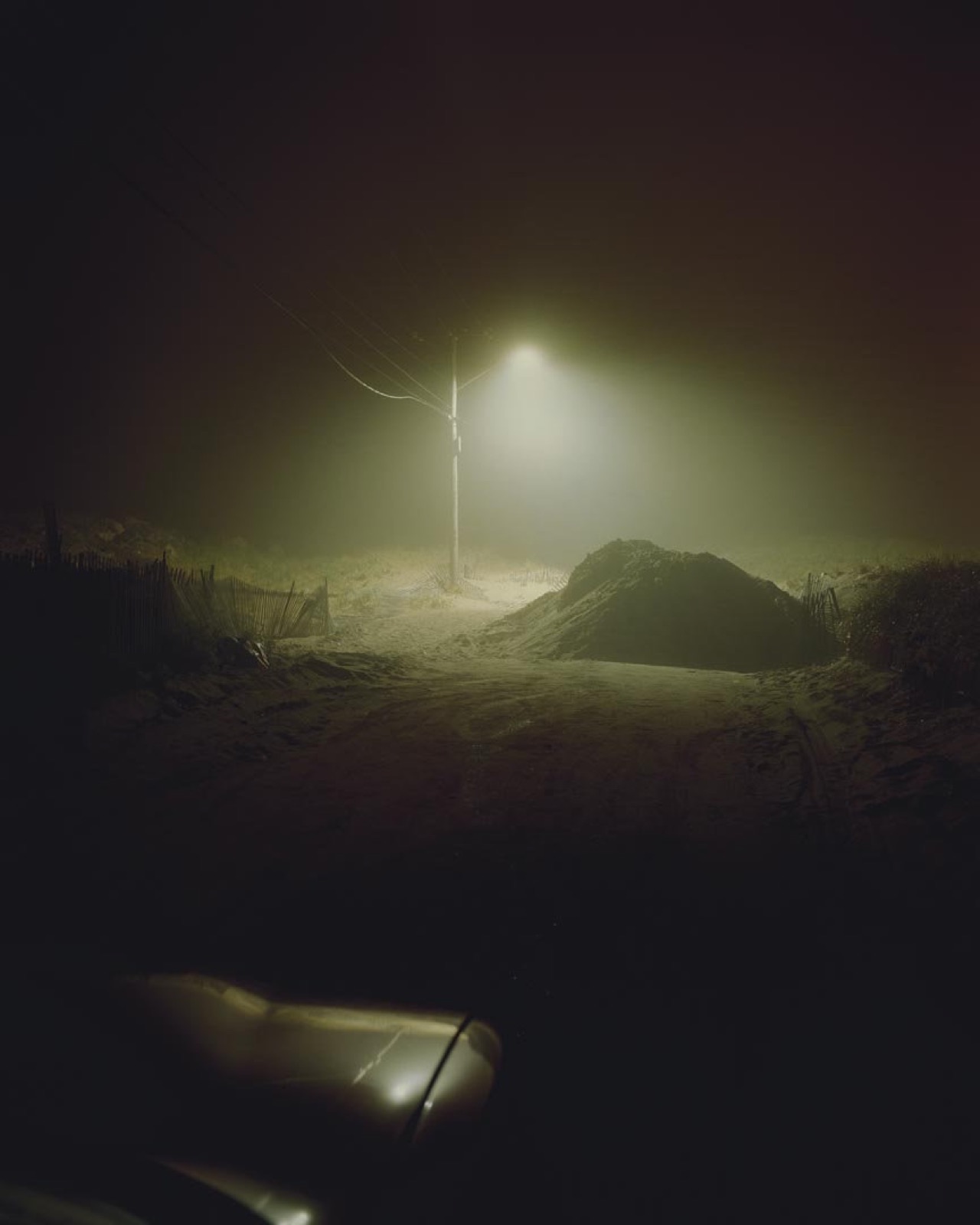
I once spent an embarrassing amount of a holiday looking for the end of a road, convinced something waited there, and of course nothing did — just where the asphalt gave up. That's the feeling this picture hands you, except Todd Hido got there at night, in fog, and didn't bother getting out of the car. You can see the car, in fact. Down at the bottom edge there's a curl of chrome fender catching the glare, which means we're sitting in it, parked, engine probably still ticking. The whole photograph is a windshield.
And what the windshield frames is almost nothing: a public lamp at the dead end of a sand road, burning so hard through the sea fog that the light stops being light and turns into a body — greenish-gold, swollen, thick enough to swallow the leaning utility pole and dissolve its slack power lines into a smudge. Snow fencing staggers along both shoulders like it's been drinking. A mound of sand humps up beside the pole. Grave, or just a dune that wandered inland and sat down; the photograph won't say.
What gets me is that Hido built a whole reputation on lit windows — Houses at Night, House Hunting, all that loneliness drifting out of other people's living rooms, the stuff the Whitney and SFMOMA quietly kept. Here nobody lives anywhere. The destination is a streetlight. The road just stops, the light just holds, and we don't open the door. We never do.