Txema Yeste
Spanish, b. 1972Needles, 2019-24
Gelatin silver print mounted on aluminium Dibond.
Image: 63 x 45 cm / 24 3/4 x 17 3/4 in / Paper: 78 x 59 cm / 30 3/4 x 23 1/4 in
Image: 110 x 78.5 cm / 43 1/4 x 30 7/8 in / Paper: 127 x 94.5 cm / 50 x 37 1/4 in
Image: 126 x 90 cm / 49 5/8 x 35 3/8 in / Paper: 143 x 106 cm / 56 1/4 x 41 3/4 in
Hand-signed by the artist, titled, editioned, and dated in ink on a label affixed to the verso of the mount
Edition of 10 — Image: 63 x 45 cm / 24 3/4 x 17 3/4 in / Paper: 78 x 59 cm / 30 3/4 x 23 1/4 in
Edition of 5 — Image: 110 x 78.5 cm / 43 1/4 x 30 7/8 in / Paper: 127 x 94.5 cm / 50 x 37 1/4 in
Edition of 3 — Image: 126 x 90 cm / 49 5/8 x 35 3/8 in / Paper: 143 x 106 cm / 56 1/4 x 41 3/4 in
© The Artist
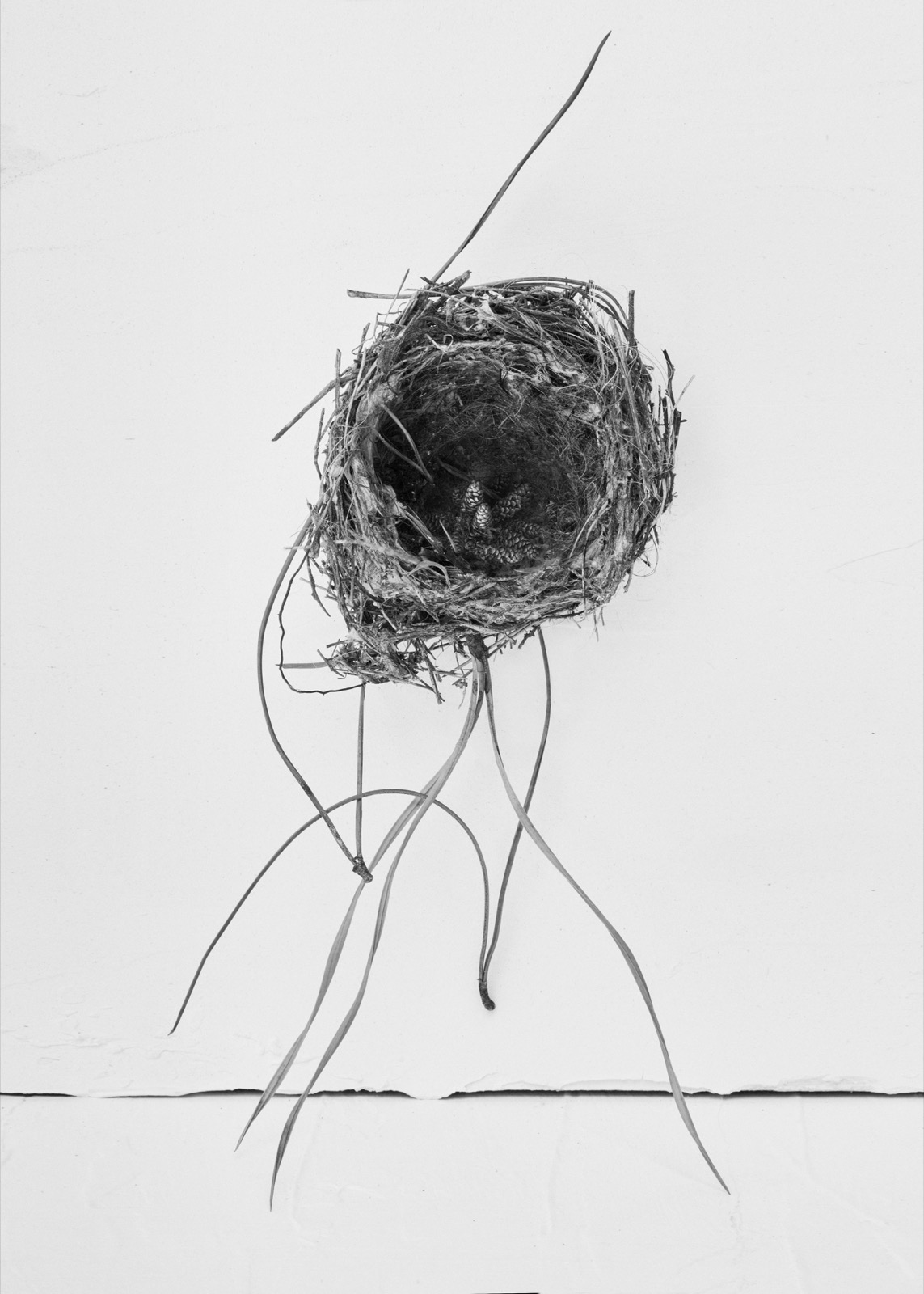
By the time a nest reaches a table like this, its season is finished and its tenants long gone. Yeste photographs one such abandoned cup, woven of dried grass and twig, and lays inside it, where eggs would have been, a small clutch of pine cones, three or four, no bigger than thumbnails. A single blade of grass juts up and to the right like a broken antenna; several more trail down from the rim to the bottom of the sheet, so that the nest seems to stand on splayed, spidery legs.
Everything is arranged frontally: the nest set high on a plain white ground whose only incident is a torn, deckled edge crossing the lower frame. Yeste lets the trailing grasses do the compositional work, converting a heavy circular mass into something almost ambulatory, a creature pausing mid-stride. Light comes evenly from the front, describing every fibre without picking a favourite. The substitution at the centre, cones for eggs, is quiet enough to be missed and exact enough to reward the noticing.
Yeste built his reputation in fashion, working for Numéro, Harper’s Bazaar and Vogue, where the elemental materials, grass, feather, wind, serve the human figure. The Needles series keeps that eye and removes the figure, granting a discarded nest the gravity of a portrait. The print is gelatin silver mounted on aluminium Dibond, a surface that holds the deep grey of the woven bowl against the near-white paper without either giving way. It is a small found thing described with unhurried care, and it does not need to be more than that.