The wall has been redacted. Whatever was written on this long green building, names, threats, declarations of love, has been rolled over with paint that almost matches, leaving rectangles of slightly wrong green, the way censored documents leave black bars. You can’t read the graffiti, but you can read the erasing of it, which may be the more legible text: somebody minds; somebody keeps coming back with a roller.
It’s hard to say what the building is, motel, barracks, apartments in a witness-protection sense of the word, and the hour doesn’t help: that pink is dusk or dawn or the permanent rose of sodium light. The wall glows a mint green last seen on 1950s refrigerators. Windows wear their security bars without complaint. A palm tree loiters behind the roofline, doing what palm trees do in pictures like this: hinting at paradise while confirming its distance. Along the top of the wall runs an inexplicable strip of teal brightness, the one festive note, like tinsel left up all year.
Todd Hido, from Kent, Ohio, now of the San Francisco Bay Area, is photography’s great connoisseur of these hours and these buildings; SFMOMA, the Getty and the Whitney all hold his prints, which tells you something about how wrong it would be to call this subject matter minor. As an archival pigment print, the picture keeps its two competing greens and that improbable pink in permanent negotiation, the way the best color photographs do. The graffiti is gone. The wall, photographed, gets the last word anyway.
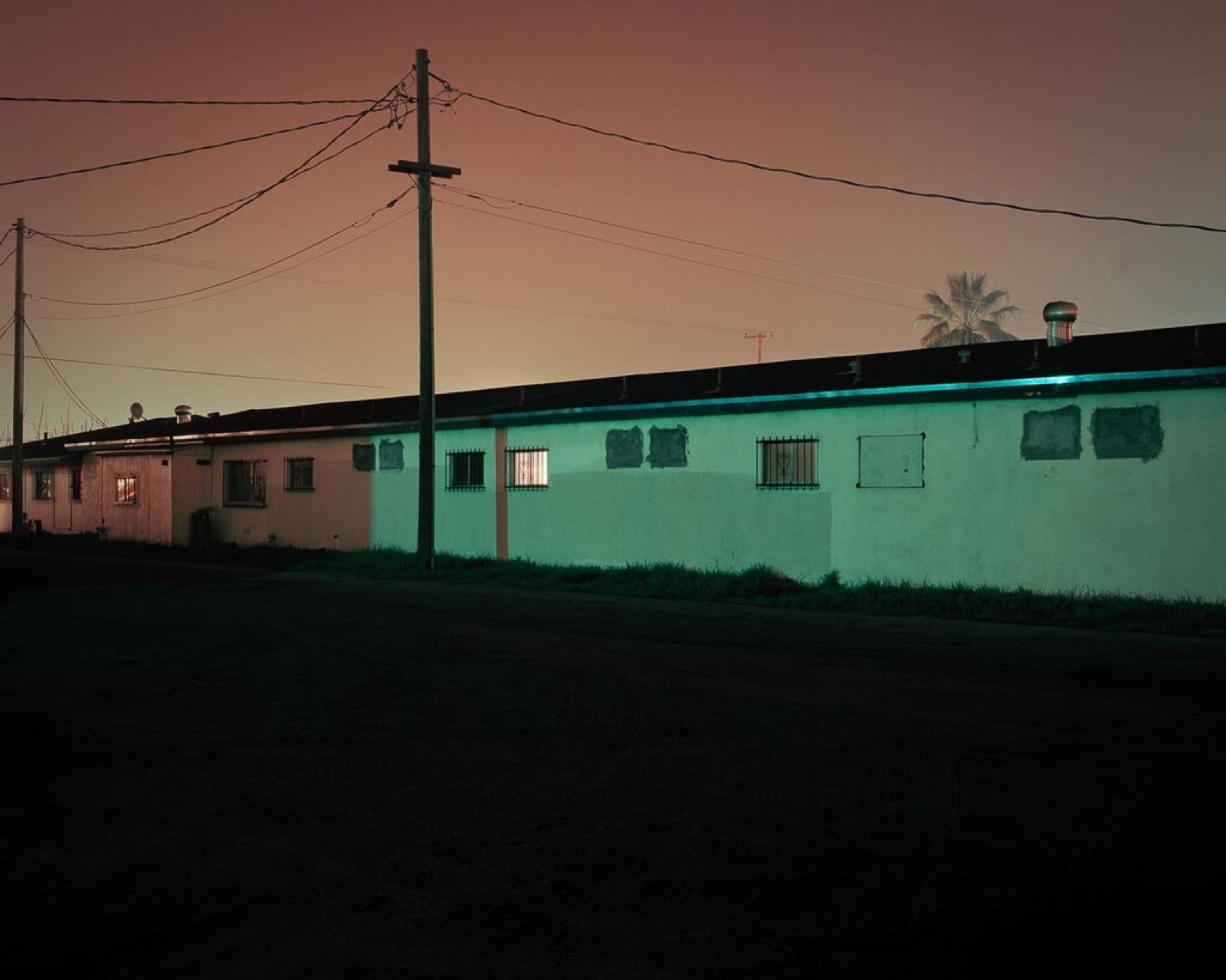

The wall has been redacted. Whatever was written on this long green building, names, threats, declarations of love, has been rolled over with paint that almost matches, leaving rectangles of slightly wrong green, the way censored documents leave black bars. You can’t read the graffiti, but you can read the erasing of it, which may be the more legible text: somebody minds; somebody keeps coming back with a roller.
It’s hard to say what the building is, motel, barracks, apartments in a witness-protection sense of the word, and the hour doesn’t help: that pink is dusk or dawn or the permanent rose of sodium light. The wall glows a mint green last seen on 1950s refrigerators. Windows wear their security bars without complaint. A palm tree loiters behind the roofline, doing what palm trees do in pictures like this: hinting at paradise while confirming its distance. Along the top of the wall runs an inexplicable strip of teal brightness, the one festive note, like tinsel left up all year.
Todd Hido, from Kent, Ohio, now of the San Francisco Bay Area, is photography’s great connoisseur of these hours and these buildings; SFMOMA, the Getty and the Whitney all hold his prints, which tells you something about how wrong it would be to call this subject matter minor. As an archival pigment print, the picture keeps its two competing greens and that improbable pink in permanent negotiation, the way the best color photographs do. The graffiti is gone. The wall, photographed, gets the last word anyway.