Image: 35.5 x 23.5 cm / 14 x 9 1/4 in / Paper: 40.3 x 28.1 cm / 15 7/8 x 11 1/8 in
Embossed photograph's copyright credit. Signed, titled "NYC " and dated ca 1954 in ink in the margin.
Signed and annotated "Premier tirage Mars 1994"in pencil on the verso
The avenue offers itself first as knowledge: the low sun raking west down the canyon, a row of bulbous parked sedans catching its glare on their roofs, the Empire State Building dissolved into the haze, a billboard promising in capitals that everything, this year, is new. This is the studium, the legible city of 1954 one reads with cultivated interest — the traffic, the bus, the clock above the Chevrolet sign measuring a morning that belongs to commerce and to history. One could date it, locate it, file it. The eye moves along the cars as along a sentence, slightly bored by its own competence.
And then the dog. He sits alone on the empty sidewalk, a setter the color of the pavement, ears down, gazing back up the avenue, and his long shadow spills across the flagstones toward me. He is the punctum — the small, unbidden thing that pierces and will not be argued with. Nothing asks him to be there; he is simply waiting, with that mute animal patience for someone who has gone into the buildings and not returned. The cars are a fact. The dog is a wound. He converts the whole indifferent street into the scene of an absence I will never be able to name.
That a humanist who divided seven decades between New York and Paris should arrange tenderness so quietly is the achievement here — held now by the Met, the Pompidou, SFMOMA. A vintage print keeps the silver of that exact morning, the grain breathing in the haze. One looks, and the dog keeps looking, and the looking does not close.
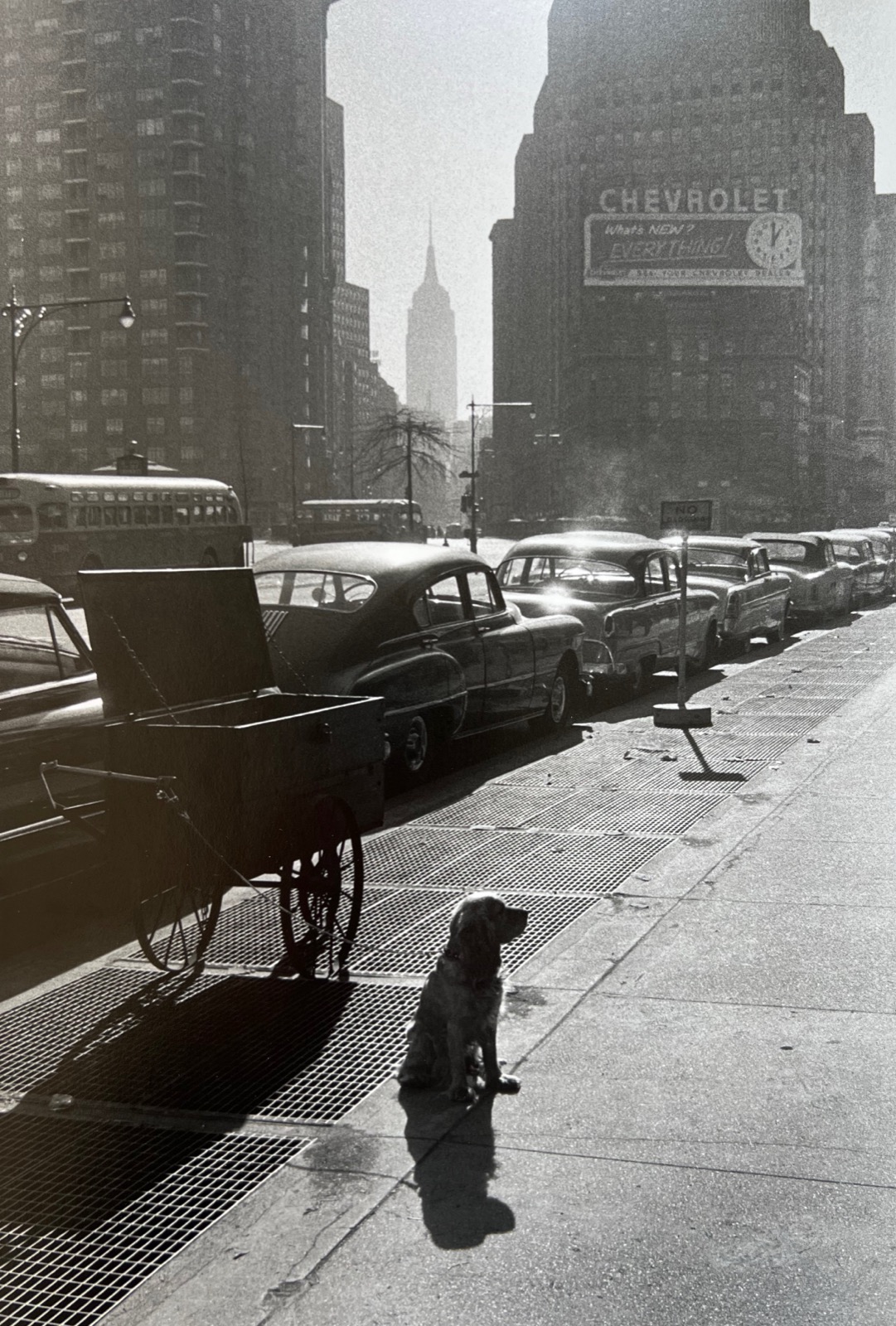
The avenue offers itself first as knowledge: the low sun raking west down the canyon, a row of bulbous parked sedans catching its glare on their roofs, the Empire State Building dissolved into the haze, a billboard promising in capitals that everything, this year, is new. This is the studium, the legible city of 1954 one reads with cultivated interest — the traffic, the bus, the clock above the Chevrolet sign measuring a morning that belongs to commerce and to history. One could date it, locate it, file it. The eye moves along the cars as along a sentence, slightly bored by its own competence.
And then the dog. He sits alone on the empty sidewalk, a setter the color of the pavement, ears down, gazing back up the avenue, and his long shadow spills across the flagstones toward me. He is the punctum — the small, unbidden thing that pierces and will not be argued with. Nothing asks him to be there; he is simply waiting, with that mute animal patience for someone who has gone into the buildings and not returned. The cars are a fact. The dog is a wound. He converts the whole indifferent street into the scene of an absence I will never be able to name.
That a humanist who divided seven decades between New York and Paris should arrange tenderness so quietly is the achievement here — held now by the Met, the Pompidou, SFMOMA. A vintage print keeps the silver of that exact morning, the grain breathing in the haze. One looks, and the dog keeps looking, and the looking does not close.