Weegee
American, 1899–1968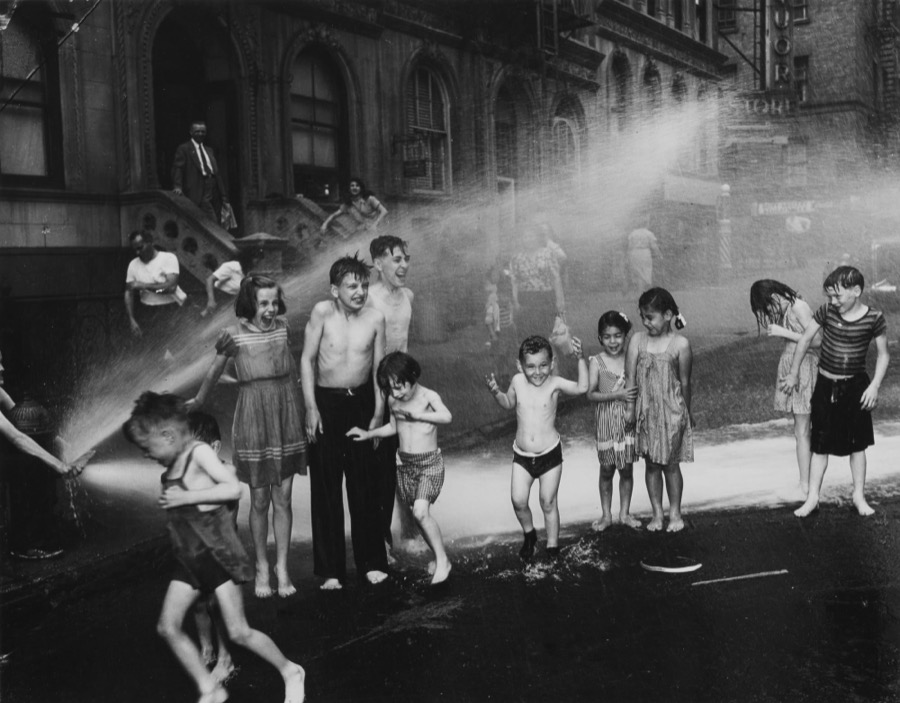
Usher Fellig (1899-1968) was born in the town of Lemburg (now in Ukraine) and first worked as a photographer at age fourteen, three years after his family immigrated to the United States, where his first name was changed to the more American-sounding Arthur. Self-taught, he held many photography-related jobs before gaining regular employment at a photography studio in lower Manhattan in 1918. By 1935 he was working as a freelance news photographer, centering his activity around police headquarters. In 1938, he obtained permission to install a police radio in his car, which enabled him to take the first and most sensational photographs of news events and offer them for sale to publications such as the Herald-Tribune, Daily News, Post, the Sun, and PM Weekly, among others. It was at this time that he earned the name Weegee (appropriated from the Ouija board) for his uncanny ability to make such early appearances at scenes of violence and catastrophe.
During the 1940s, Weegee's photographs appeared outside the mainstream press and met success there as well. New York's Photo League held an exhibition of his work in 1941, and the Museum of Modern Art began collecting his work and exhibited it in 1943. Weegee published his photographs in several books, including Naked City (1945), Weegee's People (1946), and Naked Hollywood (1953). After moving to Hollywood in 1947, he devoted most of his energy to making 16-millimeter films and photographs for his "Distortions" series, a project that resulted in experimental portraits of celebrities and political figures. He returned to New York in 1952 and lectured and wrote about photography until his death.