
Ramón Masats
Spanish, 1931–2024Ludmilla Tchérina, Madrid, 1964
Gelatin Silver Print.
Printed later.
Image: 24.5 x 37.5 cm / 9 5/8 x 14 3/4 in / Paper: 30 x 40 cm / 11 3/4 x 15 3/4 in
Image: 37.5 x 56.5 cm / 14 3/4 x 22 1/4 in / Paper: 50 x 60 cm / 19 3/4 x 23 5/8 in
Ramón Masats Estate dry stamp, signed and authenticated by Sonia Masats with title and edition number in pencil on label affixed to print verso
Edition of 15 — Image: 24.5 x 37.5 cm / 9 5/8 x 14 3/4 in / Paper: 30 x 40 cm / 11 3/4 x 15 3/4 in
Edition of 5 — Image: 37.5 x 56.5 cm / 14 3/4 x 22 1/4 in / Paper: 50 x 60 cm / 19 3/4 x 23 5/8 in
© The Artist
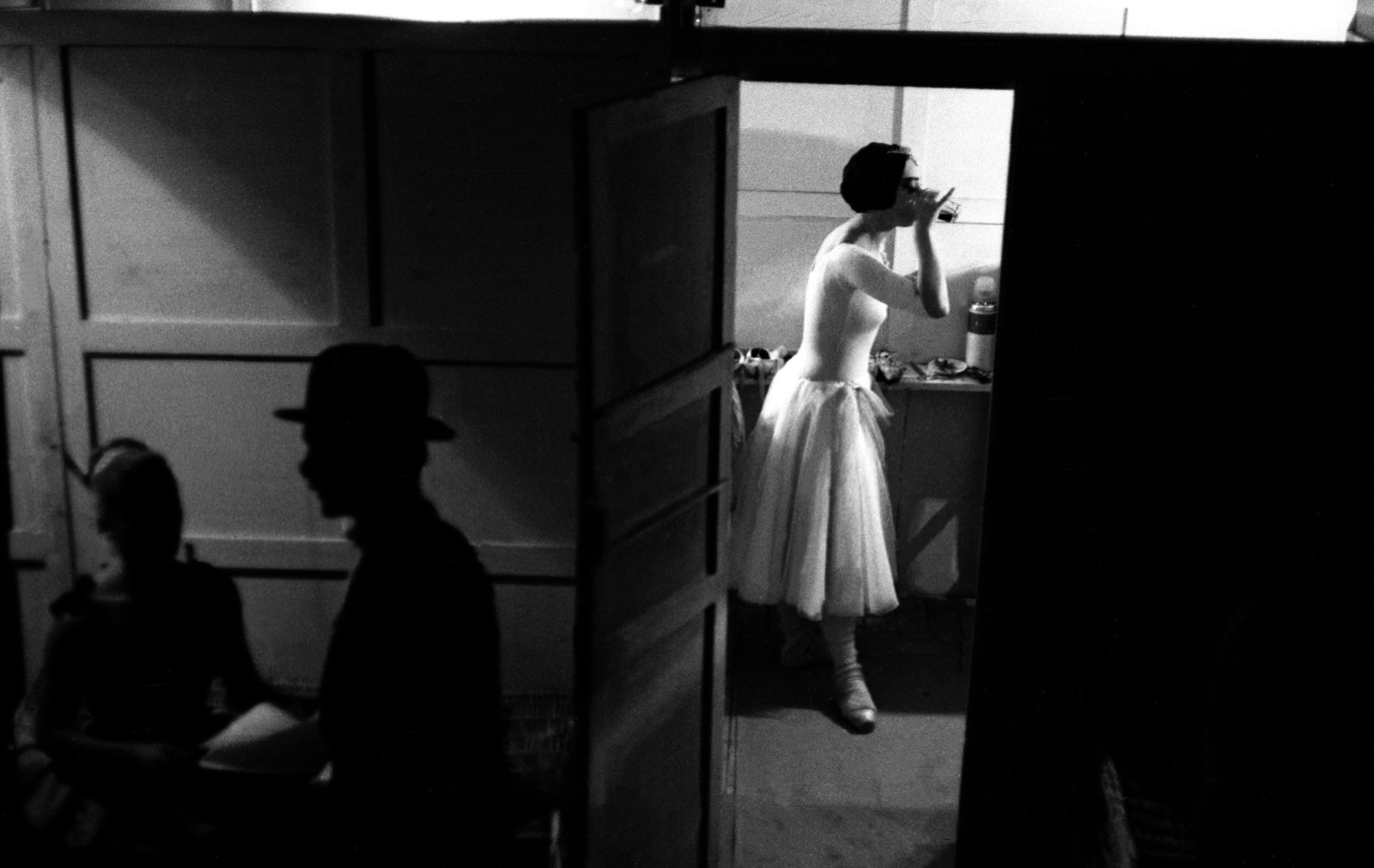
She tips her head back and drinks — mid-gulp, throat exposed, the bottle raised the way you'd raise it backstage between acts when nobody important is watching. Except someone is. Masats is, and so are the two men slumped in the foreground dark, one in a hat, both reduced to silhouette, both turned toward the lit doorway where she stands in full white tutu like a figure out of Vermeer who happens to be wearing pointe shoes. It takes a second to register what you're actually looking at: a prima ballerina, doing the most unballetic thing imaginable, being thirsty.
That doorway does all the work. It's a frame inside the frame, a little stage of light cut out of the blackness, and she's been caught in it the way a moth gets caught in a slice of lamplight. Everything bright belongs to her — the tutu, the bare arms, the cluttered dressing table behind with its thermos and its scatter of things. Everything else has been swallowed. The two watchers are barely there, more shadow than men, and that's the joke and the tenderness of it at once: the whole apparatus of the theatre, the audience, the waiting, all dissolved into murk, while she just gets on with the unglamorous business of quenching it.
This is Madrid, 1964, and she is Ludmilla Tchérina, the French dancer the world knew from The Red Shoes, here off duty inside her own myth. Masats — one of the great names of postwar Spanish photography, the dark heart of the AFAL generation — wasn't after the diva. He was after the gap between the costume and the person inside it, and he found it in a swig from a bottle. You could hang a hundred portraits of her in arabesque. This one, you'd keep.