The whitest thing in the frame is not the sky but the lather, a thick foam of soap sliding in bright rivulets down a dark bent head and pooling at the jaw. Photography loves this kind of extreme, the way monochrome turns a private wash into a study of two tones at their limits: skin gone nearly black in the sun, suds gone chalk. Between those poles the whole picture is negotiated, and the title simply names the brighter one.
What holds it together is the ordinariness of the act. A man leans forward over a dented metal cup, one hand cupping his cheek, an earring catching a fleck of light, and washes as anyone washes, unaware or indifferent that the foam is behaving like paint. The camera does what it does best, taking a gesture too fast and too common for notice and giving it duration. Behind him a fence of sharpened stakes rakes upward into soft focus, its menace defused into pattern, so the threat becomes mere backdrop to a moment of care.
The print carries the argument to its finish: gelatin silver toned in selenium the year after the negative, a process that lets the lather stay luminous without chalking to blank white while the shaded flank of the back keeps its deep, worked blacks. That tonal reach is the difference between a snapshot of washing and a picture about it. Made by the photographer who founded the gallery showing it, the image finds unexpected drama in nothing more than soap and water.
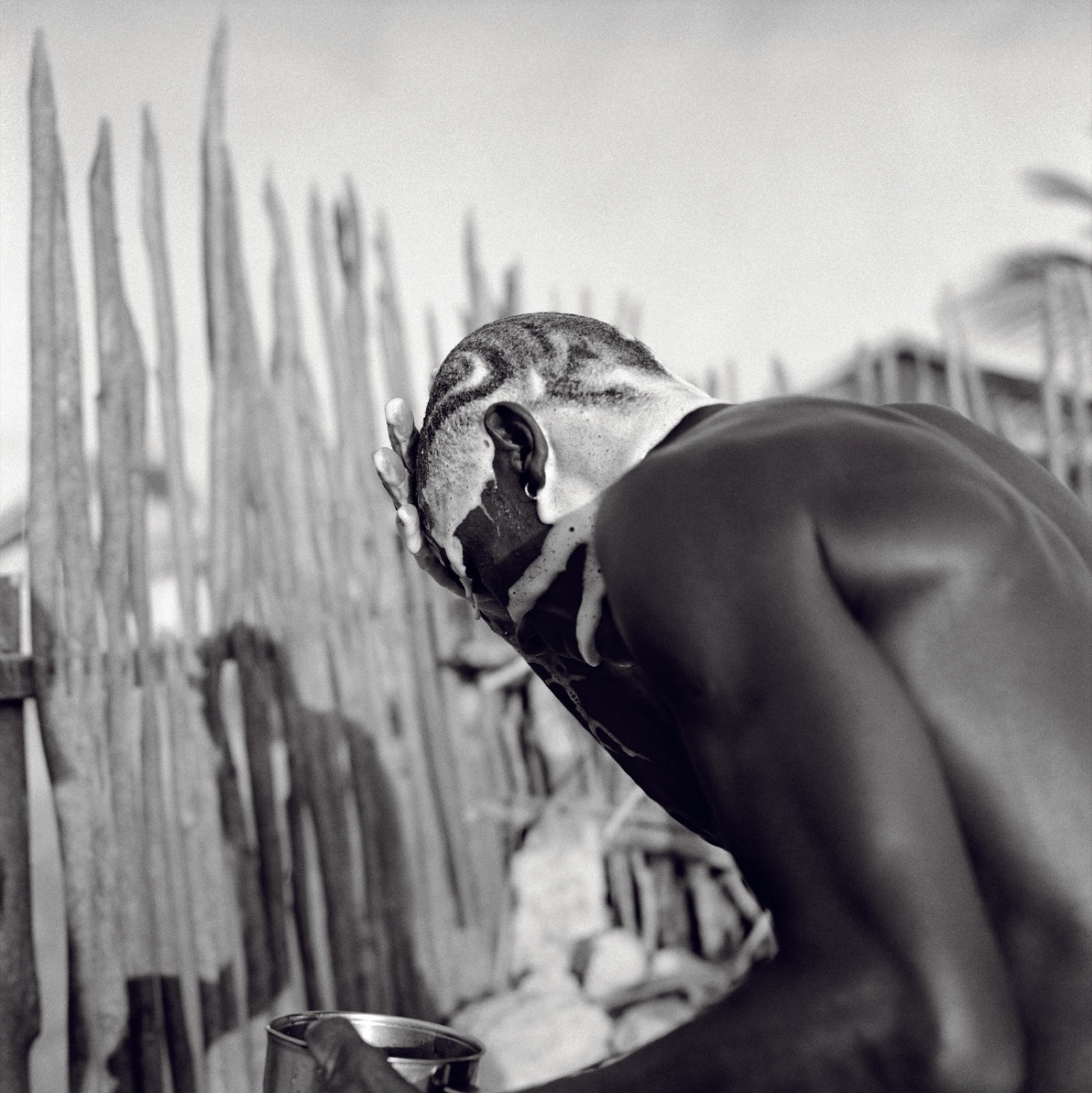

The whitest thing in the frame is not the sky but the lather, a thick foam of soap sliding in bright rivulets down a dark bent head and pooling at the jaw. Photography loves this kind of extreme, the way monochrome turns a private wash into a study of two tones at their limits: skin gone nearly black in the sun, suds gone chalk. Between those poles the whole picture is negotiated, and the title simply names the brighter one.
What holds it together is the ordinariness of the act. A man leans forward over a dented metal cup, one hand cupping his cheek, an earring catching a fleck of light, and washes as anyone washes, unaware or indifferent that the foam is behaving like paint. The camera does what it does best, taking a gesture too fast and too common for notice and giving it duration. Behind him a fence of sharpened stakes rakes upward into soft focus, its menace defused into pattern, so the threat becomes mere backdrop to a moment of care.
The print carries the argument to its finish: gelatin silver toned in selenium the year after the negative, a process that lets the lather stay luminous without chalking to blank white while the shaded flank of the back keeps its deep, worked blacks. That tonal reach is the difference between a snapshot of washing and a picture about it. Made by the photographer who founded the gallery showing it, the image finds unexpected drama in nothing more than soap and water.