Photographs do not show desire; they assign it. Here the assignment is explicit: we are inside the car, in the driver’s place, and the woman leaning through the window, wind-tangled dark hair, green wool coat, lipstick smeared past the border of her mouth, addresses whoever holds the wheel. Behind her the dusk performs its orange fade over black brush. The flash, that instrument of verdicts, has already decided she is the subject and we are the circumstance.
The scenario is borrowed, and the picture knows it: the hitchhiker, the roadside bargain, the B-film that America keeps remaking in its head. What certifies the fiction is damage. Lipstick worn correctly is grooming; lipstick smeared is plot. One could object that such images traffic in old fantasies about women at car windows, and the objection would be right, and it would arrive too late, because the perforated headliner, the chrome sill, the wood-grain door have already made us occupants. To look is to have gotten in.
The photograph belongs to Excerpts from Silver Meadows, a series whose title sounds like a subdivision and behaves like a memory. Its maker, born in Kent, Ohio in 1968, based in the San Francisco Bay Area, numbers his images rather than titling them; SFMOMA, the Getty and the Whitney have taken his pictures into their collections. The archival pigment print is mounted on aluminium Dibond, flat and frontal as a windshield, which is fitting. The picture is a proposition about looking, and it is rigged: by the time we weigh it, we have accepted.
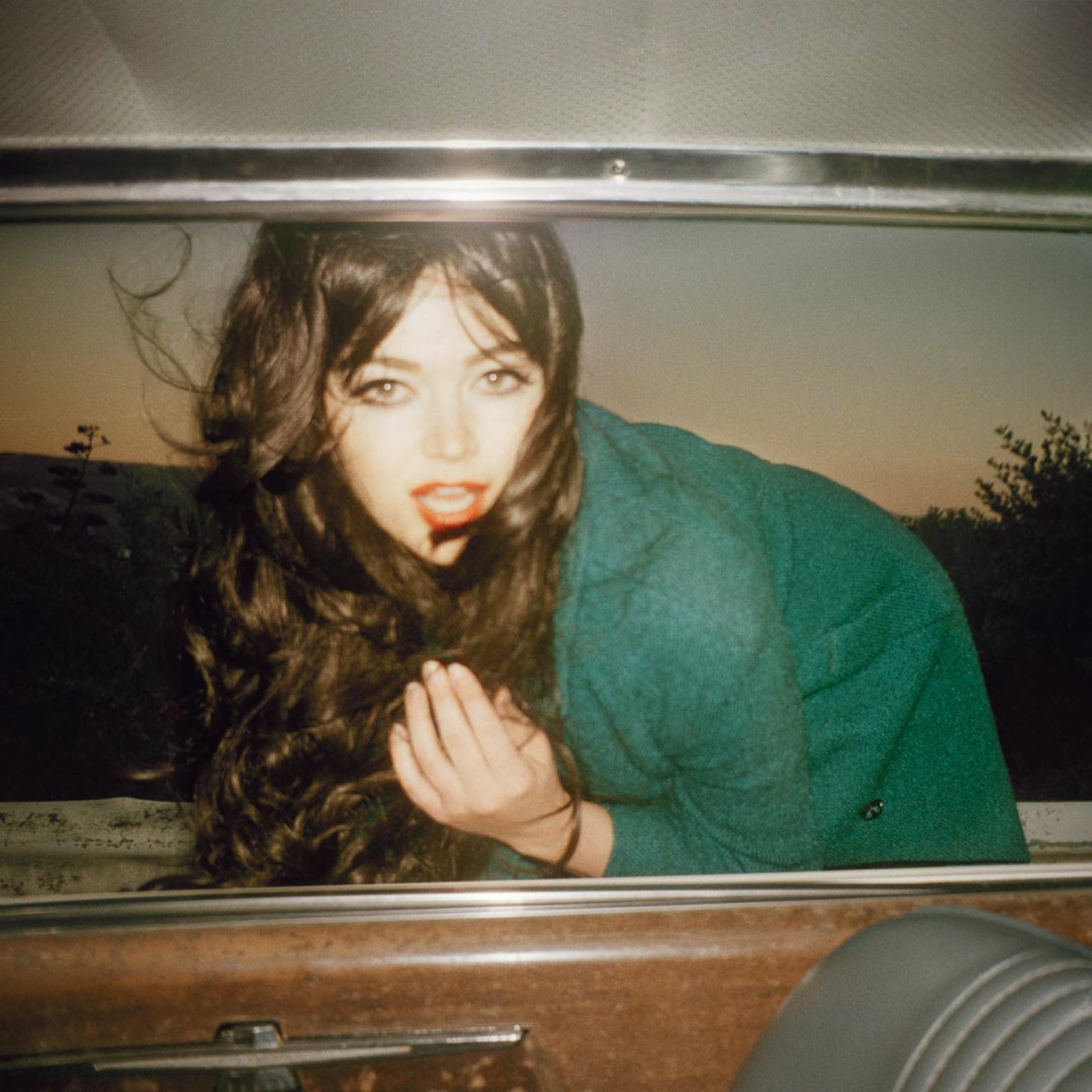

Photographs do not show desire; they assign it. Here the assignment is explicit: we are inside the car, in the driver’s place, and the woman leaning through the window, wind-tangled dark hair, green wool coat, lipstick smeared past the border of her mouth, addresses whoever holds the wheel. Behind her the dusk performs its orange fade over black brush. The flash, that instrument of verdicts, has already decided she is the subject and we are the circumstance.
The scenario is borrowed, and the picture knows it: the hitchhiker, the roadside bargain, the B-film that America keeps remaking in its head. What certifies the fiction is damage. Lipstick worn correctly is grooming; lipstick smeared is plot. One could object that such images traffic in old fantasies about women at car windows, and the objection would be right, and it would arrive too late, because the perforated headliner, the chrome sill, the wood-grain door have already made us occupants. To look is to have gotten in.
The photograph belongs to Excerpts from Silver Meadows, a series whose title sounds like a subdivision and behaves like a memory. Its maker, born in Kent, Ohio in 1968, based in the San Francisco Bay Area, numbers his images rather than titling them; SFMOMA, the Getty and the Whitney have taken his pictures into their collections. The archival pigment print is mounted on aluminium Dibond, flat and frontal as a windshield, which is fitting. The picture is a proposition about looking, and it is rigged: by the time we weigh it, we have accepted.