A long stucco wall, two storeys of it, holds the sodium warmth of a streetlamp against a night gone nearly black above the roofline. Todd Hido made this picture in the late 1990s, during the years he drove the outer edges of American towns after dark looking for houses that still showed a light. Here the building is institutional rather than domestic—apartments, perhaps, or a rooming house—yet the human trace is the same: one ground-floor window burns a steady yellow, and high on the left an open casement glows a cool aquatic blue.
Those two lights carry the whole emotional weight. Hido has long acknowledged the debt his night work owes to a tradition of American solitude, from Edward Hopper's illuminated windows to the long-exposure colour of the New Topographics generation, and this print, archival pigment on Dibond, extends that lineage into the suburban periphery. The empty road in the foreground, the leaning utility pole, the dry grass at the curb—these are the unglamorous facts of a place most photographers drive past.
What moves me is the restraint. Nothing is happening, and yet the picture is full of implied lives: someone left a window open to the cold; someone is awake behind the yellow glass. Hido lets the ordinary building keep its dignity and its secrets at once. It is a photograph about what a town looks like when it thinks no one is watching, and about the tenderness of noticing anyway.
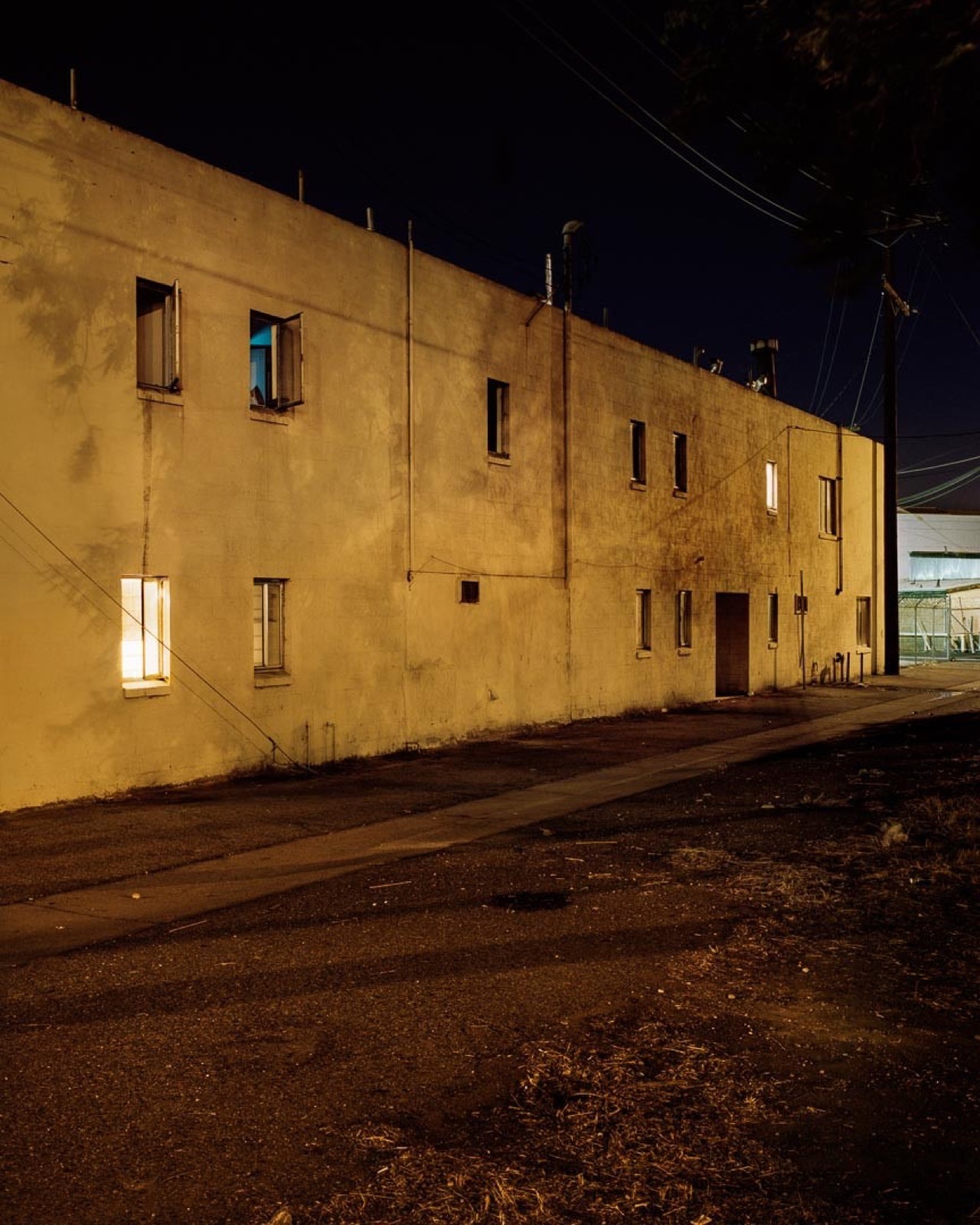

A long stucco wall, two storeys of it, holds the sodium warmth of a streetlamp against a night gone nearly black above the roofline. Todd Hido made this picture in the late 1990s, during the years he drove the outer edges of American towns after dark looking for houses that still showed a light. Here the building is institutional rather than domestic—apartments, perhaps, or a rooming house—yet the human trace is the same: one ground-floor window burns a steady yellow, and high on the left an open casement glows a cool aquatic blue.
Those two lights carry the whole emotional weight. Hido has long acknowledged the debt his night work owes to a tradition of American solitude, from Edward Hopper's illuminated windows to the long-exposure colour of the New Topographics generation, and this print, archival pigment on Dibond, extends that lineage into the suburban periphery. The empty road in the foreground, the leaning utility pole, the dry grass at the curb—these are the unglamorous facts of a place most photographers drive past.
What moves me is the restraint. Nothing is happening, and yet the picture is full of implied lives: someone left a window open to the cold; someone is awake behind the yellow glass. Hido lets the ordinary building keep its dignity and its secrets at once. It is a photograph about what a town looks like when it thinks no one is watching, and about the tenderness of noticing anyway.