Hand-signed by the artist, with title, date, and edition number inscribed in ink on an archival label affixed to the reverse side of the mounted photograph.
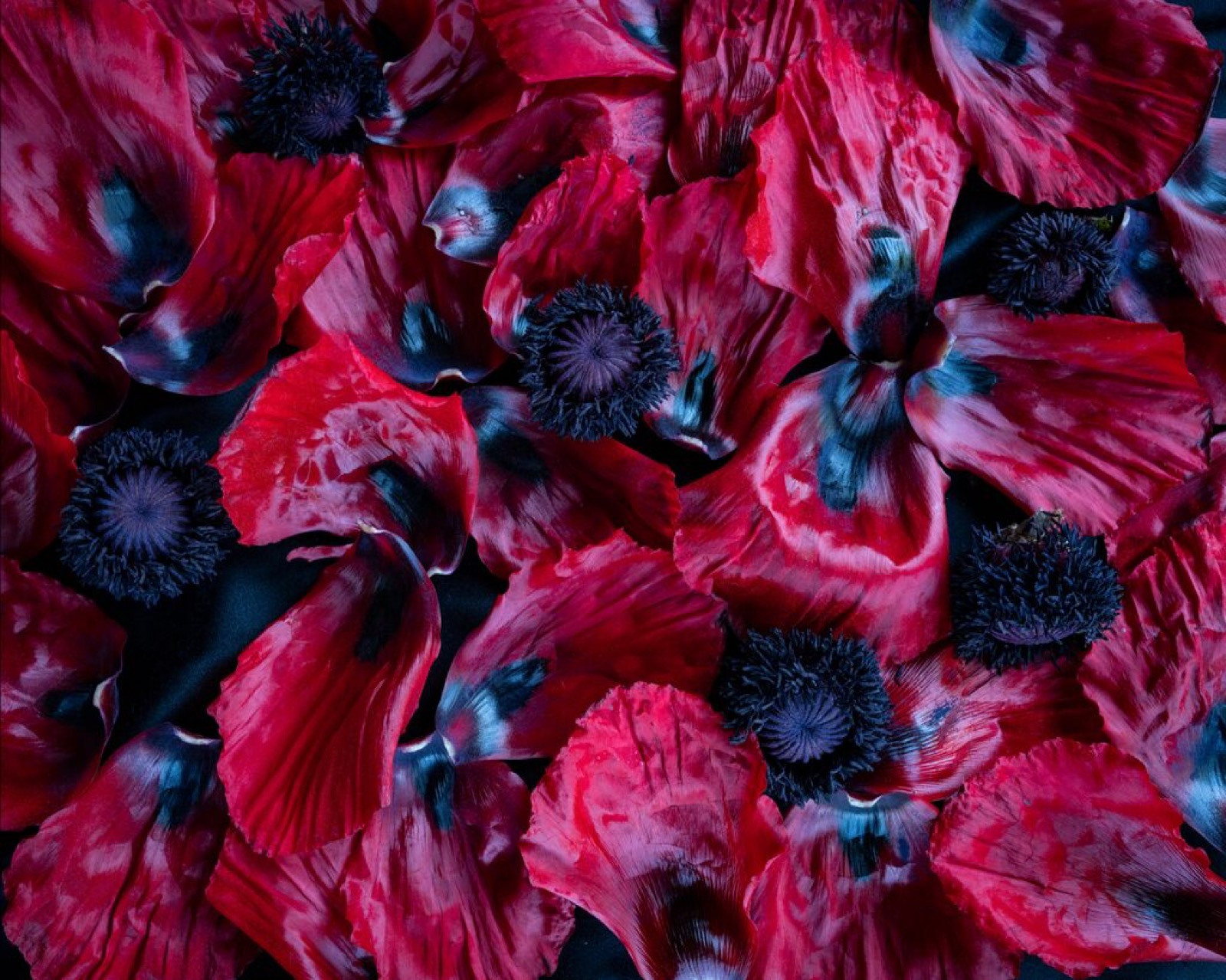
The poppy standing is what we are not shown. There is no stem here, no green, no field of them nodding in wind; the flower has been taken apart and laid on black, its crimson petals separated from their dark hearts and scattered like evidence. The picture withholds the living plant and offers instead its components: crinkled red tissue veined with blue, and the inky, bristling centers set loose beside them. To disassemble a flower is to refuse the bouquet, and its easy consolation.
The poppy carries more than most flowers. It is the bloom of remembrance and of sleep, of fields turned to slaughter and of the drug that dulls their memory, and Harvey lets none of that history speak aloud; she simply shows the parts and trusts us to feel the freight. Against the black cloth the red goes almost sacramental, wine-dark, bruised with blue at every base, and the petals keep the papery crease of things that were briefly alive. Beauty here is not denied its violence.
This is Harvey’s territory, the sensory world pressed until it yields feeling, and she has built books and a wide museum following out of such intensities. The archival pigment print earns its place by holding two extremes at once, red and near-black, without letting either drown the other, so the petals stay legible down to their creases. What the image finally withholds is closure: these poppies will not be put back together, and the print keeps them forever in pieces, exquisite and undone.

The poppy standing is what we are not shown. There is no stem here, no green, no field of them nodding in wind; the flower has been taken apart and laid on black, its crimson petals separated from their dark hearts and scattered like evidence. The picture withholds the living plant and offers instead its components: crinkled red tissue veined with blue, and the inky, bristling centers set loose beside them. To disassemble a flower is to refuse the bouquet, and its easy consolation.
The poppy carries more than most flowers. It is the bloom of remembrance and of sleep, of fields turned to slaughter and of the drug that dulls their memory, and Harvey lets none of that history speak aloud; she simply shows the parts and trusts us to feel the freight. Against the black cloth the red goes almost sacramental, wine-dark, bruised with blue at every base, and the petals keep the papery crease of things that were briefly alive. Beauty here is not denied its violence.
This is Harvey’s territory, the sensory world pressed until it yields feeling, and she has built books and a wide museum following out of such intensities. The archival pigment print earns its place by holding two extremes at once, red and near-black, without letting either drown the other, so the petals stay legible down to their creases. What the image finally withholds is closure: these poppies will not be put back together, and the print keeps them forever in pieces, exquisite and undone.