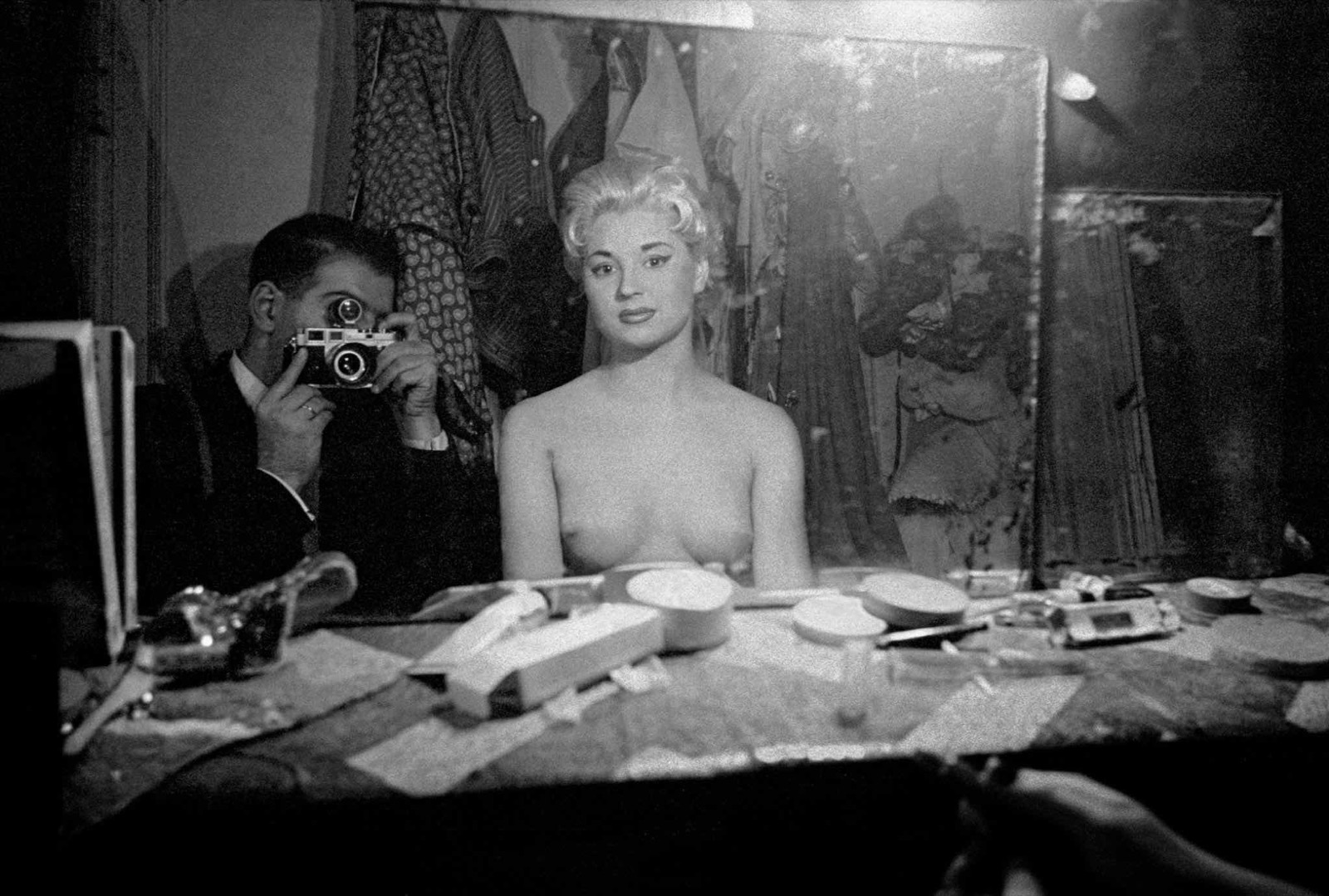
The whole picture is a mirror, and the photographer knew it before he tripped the shutter. Horvat sits at the left edge of the frame with a Leica pressed to his face, so that the act of looking is the first thing the camera describes. He has hidden himself in plain sight: one eye behind the rangefinder, a wedding ring catching the light on the hand that steadies the lens. Beside him a blonde dancer sits bare-shouldered at her dressing table and returns the look directly, calmly, as if being seen were simply part of the evening's work.
What holds the two of them together is the clutter between them. The table is a still life of the trade—powder compacts, jars, a scatter of small tubes and tins, the cool gleam of metal—described with a sharpness that refuses to flatter or soften. Behind, costumes hang in the shadow and a second mirror leans against the wall, doubling the room into further depth. The camera reports all of it at once: the woman's composure, the man's concealment, the working disorder of a backstage at the Sphynx.
The picture's intelligence lies in how it divides our attention. We cannot watch the dancer without watching the photographer watch her, and that second look is the real subject. Horvat reportedly had only minutes inside the club before he was turned out, which makes the frame's economy feel less like style than necessity. The result is among the most quietly self-aware self-portraits in his Paris work—a photograph about the transaction of the gaze, made by putting himself squarely inside it.
The whole picture is a mirror, and the photographer knew it before he tripped the shutter. Horvat sits at the left edge of the frame with a Leica pressed to his face, so that the act of looking is the first thing the camera describes. He has hidden himself in plain sight: one eye behind the rangefinder, a wedding ring catching the light on the hand that steadies the lens. Beside him a blonde dancer sits bare-shouldered at her dressing table and returns the look directly, calmly, as if being seen were simply part of the evening's work.
What holds the two of them together is the clutter between them. The table is a still life of the trade—powder compacts, jars, a scatter of small tubes and tins, the cool gleam of metal—described with a sharpness that refuses to flatter or soften. Behind, costumes hang in the shadow and a second mirror leans against the wall, doubling the room into further depth. The camera reports all of it at once: the woman's composure, the man's concealment, the working disorder of a backstage at the Sphynx.
The picture's intelligence lies in how it divides our attention. We cannot watch the dancer without watching the photographer watch her, and that second look is the real subject. Horvat reportedly had only minutes inside the club before he was turned out, which makes the frame's economy feel less like style than necessity. The result is among the most quietly self-aware self-portraits in his Paris work—a photograph about the transaction of the gaze, made by putting himself squarely inside it.