She turns her face up into a bright light and squints, lips parting as if about to speak or simply to breathe the day in. Kate Moss, still nearly unknown, is caught mid-gesture: the wind lifting her tousled hair off her forehead, the sun raking hard across a freckled cheek, the collar of a leather jacket pushed up around her throat. Nothing has been arranged for us. She looks past the camera entirely, out toward whatever waits in the glare.
The freckles are the point, or half of it. This was the season fashion began to turn from the polished supermodel toward something rawer and more particular, and Weber, of all people an architect of gloss, records it without a trace of retouching: the faint lines at the eyes, the sun-chapped lip, the down along the jaw. The tonal range is generous and true, a wide scale of grays that keeps skin as skin. The portrait rests on a conviction that an ordinary young face, closely seen, outlasts any amount of polish.
What carries this now is the archival pigment print, which lays those grays down with a matte, continuous depth and lets the highlight on her cheekbone stay open rather than burn to white. Weber spent the 1980s defining how America pictured beauty; here, at the edge of a new decade, he helps usher in its successor, and does it plainly, in daylight. The face tilts toward the sun, the eyes narrow against it, and a whole career hangs in that unguarded squint.
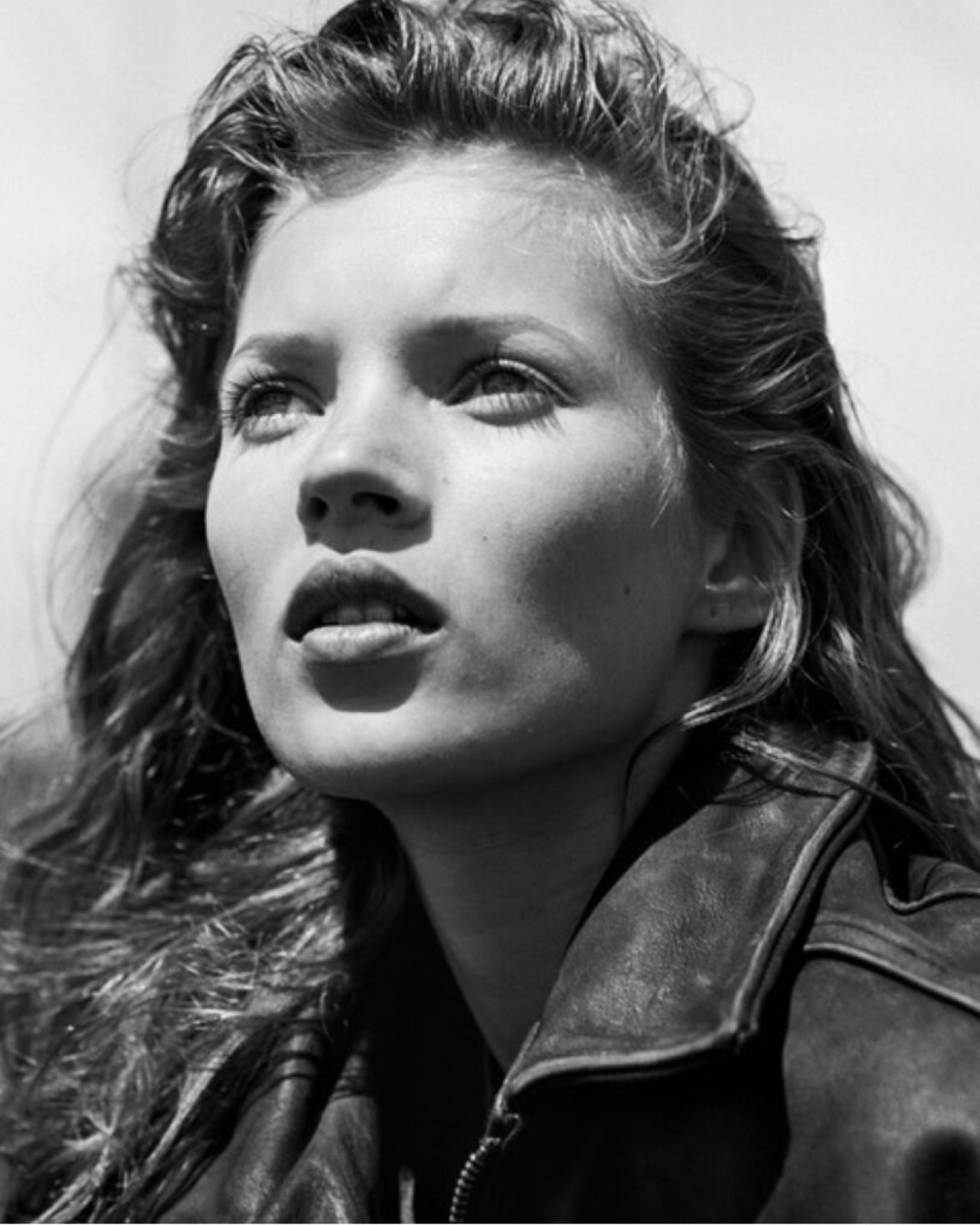

She turns her face up into a bright light and squints, lips parting as if about to speak or simply to breathe the day in. Kate Moss, still nearly unknown, is caught mid-gesture: the wind lifting her tousled hair off her forehead, the sun raking hard across a freckled cheek, the collar of a leather jacket pushed up around her throat. Nothing has been arranged for us. She looks past the camera entirely, out toward whatever waits in the glare.
The freckles are the point, or half of it. This was the season fashion began to turn from the polished supermodel toward something rawer and more particular, and Weber, of all people an architect of gloss, records it without a trace of retouching: the faint lines at the eyes, the sun-chapped lip, the down along the jaw. The tonal range is generous and true, a wide scale of grays that keeps skin as skin. The portrait rests on a conviction that an ordinary young face, closely seen, outlasts any amount of polish.
What carries this now is the archival pigment print, which lays those grays down with a matte, continuous depth and lets the highlight on her cheekbone stay open rather than burn to white. Weber spent the 1980s defining how America pictured beauty; here, at the edge of a new decade, he helps usher in its successor, and does it plainly, in daylight. The face tilts toward the sun, the eyes narrow against it, and a whole career hangs in that unguarded squint.