A telephone lies on its side at the foot of a wall, its cream plastic yellowed with age, the receiver off the hook and the coiled cord slack across a pale carpet. No one will answer; there is no one, and the room says so in every particular — the damask wallpaper gone brown and blotched with damp, the electrical outlet staring blankly, the corners falling into the soft dark of a cheap lens.
Silver Meadows is Hido's country of abandonment, and this is one of its still lifes: an object left behind by the people who left. The telephone is the most eloquent of ruins because it was made for connection, for a voice reaching another voice, and here it lies mute among the stains of the vanished. I keep noticing the receiver, set down as if mid-sentence, as if the conversation simply stopped.
The archival print on Dibond gives the wallpaper's faded pattern the weight of a fresco, something almost devotional in its decay. There is grief in the picture, but it is quiet, unhurried — the grief of things outliving their use. What the eye returns to is not tragedy but residue: the small, human evidence of a house where the last call was never quite hung up. A whole life once ran through that cord — appointments, arguments, good news carried down the line — and now it lies coiled and silent on the floor, the wallpaper keeping its faded pattern like a family keeping up appearances after everyone has gone.
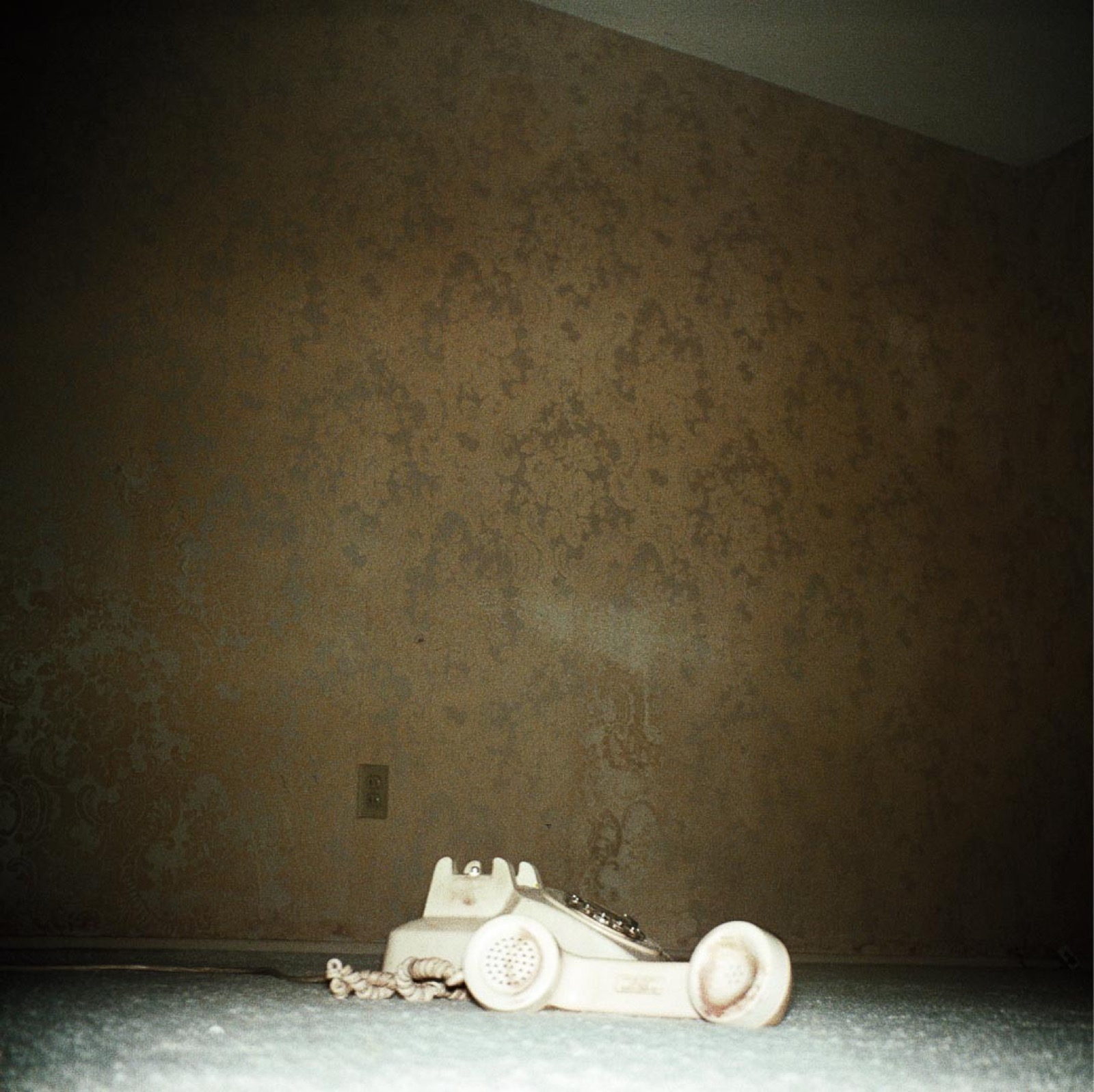

A telephone lies on its side at the foot of a wall, its cream plastic yellowed with age, the receiver off the hook and the coiled cord slack across a pale carpet. No one will answer; there is no one, and the room says so in every particular — the damask wallpaper gone brown and blotched with damp, the electrical outlet staring blankly, the corners falling into the soft dark of a cheap lens.
Silver Meadows is Hido's country of abandonment, and this is one of its still lifes: an object left behind by the people who left. The telephone is the most eloquent of ruins because it was made for connection, for a voice reaching another voice, and here it lies mute among the stains of the vanished. I keep noticing the receiver, set down as if mid-sentence, as if the conversation simply stopped.
The archival print on Dibond gives the wallpaper's faded pattern the weight of a fresco, something almost devotional in its decay. There is grief in the picture, but it is quiet, unhurried — the grief of things outliving their use. What the eye returns to is not tragedy but residue: the small, human evidence of a house where the last call was never quite hung up. A whole life once ran through that cord — appointments, arguments, good news carried down the line — and now it lies coiled and silent on the floor, the wallpaper keeping its faded pattern like a family keeping up appearances after everyone has gone.