Martha's Vineyard is named in the title and visible nowhere. Bruce Weber empties the island into a field of white seamless light, leaving a single circumstantial clue, the wet, wind-thrown hair that implies an ocean just outside the frame. In that placeless setting Christy Turlington closes her eyes and gathers a child against her bare shoulder, one hand cradling the small freckled face, her white garment slipping as though the pose had been carved before it was dressed.
The photograph was made for a fragrance campaign and wears its construction openly. Profile, shoulder, spiralling hair: the arrangement quotes the repertoire of classical sculpture, and the gelatin silver print supplies the museum finish. This is intimacy produced under studio conditions, tenderness as a commissioned effect, yet the staging concentrates the emotion rather than thinning it, the way a sonnet's rules concentrate a sentiment. Advertising asked for eternity; Weber answered with the oldest tableau in Western art, a madonna and child in modern dress.
What makes the picture endure is the misalignment between purpose and result. Commissioned to sell perfume, it behaves like a devotional image; built entirely from artifice, it produces the most credible tenderness. The white ground that once stood in for a marketable island now reads as pure duration, no place, no season, no product in sight. The construction has outlived its brief.
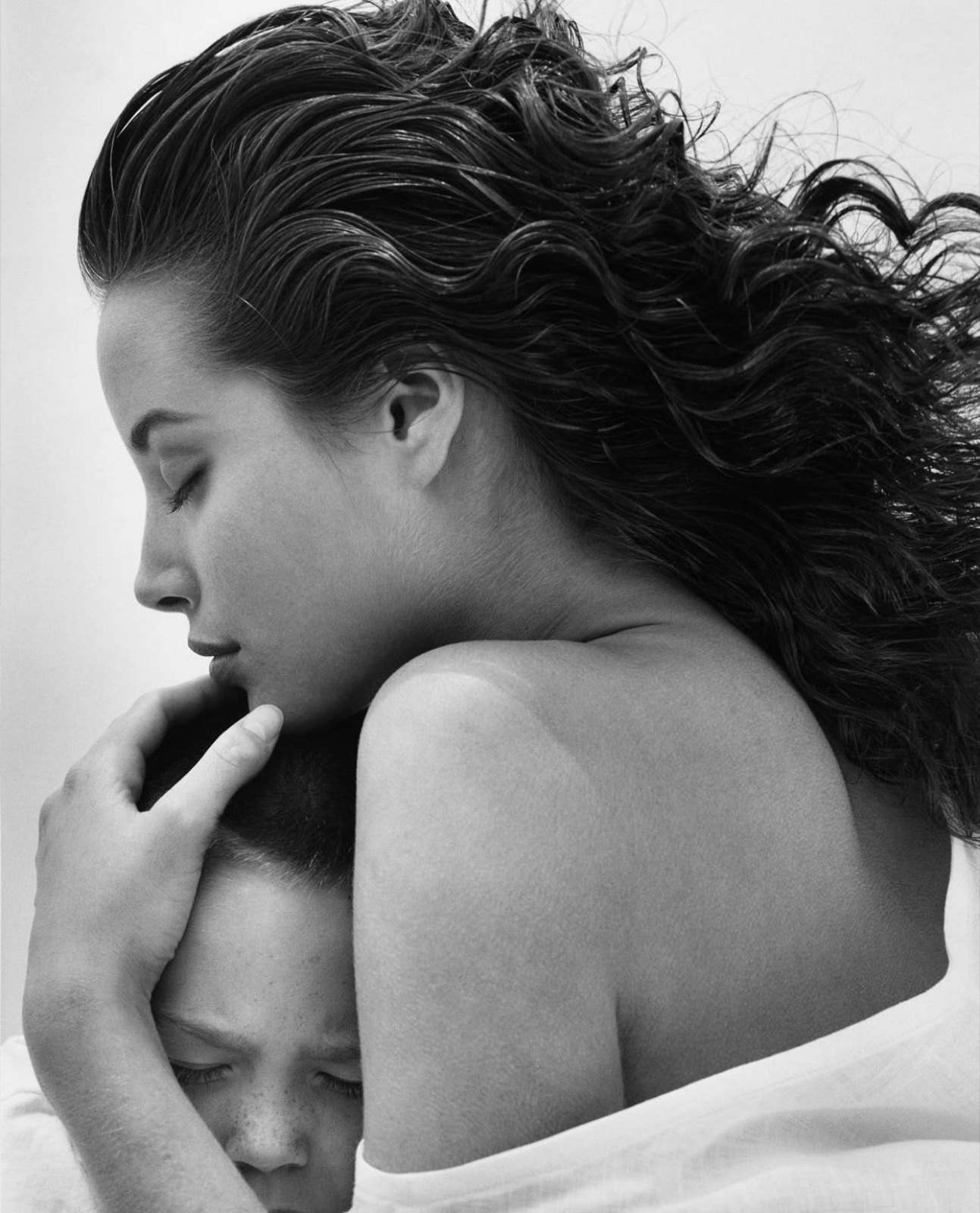

Martha's Vineyard is named in the title and visible nowhere. Bruce Weber empties the island into a field of white seamless light, leaving a single circumstantial clue, the wet, wind-thrown hair that implies an ocean just outside the frame. In that placeless setting Christy Turlington closes her eyes and gathers a child against her bare shoulder, one hand cradling the small freckled face, her white garment slipping as though the pose had been carved before it was dressed.
The photograph was made for a fragrance campaign and wears its construction openly. Profile, shoulder, spiralling hair: the arrangement quotes the repertoire of classical sculpture, and the gelatin silver print supplies the museum finish. This is intimacy produced under studio conditions, tenderness as a commissioned effect, yet the staging concentrates the emotion rather than thinning it, the way a sonnet's rules concentrate a sentiment. Advertising asked for eternity; Weber answered with the oldest tableau in Western art, a madonna and child in modern dress.
What makes the picture endure is the misalignment between purpose and result. Commissioned to sell perfume, it behaves like a devotional image; built entirely from artifice, it produces the most credible tenderness. The white ground that once stood in for a marketable island now reads as pure duration, no place, no season, no product in sight. The construction has outlived its brief.