Txema Yeste
Spanish, b. 1972Needles, 2019-24
Gelatin silver print mounted on aluminium Dibond.
Image: 63 x 45 cm / 24 3/4 x 17 3/4 in / Paper: 78 x 59 cm / 30 3/4 x 23 1/4 in
Image: 110 x 78.5 cm / 43 1/4 x 30 7/8 in / Paper: 127 x 94.5 cm / 50 x 37 1/4 in
Image: 126 x 90 cm / 49 5/8 x 35 3/8 in / Paper: 143 x 106 cm / 56 1/4 x 41 3/4 in
Hand-signed by the artist, titled, editioned, and dated in ink on a label affixed to the verso of the mount
Edition of 10 — Image: 63 x 45 cm / 24 3/4 x 17 3/4 in / Paper: 78 x 59 cm / 30 3/4 x 23 1/4 in
Edition of 5 — Image: 110 x 78.5 cm / 43 1/4 x 30 7/8 in / Paper: 127 x 94.5 cm / 50 x 37 1/4 in
Edition of 3 — Image: 126 x 90 cm / 49 5/8 x 35 3/8 in / Paper: 143 x 106 cm / 56 1/4 x 41 3/4 in
© The Artist
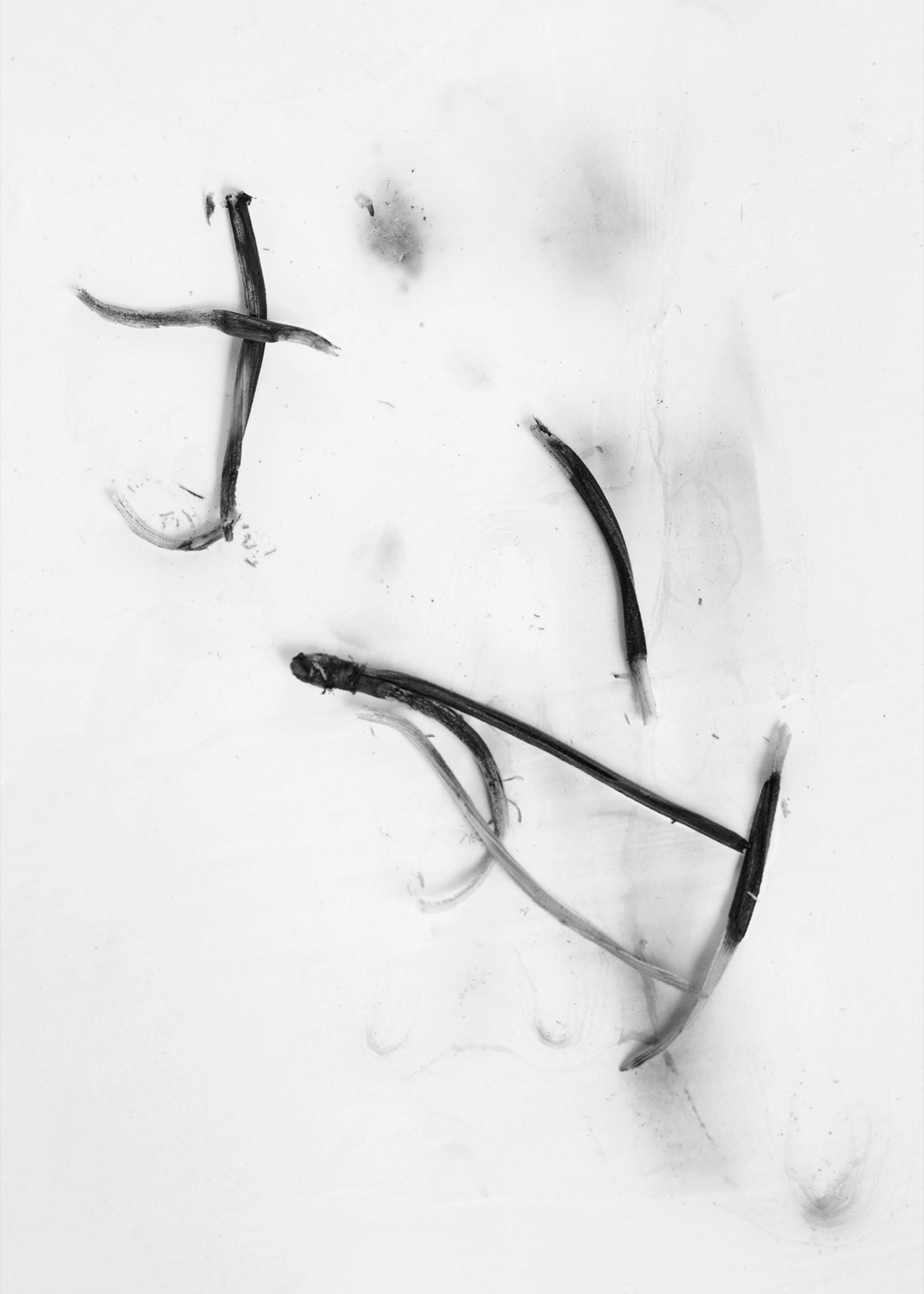
The white here is not blank but handled: a skin of paint or plaster that has taken thumb-smears, drag marks, the grey ghosts of touches it could not refuse. Across it lies a scatter of needles, wet-black, thin as pen strokes. Two of them cross near the upper edge with the offhand authority of a signature. Another curves alone, mid-field, like a dropped eyelash. The rest tangle into angles at the bottom, half-drowned in the surface that holds them.
Photography’s most durable seduction is to make debris legible. The camera cannot help conferring intention: scatter becomes script, litter becomes calligraphy, and we begin to read. A cross, a hook, a letter from an alphabet no one wrote. One should distrust this beauty; it is the beauty of aftermath, of things dropped and stranded, dignified by isolation and by the frame. And yet the distrust changes nothing. The eye keeps translating. What was refuse becomes rebus. The picture’s austerity is a style, and style is never innocent; it argues that even the world’s leavings deserve the full ceremony of attention.
Txema Yeste is best known as one of the great image-makers of Spanish fashion photography, with pages for Numéro, Harper’s Bazaar and Vogue, yet an elemental undertow runs through that work: fire, water, sand, wind-blown cloth. Here the element is reduced to residue. Printed in gelatin silver and mounted on aluminium Dibond, the photograph becomes a hard, matte object, its whites physical, its blacks mineral. Nothing glamorous is left, except the oldest glamour: black marks on a white ground, asking to be read.